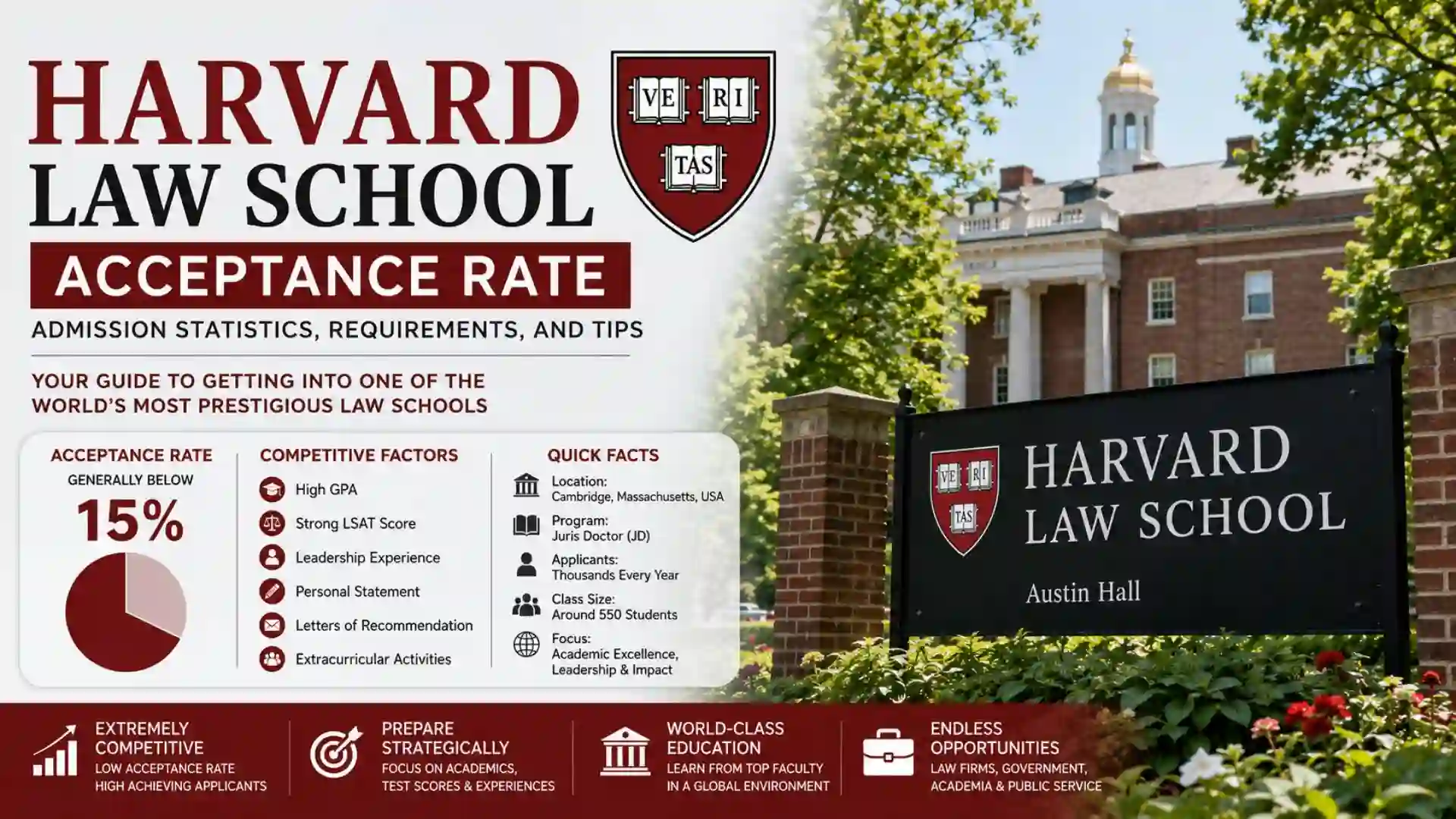
The Harvard Law School acceptance rate is one of the most discussed topics among students who dream of studying law at one of the most prestigious institutions in the world. Every year, thousands of applicants from different countries apply to Harvard Law School with the hope of gaining admission into its highly competitive Juris Doctor (JD) program. However, only a small percentage of applicants receive acceptance offers, making the Harvard Law School acceptance rate extremely selective.
Harvard Law School is internationally recognized for academic excellence, influential alumni, world-class faculty, and outstanding career opportunities. Students who graduate from Harvard Law School often become judges, politicians, legal scholars, business leaders, corporate attorneys, and public service professionals. Because of its reputation and opportunities, the competition for admission is intense.
Understanding the Harvard Law School acceptance rate is important for prospective applicants because it helps them evaluate their chances of admission and prepare stronger applications. Acceptance rates are influenced by many factors, including the number of applications received, applicant qualifications, academic achievements, LSAT scores, GPA performance, personal statements, recommendation letters, and extracurricular involvement.
This article provides a complete guide to the Harvard Law School acceptance rate, including admissions statistics, factors affecting admission decisions, application requirements, strategies to improve admission chances, financial aid information, career opportunities, and frequently asked questions.
Overview of Harvard Law School
Harvard Law School is one of the oldest and most respected law schools in the United States. Located in Cambridge, the institution has educated many influential leaders in law, politics, business, and public policy.
Harvard Law School is part of Harvard University and is known for its rigorous academic environment, extensive legal resources, and global influence. The school offers multiple degree programs, but the Juris Doctor program is the most popular among applicants.
The institution attracts applicants from diverse academic and professional backgrounds. Students applying to Harvard Law School often have exceptional academic records, leadership experiences, research accomplishments, and strong communication skills.
Important Information About Harvard Law School Acceptance Rate
| Category | Information |
|---|---|
| Institution Name | Harvard Law School |
| University | Harvard University |
| Location | Cambridge, Massachusetts, USA |
| Program Type | Juris Doctor (JD) and Advanced Law Programs |
| Focus Keyword | Harvard Law School Acceptance Rate |
| Admission Competitiveness | Extremely Competitive |
| Average Acceptance Rate | Generally Below 15% |
| Application Components | LSAT, GPA, Essays, Resume, Recommendations |
| Known For | Academic Excellence and Legal Education |
| Career Opportunities | Law Firms, Judiciary, Government, Academia |
Understanding the Harvard Law School Acceptance Rate
The Harvard Law School acceptance rate refers to the percentage of applicants who are admitted during a particular admissions cycle. For example, if 100 applicants apply and 10 are accepted, the acceptance rate would be 10%.
The Harvard Law School acceptance rate is usually very low because the school receives a massive number of applications from highly qualified students worldwide. Thousands of candidates compete for a limited number of seats.
A low acceptance rate indicates that the institution is highly selective. Harvard Law School carefully evaluates applicants using a holistic admissions process, meaning the school considers multiple aspects of an applicant’s profile instead of relying only on grades or test scores.
The Harvard Law School acceptance rate can vary slightly from year to year depending on:
- Total number of applicants
- Number of available seats
- Changes in admissions policies
- Applicant quality
- National and international demand for legal education
Why the Harvard Law School Acceptance Rate Is So Low?
Strong Global Reputation
Harvard Law School has built a reputation for excellence over many decades. Students from around the world apply because the institution is recognized internationally.
Graduating from Harvard Law School can open doors to prestigious career opportunities in law firms, government institutions, courts, universities, and multinational organizations.
Limited Seats
Although Harvard Law School enrolls a relatively large class compared to some other law schools, the number of available seats is still much smaller than the total number of applications received.
This imbalance between applications and available positions contributes to the low Harvard Law School acceptance rate.
Highly Qualified Applicants
Most applicants to Harvard Law School already possess excellent academic credentials. Many candidates have:
- High GPAs
- Outstanding LSAT scores
- Leadership experience
- Research achievements
- Internship experience
- Community involvement
- Professional accomplishments
Because the applicant pool is extremely strong, admissions officers must make highly selective decisions.
Harvard Law School Admissions Process
Understanding the admissions process is essential for students interested in the Harvard Law School acceptance rate.
Application Submission
Applicants submit their materials through the Law School Admission Council (LSAC) platform. The application generally includes:
- Academic transcripts
- LSAT or GRE scores
- Personal statement
- Resume
- Letters of recommendation
- Character and fitness information
Academic Evaluation
Admissions officers review academic performance carefully. GPA and test scores remain important factors in evaluating readiness for legal education.
Holistic Review
Harvard Law School uses a holistic admissions process. This means the institution considers:
- Academic achievement
- Leadership ability
- Personal background
- Community service
- Professional experience
- Communication skills
- Diversity of perspectives
Interviews
Some applicants may receive interview invitations as part of the admissions process. Interviews help the admissions committee learn more about candidates beyond written application materials.
GPA Expectations for Harvard Law School
Academic performance is one of the most important factors influencing the Harvard Law School acceptance rate.
Most admitted students have very high undergraduate GPAs. Although there is no official minimum GPA requirement, successful applicants often demonstrate consistent academic excellence throughout college.
Strong GPA performance indicates:
- Discipline
- Analytical ability
- Time management
- Academic commitment
Applicants with lower GPAs may still be considered if other aspects of their applications are exceptionally strong.
LSAT Scores and Harvard Law School Acceptance Rate
The Law School Admission Test (LSAT) plays a major role in admissions decisions.
The LSAT measures:
- Reading comprehension
- Logical reasoning
- Analytical thinking
- Problem-solving ability
Competitive applicants to Harvard Law School generally achieve very high LSAT scores. Because the Harvard Law School acceptance rate is extremely competitive, strong LSAT performance can significantly improve admission chances.
However, Harvard Law School evaluates applicants holistically, so test scores alone do not guarantee admission.
Importance of the Personal Statement
The personal statement is a crucial component of the application process.
A strong personal statement should:
- Explain the applicant’s motivations
- Highlight unique experiences
- Demonstrate communication skills
- Show intellectual curiosity
- Reflect personal growth
Admissions officers use personal statements to understand the applicant as an individual beyond grades and test scores.
An effective essay can positively influence admissions decisions even in a highly competitive environment.
Letters of Recommendation
Recommendation letters help admissions officers evaluate an applicant’s character, academic abilities, and professional potential.
Strong recommendations usually come from:
- Professors
- Employers
- Supervisors
- Research mentors
Effective letters provide specific examples of the applicant’s strengths, achievements, and potential for success in law school.
Extracurricular Activities and Leadership
Harvard Law School values applicants who demonstrate leadership and community involvement.
Examples of valuable extracurricular experiences include:
- Debate clubs
- Student government
- Volunteer programs
- Legal internships
- Research projects
- Advocacy work
- Public speaking activities
Leadership experiences show initiative, responsibility, and communication skills.
Diversity and Inclusion in Admissions
Harvard Law School seeks to build a diverse student community with varied backgrounds, experiences, and perspectives.
Diversity may include differences in:
- Academic disciplines
- Professional experiences
- Cultural backgrounds
- Geographic origins
- Life experiences
A diverse learning environment enriches classroom discussions and prepares students for global legal practice.
Financial Aid and Scholarships
The cost of attending law school can be substantial, but Harvard Law School provides financial aid options to help students manage expenses.
Financial support may include:
- Need-based grants
- Scholarships
- Student employment opportunities
- Loan programs
Harvard Law School aims to make legal education accessible to talented students from different financial backgrounds.
Career Opportunities After Graduation
One reason the Harvard Law School acceptance rate remains so competitive is the strong career outcomes available to graduates.
Graduates often pursue careers in:
- Corporate law
- Litigation
- Public interest law
- Government service
- Academia
- International law
- Judicial clerkships
- Business leadership
Many graduates secure positions at top law firms and influential organizations worldwide.
Famous Alumni of Harvard Law School
Harvard Law School has produced many notable graduates who have influenced politics, law, business, and society.
Alumni include:
- Presidents
- Supreme Court justices
- Senators
- International leaders
- Legal scholars
- Business executives
The school’s alumni network is one of its strongest advantages.
Tips to Improve Your Chances of Admission
Because the Harvard Law School acceptance rate is extremely selective, applicants should focus on building strong overall profiles.
Maintain Academic Excellence
Strong academic performance throughout college is essential.
Prepare Thoroughly for the LSAT
High LSAT scores can strengthen applications significantly.
Develop Leadership Skills
Leadership experiences demonstrate initiative and responsibility.
Gain Relevant Experience
Internships, volunteer work, and research projects can improve applications.
Write a Strong Personal Statement
A thoughtful and authentic essay can help applicants stand out.
Secure Strong Recommendations
Choose recommenders who know your abilities well and can provide detailed evaluations.
Apply Early
Submitting applications early may provide strategic advantages during the admissions cycle.
Challenges Faced by Applicants
Intense Competition
Thousands of highly qualified candidates compete for limited spots.
High Academic Standards
Applicants often feel pressure to maintain excellent grades and test scores.
Complex Application Process
Preparing essays, recommendations, and application materials requires significant time and effort.
Financial Concerns
Law school expenses can create financial challenges for some students.
Harvard Law School Student Experience
Students at Harvard Law School experience a rigorous academic environment combined with extensive extracurricular opportunities.
Academic Environment
The curriculum emphasizes:
- Legal analysis
- Critical thinking
- Case studies
- Research
- Advocacy skills
Student Organizations
Students can participate in:
- Legal journals
- Debate societies
- Public interest organizations
- Networking groups
- Cultural associations
Clinical Programs
Clinical programs provide practical legal experience through real-world cases and client representation.
Global Recognition of Harvard Law School
Harvard Law School enjoys worldwide recognition due to its:
- Academic excellence
- Influential faculty
- Legal research
- Alumni achievements
- International partnerships
Graduates often gain respect and recognition in global legal and professional environments.
The Future of Harvard Law School Admissions
Admissions processes continue evolving as institutions consider:
- Diversity initiatives
- Holistic evaluation methods
- Accessibility improvements
- Technological changes
- New testing policies
Future applicants may encounter changes in admissions requirements and evaluation approaches.
FAQ about Harvard Law School Acceptance Rate
What is the Harvard Law School acceptance rate?
The Harvard Law School acceptance rate is generally below 15%, making it one of the most selective law schools in the world.
Why is the Harvard Law School acceptance rate so low?
The school receives thousands of applications from highly qualified students while offering a limited number of seats.
What GPA is needed for Harvard Law School?
There is no official minimum GPA requirement, but admitted students usually have exceptionally strong academic records.
Does Harvard Law School require the LSAT?
Harvard Law School commonly accepts LSAT scores, although policies regarding standardized tests may evolve over time.
Can international students apply to Harvard Law School?
Yes, international students from many countries apply and attend Harvard Law School.
Is work experience required for admission?
Work experience is not always required, but professional achievements and internships can strengthen applications.
How important is the personal statement?
The personal statement is extremely important because it helps admissions officers understand the applicant’s motivations and personality.
Does Harvard Law School offer scholarships?
Yes, Harvard Law School provides financial aid and need-based assistance for eligible students.
What careers do Harvard Law School graduates pursue?
Graduates work in law firms, government agencies, courts, academia, corporations, and public service organizations.
Is Harvard Law School worth it?
Many students consider Harvard Law School valuable because of its reputation, educational quality, alumni network, and career opportunities.
Conclusion
The Harvard Law School acceptance rate reflects the institution’s reputation as one of the most prestigious and competitive law schools in the world. Every year, thousands of ambitious students apply with hopes of joining a program known for academic excellence, influential faculty, and exceptional career opportunities.
Although the admissions process is highly selective, successful applicants usually demonstrate a combination of academic achievement, strong LSAT performance, leadership experience, communication skills, and personal motivation. Harvard Law School evaluates candidates holistically, meaning every part of the application matters.
Understanding the Harvard Law School acceptance rate helps prospective students prepare realistic and strategic applications. Applicants who focus on academic excellence, meaningful experiences, authentic personal statements, and strong recommendations can improve their chances of success.
For many aspiring lawyers, admission to Harvard Law School represents more than academic achievement. It symbolizes access to world-class education, influential professional networks, and opportunities to make meaningful contributions to law and society.