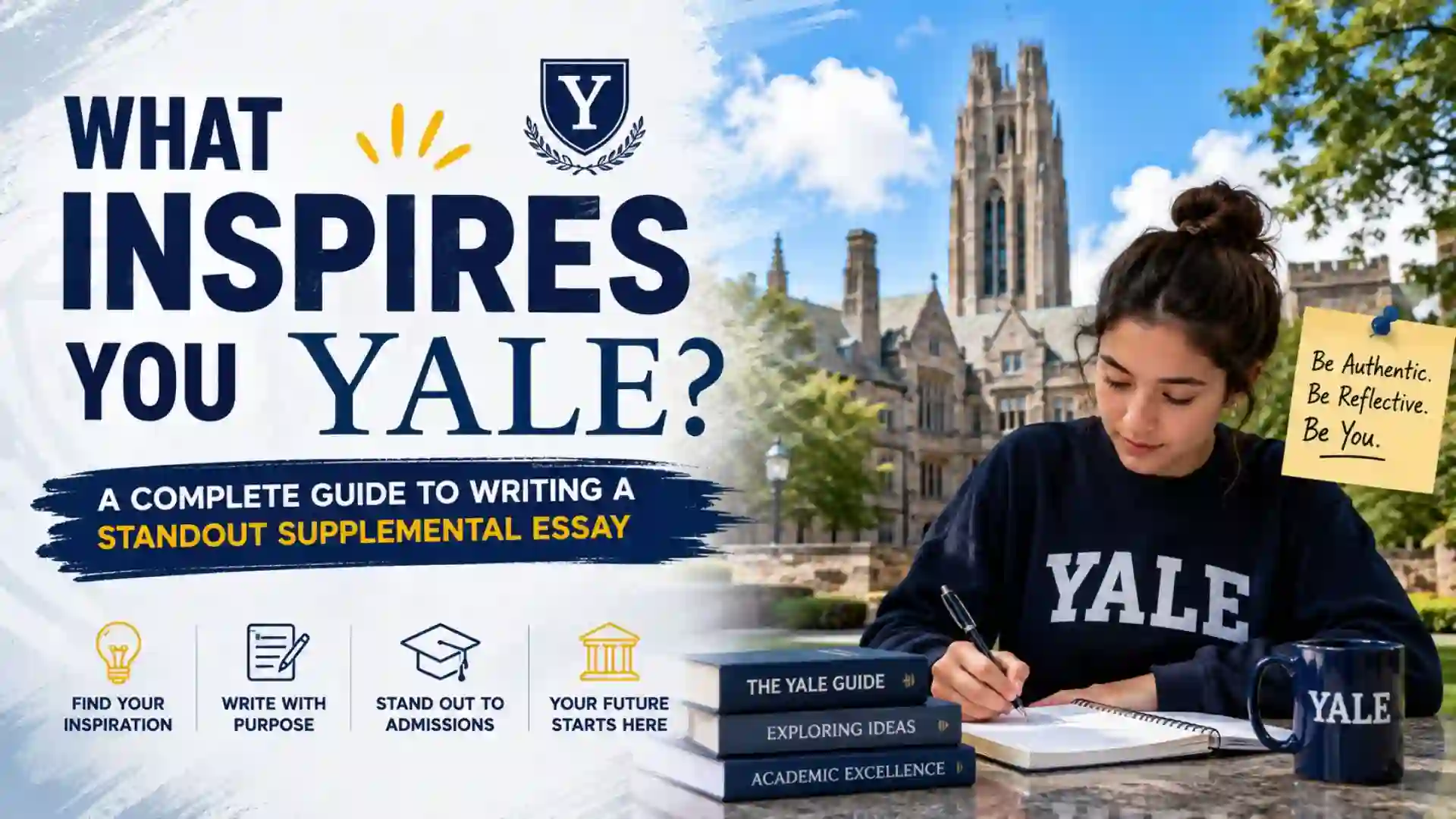
What Inspires You Yale? Applying to Yale University involves more than submitting grades, test scores, and extracurricular achievements. One of the most important parts of the application process is the supplemental essay commonly known as the “What Inspires You?” Yale essay. This short but meaningful prompt gives applicants an opportunity to reveal their personality, intellectual curiosity, values, and passions beyond what appears elsewhere in the application.
For many students, this essay can feel challenging because it asks them to look inward and explain what truly motivates them. Unlike academic essays that focus on research and evidence, the Yale inspiration essay requires self-reflection, authenticity, and storytelling.
In this comprehensive guide, we will explore the purpose of the “What Inspires You?” Yale essay, discuss how admissions officers evaluate responses, provide strategies for brainstorming ideas, outline common mistakes to avoid, and offer practical tips for writing an outstanding essay.
Important Information and Links
| Resource | Description |
|---|---|
| Yale University | One of the most prestigious universities in the world |
| Yale Undergraduate Admissions | Official admissions office for undergraduate applicants |
| Common Application | Platform used by many students to submit Yale applications |
| Yale Supplemental Essays | Additional essays required as part of the Yale application |
| What Inspires You Essay | Short response designed to reveal personality and motivation |
| Word Count | Usually a brief response requiring concise and meaningful writing |
| Main Goal | Demonstrate authenticity, curiosity, and personal values |
| Best Approach | Share a genuine source of inspiration with specific examples |
| Common Mistake | Choosing a topic that sounds impressive but lacks personal meaning |
| Ideal Tone | Reflective, personal, thoughtful, and engaging |
Understanding the “What Inspires You?” Yale Essay
Yale frequently includes short-answer questions that encourage applicants to reveal who they are beyond academics and achievements. The “What Inspires You?” prompt is designed to uncover what motivates a student intellectually, creatively, socially, or personally.
The question appears simple at first glance. However, Yale admissions officers are not merely looking for a list of interests. They want to understand the deeper reasons behind a student’s passions and how those inspirations shape their actions and aspirations.
The prompt gives students a chance to highlight qualities such as:
- Intellectual curiosity
- Creativity
- Leadership
- Compassion
- Perseverance
- Open-mindedness
- Love of learning
- Commitment to growth
Rather than focusing on accomplishments, the essay focuses on motivation.
Why Yale Asks This Question?
Every supplemental essay serves a purpose. Yale uses this question to gain insight into aspects of an applicant that cannot be measured through grades or standardized tests.
Thousands of students applying to Yale have excellent academic records. Admissions officers need additional information to distinguish among highly qualified candidates.
The inspiration essay helps Yale answer questions such as:
- What excites this student?
- What drives their curiosity?
- How do they think?
- What values matter to them?
- What experiences have shaped their worldview?
These insights help Yale build a diverse and dynamic student community.
What Inspiration Really Means?
Many students mistakenly assume inspiration must come from a famous person, major life event, or extraordinary achievement.
In reality, inspiration can come from almost anything.
Examples include:
- A family member
- A teacher
- Scientific discoveries
- Literature
- Music
- Nature
- Community service
- Personal challenges
- Historical events
- Cultural traditions
- Artistic expression
- Everyday observations
The most effective essays often focus on specific and meaningful experiences rather than broad or generic topics.
Characteristics of a Strong Yale Inspiration Essay
Successful essays typically share several key characteristics.
Authenticity
Admissions officers can easily recognize when students write what they think colleges want to hear.
The strongest essays are honest and personal.
Instead of choosing a topic because it sounds impressive, choose one that genuinely matters to you.
Specificity
Specific details bring essays to life.
Rather than saying:
“I am inspired by science.”
You might write:
“I became fascinated by science after spending evenings helping my grandfather repair old radios and wondering how invisible signals could travel through the air.”
Specific examples create memorable essays.
Reflection
The essay should go beyond describing inspiration.
It should explain:
- Why it matters
- How it affects you
- What you have learned
- How it influences your goals
Reflection transforms a simple story into a meaningful essay.
Personal Voice
Your essay should sound like you.
Avoid overly formal language or vocabulary that feels unnatural.
A genuine voice helps admissions officers connect with your story.
Brainstorming Ideas for the Essay
Before writing, spend time brainstorming.
Consider the following questions:
What Topics Fascinate You?
Think about subjects that naturally capture your attention.
Examples:
- Astronomy
- Psychology
- Economics
- Literature
- Environmental science
Ask yourself why these topics matter to you.
Who Has Influenced You?
Many students find inspiration in people.
Possibilities include:
- Parents
- Grandparents
- Teachers
- Coaches
- Mentors
- Historical figures
Focus on how their influence shaped your perspective.
What Experiences Changed You?
Sometimes inspiration comes from important experiences.
Examples:
- Volunteering
- Travel
- Research projects
- Competitions
- Community involvement
Reflect on lessons learned from these experiences.
What Challenges Have Motivated Growth?
Difficult experiences can become sources of inspiration.
Examples:
- Academic setbacks
- Personal obstacles
- Family responsibilities
The key is demonstrating growth rather than focusing solely on hardship.
Examples of Effective Inspiration Topics
Inspiration from Curiosity
A student may write about being inspired by unanswered questions.
Perhaps they spent years exploring marine ecosystems, programming languages, or ancient civilizations simply because they wanted to understand more about the world.
This approach highlights intellectual vitality.
Inspiration from Family
Family stories can provide compelling essay material.
For example, a student might describe how a grandparent’s resilience inspired their commitment to education and service.
This demonstrates values and character.
Inspiration from Art
Artists, musicians, and writers often find inspiration in creative expression.
A student might discuss how poetry taught them to observe the world more carefully.
This can reveal creativity and self-awareness.
Inspiration from Community Service
Helping others can become a powerful source of motivation.
An essay might explain how volunteering at a local organization inspired a commitment to public health or social justice.
This showcases empathy and leadership.
Inspiration from Nature
Nature often inspires curiosity and reflection.
A student interested in environmental science might describe how hiking experiences led to a passion for conservation.
This creates a vivid and memorable narrative.
Structuring the Essay
Even short essays benefit from a clear structure.
Opening
Begin with an engaging detail, observation, or anecdote.
For example:
“The first time I looked through a telescope, I expected to see stars. Instead, I discovered questions.”
An interesting opening immediately captures attention.
Body
Explain:
- The source of inspiration
- Why it matters
- How it influences your thinking and actions
Use specific examples whenever possible.
Reflection
Discuss personal growth and learning.
Show how your inspiration has shaped your goals, interests, or perspective.
Conclusion
End with a meaningful insight rather than simply repeating earlier points.
A thoughtful conclusion leaves a lasting impression.
Common Mistakes to Avoid
Choosing an Impressive but Unimportant Topic
Students sometimes select topics they believe admissions officers will admire.
However, authenticity is more valuable than prestige.
A sincere essay about a local mentor can be stronger than a forced essay about a famous scientist.
Writing Too Broadly
Avoid discussing inspiration in vague terms.
Specific experiences are more compelling than general statements.
Focusing Only on Achievement
The essay should explore motivation, not merely accomplishments.
Admissions officers want to understand why you care about something.
Overusing Quotes
While quotes can be meaningful, relying heavily on someone else’s words limits opportunities to showcase your own voice.
Ignoring Reflection
Describing inspiration without explaining its impact leaves the essay incomplete.
Reflection is essential.
How Yale Admissions Officers Read This Essay?
Admissions officers typically evaluate several factors.
Authenticity
Does the essay feel genuine?
Intellectual Engagement
Does the student demonstrate curiosity and enthusiasm?
Character
What values and qualities emerge from the essay?
Writing Ability
Is the essay clear, engaging, and well-organized?
Fit with Yale
Does the essay suggest the student will contribute positively to Yale’s academic community?
These considerations help admissions officers build a fuller picture of each applicant.
Sample Brainstorm Topics
Here are examples of potential inspiration sources:
| Inspiration Source | Possible Essay Focus |
| Grandparent | Resilience and lifelong learning |
| Teacher | Passion for education |
| Books | Intellectual curiosity |
| Music | Creativity and expression |
| Community Service | Commitment to helping others |
| Research Project | Love of discovery |
| Nature | Environmental awareness |
| Cultural Heritage | Identity and values |
| Sports | Discipline and teamwork |
| Entrepreneurship | Innovation and problem-solving |
Turning Ordinary Experiences into Extraordinary Essays
One misconception is that applicants need extraordinary stories.
In reality, strong essays often emerge from ordinary experiences viewed through a thoughtful lens.
Consider these examples:
- Daily conversations with a parent
- Reading books at the local library
- Building small science experiments
- Participating in community events
- Observing neighborhood traditions
The significance comes from your reflection and perspective.
Admissions officers are interested in how you think, not just what happened.
Demonstrating Intellectual Vitality
Yale highly values intellectual curiosity.
If your inspiration relates to learning, consider discussing:
- Questions you pursue outside the classroom
- Independent projects
- Research interests
- Books that changed your perspective
- Topics you explore for fun
Showing genuine enthusiasm for learning can strengthen your application.
Demonstrating Personal Growth
The best essays often show development over time.
Instead of presenting inspiration as a single moment, describe how it evolved.
For example:
- What first sparked your interest?
- How did your understanding deepen?
- What actions did you take?
- What goals emerged?
Growth creates a more dynamic and compelling narrative.
The Role of Storytelling
Stories make essays memorable.
A brief anecdote can illustrate inspiration far more effectively than abstract explanation.
Strong storytelling includes:
- Concrete details
- Sensory descriptions
- Personal reflections
- Clear lessons
Even a short story can reveal important aspects of your personality.
Revising Your Essay
Once you complete a draft, revise carefully.
Ask yourself:
- Does the essay sound like me?
- Have I explained why this inspiration matters?
- Are there specific details?
- Have I shown reflection and growth?
- Is every sentence meaningful?
Multiple revisions often transform a good essay into an excellent one.
Final Tips for Success
When writing your Yale inspiration essay:
- Be authentic.
- Focus on personal meaning.
- Use specific examples.
- Show reflection.
- Demonstrate curiosity.
- Highlight growth.
- Write clearly and concisely.
- Let your personality shine.
Remember that Yale already knows about your grades and achievements. This essay helps admissions officers understand the person behind the application.
FAQ about What Inspires You Yale?
What is the purpose of the “What Inspires You?” Yale essay?
The essay allows Yale admissions officers to understand what motivates you, what values you hold, and how you think beyond your academic achievements.
Does the inspiration need to be academic?
No. Inspiration can come from academics, family, community service, art, nature, personal experiences, or many other sources.
Can I write about a person who inspires me?
Yes. Many successful essays focus on mentors, teachers, family members, or other influential individuals. The key is explaining how their influence shaped you.
Should I choose a unique topic?
The topic does not need to be unique. What matters most is your perspective and reflection.
How personal should the essay be?
The essay should be personal enough to reveal meaningful insights about your character, values, and motivations.
Can I discuss challenges?
Yes. Challenges can be effective sources of inspiration if the essay focuses on growth, learning, and resilience.
Is storytelling important?
Yes. A brief, engaging story often helps admissions officers connect with your essay and remember your application.
What is the biggest mistake students make?
One of the biggest mistakes is choosing a topic that sounds impressive but lacks genuine personal significance.
How can I make my essay memorable?
Use specific details, authentic reflection, and a strong personal voice to create a memorable response.
Should I connect my inspiration to future goals?
If relevant, yes. Explaining how your inspiration influences future aspirations can strengthen the essay.
Conclusion
The “What Inspres You?” Yale essay is much more than a simple supplemental question. It is an opportunity to showcase the motivations, values, curiosity, and experiences that shape who you are. Yale uses this essay to understand the individual behind the transcript and determine how that individual might contribute to the university community.
A successful essay does not require an extraordinary story or a world-changing accomplishment. Instead, it requires honest reflection, thoughtful storytelling, and a clear explanation of what genuinely inspires you. Whether your inspiration comes from a family member, a scientific question, a creative pursuit, a personal challenge, or a community experience, the most effective response will reveal authentic aspects of your character.
By focusing on meaningful experiences, providing specific examples, and demonstrating personal growth, applicants can craft an essay that resonates with admissions officers and strengthens their overall application. Ultimately, the best Yale inspiration essays are not about impressing readers—they are about helping readers understand the unique perspective and passion that you would bring to Yale.