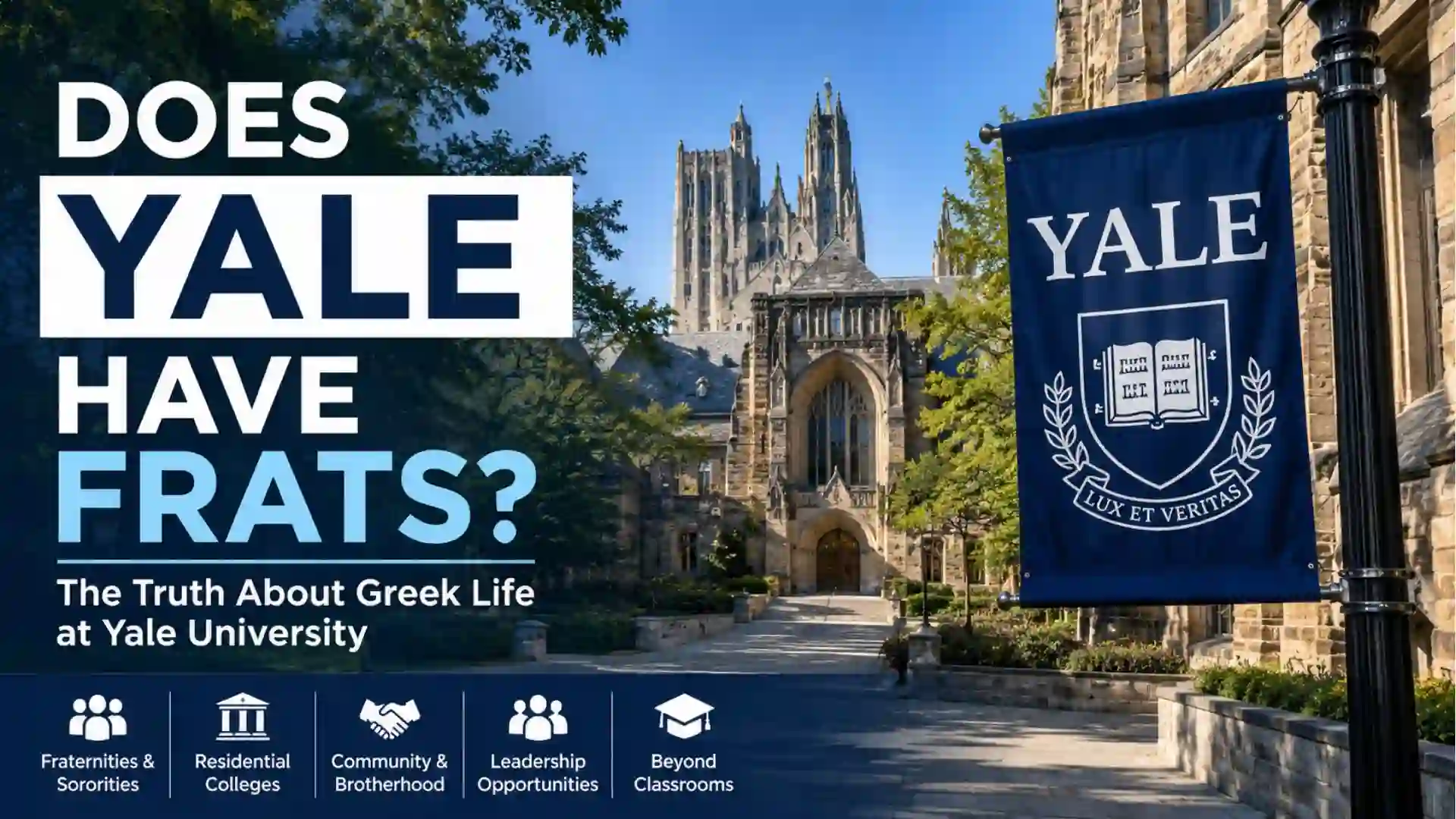
Does Yale Have Frats? When students begin researching colleges in the United States, one common question often comes up: Does Yale have frats? The answer is yes, Yale University does have fraternities and sororities. However, the role they play in campus life is very different from what many people associate with fraternity culture at other universities.
Yale University is one of the most prestigious institutions in the world and is known for its academic excellence, historic traditions, and vibrant student community. Unlike many large public universities where Greek life dominates social activities, Yale offers a unique social environment that revolves around residential colleges, student organizations, academic communities, and extracurricular activities.
For prospective students, parents, and anyone interested in Yale’s student culture, understanding how fraternities fit into the university experience is important. This guide explores the history of fraternities at Yale, their current presence, how they compare with Greek life at other schools, and whether joining one is necessary to have a fulfilling social life.
Important Information About Yale Fraternities
| Topic | Information |
|---|---|
| University | Yale University |
| Location | New Haven, Connecticut |
| Greek Life Presence | Yes |
| Fraternities Available | Multiple recognized organizations |
| Sororities Available | Multiple recognized organizations |
| Dominant Social Structure | Residential College System |
| Greek Life Participation | Relatively small compared to many universities |
| Alternative Social Opportunities | Clubs, societies, sports, arts, residential colleges |
| Student Population | Undergraduate and graduate students |
| Campus Culture | Academics, leadership, diversity, community engagement |
Understanding Yale’s Social Culture
Before discussing fraternities specifically, it is important to understand Yale’s social structure.
Many universities rely heavily on Greek organizations to provide social events, networking opportunities, and student communities. Yale takes a different approach through its residential college system.
Every undergraduate student becomes a member of one of Yale’s residential colleges. These colleges function like smaller communities within the larger university. Students live, dine, participate in activities, and develop friendships within their college.
Because of this system, students often find strong social connections without needing to join a fraternity or sorority.
This residential college model is one of the main reasons why Greek life does not dominate Yale’s social landscape.
Does Yale Have Frats?
Yes, Yale has fraternities.
Several fraternity organizations operate on or around Yale’s campus. Students interested in joining Greek organizations can participate in recruitment processes and become members if accepted.
However, fraternity membership represents only a small portion of Yale’s undergraduate population.
Unlike universities where a large percentage of students join fraternities and sororities, Yale students often choose from hundreds of other organizations and social opportunities.
As a result, fraternities are present but not central to the overall Yale experience.
A Brief History of Fraternities at Yale
Yale has a long history connected to student societies and fraternities.
In fact, some of the earliest collegiate secret societies and social organizations in the United States have roots at Yale.
Throughout the nineteenth and twentieth centuries, fraternities played a more visible role in student life. Many students participated in Greek organizations, and some fraternities maintained houses near campus.
Over time, Yale’s social environment evolved. The university expanded its residential college system, increased diversity among students, and encouraged participation in a broader range of activities.
As these changes occurred, fraternities became one option among many rather than the center of student life.
Today, Yale students can choose whether fraternity membership aligns with their interests and goals.
Why Yale Is Different From Other Universities?
When people think about fraternities, they often imagine large fraternity houses, major social events, and a campus culture heavily influenced by Greek life.
This image may accurately describe some universities, but Yale operates differently.
Several factors distinguish Yale from schools where Greek life dominates:
Strong Residential College System
The residential college system creates built-in communities for students.
Friendships, events, mentorship opportunities, and traditions often develop within these colleges.
As a result, students already have access to strong social networks.
Extensive Student Organizations
Yale offers hundreds of student organizations covering interests such as:
- Politics
- Business
- Entrepreneurship
- Music
- Theater
- Journalism
- Community service
- Debate
- Technology
- Cultural identity
Students often dedicate significant time to these organizations.
Academic Focus
Yale students are known for balancing social activities with rigorous academic commitments.
Many students prioritize research, internships, leadership opportunities, and intellectual pursuits.
Diverse Social Opportunities
Social life extends far beyond fraternities.
Students participate in:
- Campus events
- Performances
- Athletic competitions
- Cultural celebrations
- Academic conferences
- Student-run organizations
Because of these opportunities, students do not need fraternity membership to enjoy an active social life.
How Many Students Join Fraternities at Yale?
Greek life participation at Yale is generally lower than at universities known for strong fraternity cultures.
While exact numbers can vary from year to year, only a minority of students join fraternities or sororities.
This means that most Yale students build their social circles through other avenues.
A student can spend four years at Yale, have an incredible social experience, and never participate in Greek life.
Similarly, students who enjoy fraternity membership can find value in joining.
The choice is entirely personal.
Benefits of Joining a Fraternity at Yale
Although fraternities are not central to campus culture, they can still offer meaningful advantages.
Social Connections
Fraternities provide opportunities to meet students from different backgrounds and academic interests.
Members often develop close friendships that last beyond graduation.
Leadership Experience
Many fraternities have leadership positions that help students develop organizational and management skills.
These experiences can strengthen resumes and professional development.
Networking Opportunities
Fraternity alumni networks can provide connections in various industries and professions.
Students may benefit from mentorship and career guidance.
Community Service
Many fraternities participate in charitable activities and volunteer projects.
Members often contribute to local communities through organized service initiatives.
Event Planning Experience
Fraternity members frequently help organize social, philanthropic, and educational events.
This experience can improve communication and project management abilities.
Potential Challenges of Fraternity Membership
Like any organization, fraternities come with both benefits and challenges.
Time Commitment
Active participation often requires attending meetings, events, and activities.
Students must balance these responsibilities with academics.
Financial Costs
Some fraternities charge membership dues.
Students should consider financial obligations before joining.
Maintaining Academic Priorities
Yale’s academic environment is demanding.
Students need strong time-management skills to balance fraternity involvement and coursework.
Finding the Right Fit
Not every fraternity will match every student’s personality or interests.
Students should carefully evaluate organizations before making commitments.
Fraternities vs. Residential Colleges
One of the most interesting aspects of Yale is the relationship between fraternities and residential colleges.
Residential colleges provide:
- Housing communities
- Dining halls
- Academic support
- Social programming
- Cultural events
- Mentorship opportunities
Fraternities provide:
- Membership-based communities
- Social events
- Networking opportunities
- Leadership roles
- Brotherhood traditions
Because residential colleges already fulfill many social functions, fraternities serve as an additional option rather than a primary social structure.
Are There Fraternity Houses at Yale?
Some fraternity organizations associated with Yale have maintained houses or meeting spaces.
However, fraternity housing is not nearly as prominent as it is at universities where Greek life dominates campus culture.
Most Yale undergraduates continue to identify primarily with their residential colleges rather than fraternity residences.
This distinction helps explain why Yale’s social environment differs from schools with extensive fraternity housing systems.
What About Sororities?
Yale also has sororities.
Like fraternities, sororities offer students opportunities for friendship, leadership development, networking, and community engagement.
Sorority participation is generally similar to fraternity participation in that it represents one option among many rather than a defining feature of student life.
Students interested in women’s leadership communities often explore sorority membership alongside other campus organizations.
Alternative Social Organizations at Yale
Students who choose not to join fraternities still have countless opportunities to become involved.
Popular alternatives include:
Student Government
Leadership opportunities exist through student governance organizations.
Performing Arts Groups
Yale is famous for theater, music, dance, and comedy organizations.
Athletic Teams
Varsity, club, and intramural sports offer community and competition.
Cultural Organizations
Students can celebrate and share cultural identities through numerous campus groups.
Academic Clubs
Many students join organizations connected to their academic interests.
Service Organizations
Volunteer groups help students contribute to local and global communities.
Entrepreneurship Programs
Innovation-focused organizations provide opportunities for business development and startup creation.
These alternatives contribute significantly to Yale’s dynamic social environment.
Should You Join a Fraternity at Yale?
The decision depends on personal goals and preferences.
A fraternity may be a good fit if you:
- Enjoy close-knit communities
- Want additional social opportunities
- Value alumni networking
- Like leadership experiences
- Appreciate organized traditions
A fraternity may not be necessary if you:
- Already feel connected through your residential college
- Prefer other student organizations
- Have limited time available
- Want a less structured social experience
Many successful Yale students never join fraternities and still develop strong friendships and professional networks.
Others find fraternity membership highly rewarding.
There is no single correct path.
What Prospective Students Should Know?
Students considering Yale should remember that Greek life exists but does not define the university.
When visiting campus or speaking with current students, it becomes clear that Yale’s culture is shaped by:
- Academic excellence
- Residential colleges
- Student leadership
- Diversity
- Research opportunities
- Creative expression
- Community engagement
Fraternities are simply one component of a much larger and more complex student experience.
Prospective students should focus on finding communities that align with their interests rather than feeling pressure to join Greek organizations.
Common Misconceptions About Yale Fraternities
Myth 1: Everyone Joins a Fraternity
Reality: Most Yale students do not participate in Greek life.
Myth 2: Fraternities Control Social Life
Reality: Social opportunities exist across campus through numerous organizations and events.
Myth 3: You Need Greek Life for Networking
Reality: Yale’s alumni network, academic programs, and student organizations provide extensive networking opportunities.
Myth 4: Fraternity Membership Is Required for Friendships
Reality: Students build lasting friendships through residential colleges, classes, clubs, and countless campus activities.
FAQ about Does Yale Have Frats?
Does Yale have frats?
Yes. Yale has several fraternity organizations that students can join through recruitment processes.
Is Greek life popular at Yale?
Greek life exists at Yale but is not as prominent as it is at many large public universities.
Do most Yale students join fraternities?
No. Only a minority of students participate in Greek life.
What is more important at Yale than fraternities?
The residential college system is generally considered the most significant social structure for undergraduates.
Are there fraternity houses at Yale?
Some fraternities have houses or meeting spaces, but fraternity housing is not a central feature of campus life.
Can students have a good social life without joining a fraternity?
Absolutely. Most Yale students build active social lives through residential colleges, clubs, sports, arts organizations, and campus events.
Does Yale have sororities?
Yes. Yale offers sorority opportunities alongside fraternity organizations.
Should prospective students choose Yale because of Greek life?
Most students choose Yale for its academic reputation, residential college system, research opportunities, faculty, and overall campus experience rather than for Greek life alone.
Conclusion
So, does Yale have frats? The answer is yes. Fraternities are part of Yale University’s student community and provide opportunities for friendship, leadership, networking, and personal development. However, they do not dominate campus culture in the way they do at many other American universities.
Yale’s residential college system serves as the foundation of undergraduate social life, giving students built-in communities from the moment they arrive on campus. Combined with hundreds of student organizations, athletic programs, cultural groups, and academic opportunities, Yale offers numerous ways to build meaningful relationships and engage with campus life.
For prospective students, the most important takeaway is that fraternity membership is entirely optional. Students who join can enjoy valuable experiences, while those who do not join still have access to one of the richest and most diverse campus environments in higher education. Ultimately, Yale’s social culture is defined not by fraternities alone but by the broad range of opportunities that help students grow academically, professionally, and personally.