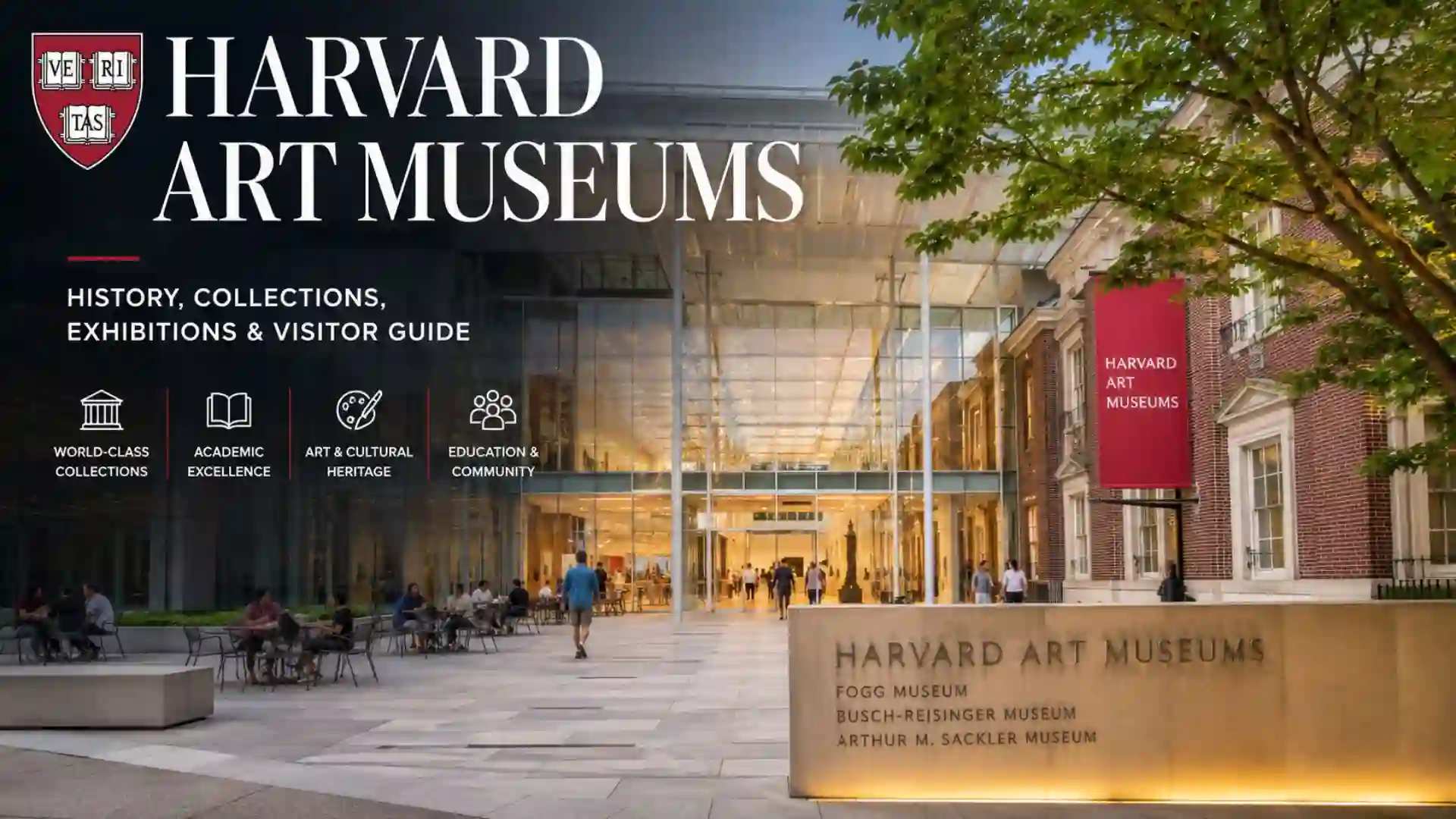
The Harvard Art Museums are among the most respected university museum institutions in the world. Located in Cambridge, Massachusetts, the museums bring together centuries of artistic achievement, academic research, and cultural preservation under one institution. Known for their exceptional collections, innovative exhibitions, and educational mission, the Harvard Art Museums attract students, scholars, artists, historians, and tourists from across the globe.
The institution combines three historic museums: the Fogg Museum, the Busch-Reisinger Museum, and the Arthur M. Sackler Museum. Together, they house hundreds of thousands of works representing cultures and civilizations from ancient times to the contemporary era. Whether someone is interested in Renaissance painting, Asian art, modern sculpture, photography, or conservation science, the Harvard Art Museums provide a rich and immersive experience.
This article explores the history, collections, architecture, exhibitions, educational programs, visitor information, and cultural significance of the Harvard Art Museums in detail.
Overview of Harvard Art Museums
The Harvard Art Museums serve as both a public museum and a teaching institution connected to Harvard University. The museums are designed not only to display art but also to support research, learning, and interdisciplinary scholarship.
Important Information and Links
| Category | Details |
|---|---|
| Official Name | Harvard Art Museums |
| Location | Cambridge, Massachusetts, USA |
| Affiliation | Harvard University |
| Museums Included | Fogg Museum, Busch-Reisinger Museum, Arthur M. Sackler Museum |
| Main Focus | Global art collections and research |
| Collection Size | More than 250,000 objects |
| Established | 1895 (Fogg Museum foundation era) |
| Official Website | https://harvardartmuseums.org/ |
| Visitor Information | https://harvardartmuseums.org/visit |
| Exhibitions | https://harvardartmuseums.org/exhibitions |
| Collections Search | https://harvardartmuseums.org/collections |
| Membership Information | https://harvardartmuseums.org/support/membership |
| Educational Programs | https://harvardartmuseums.org/calendar |
| Location Address | 32 Quincy Street, Cambridge, MA |
History of Harvard Art Museums
The history of the Harvard Art Museums reflects the evolution of art education and museum culture in the United States. The institution grew gradually over decades as Harvard University expanded its commitment to the visual arts.
The Fogg Museum
The Fogg Museum was established in 1895 and became Harvard University’s first art museum. It was created to support teaching and scholarly research while making art accessible to students and the public. The museum initially focused on European and American art and quickly developed a reputation for excellence.
The Fogg Museum also became influential in the field of art conservation. Harvard scholars pioneered scientific methods for analyzing and preserving artworks, helping museums worldwide adopt more advanced conservation practices.
The Busch-Reisinger Museum
The Busch-Reisinger Museum was founded in 1903 and specialized in art from German-speaking countries. It became one of the few museums outside Europe dedicated specifically to central and northern European art.
The museum’s collections include Austrian, German, and Scandinavian works from various artistic movements such as Expressionism, Bauhaus, and modernist design.
The Arthur M. Sackler Museum
The Arthur M. Sackler Museum opened in 1985 and expanded Harvard’s commitment to Asian, Islamic, and Mediterranean art. It introduced important collections from China, Japan, Korea, India, and the Middle East.
The addition of the Sackler Museum allowed Harvard to present a broader global perspective on artistic traditions and cultural exchange.
Unified Harvard Art Museums
In 2014, Harvard completed a major renovation and expansion project that unified the museums into a single integrated institution. The redesigned facility brought together galleries, conservation laboratories, classrooms, and public spaces into one interconnected complex.
This transformation improved visitor access while preserving the identity and strengths of each museum collection.
Architecture and Building Design
The architecture of the Harvard Art Museums is one of its most admired features. The renovation project was led by renowned architect Renzo Piano, known for designing museums and cultural institutions around the world.
The building blends historic and modern elements. Natural light plays a major role in the design, creating open and welcoming gallery spaces. Glass ceilings, spacious courtyards, and carefully designed study areas make the museum environment both elegant and functional.
One of the most remarkable spaces is the Calderwood Courtyard, a central gathering area filled with natural light. The courtyard serves as a social and academic hub where visitors can rest, study, or participate in museum events.
The building also includes state-of-the-art conservation laboratories that allow researchers and students to examine artworks using scientific methods.
Collections at Harvard Art Museums
The Harvard Art Museums contain more than 250,000 works spanning numerous cultures, historical periods, and artistic traditions. The collections are organized into several major categories.
European Art Collection
The European collection includes paintings, sculptures, decorative arts, and drawings from the medieval period to the modern era.
Visitors can explore works influenced by Renaissance, Baroque, Impressionist, and Post-Impressionist movements. The collection includes pieces by major European masters and lesser-known artists whose works contribute to understanding the broader development of Western art.
Important themes within the European collection include religion, mythology, portraiture, political power, and social change.
American Art Collection
The American art collection reflects the cultural and historical evolution of the United States. It includes paintings, photography, prints, sculptures, and decorative objects from colonial America to contemporary times.
The collection highlights the development of American identity, urban life, industrialization, and artistic experimentation. Many works explore themes such as landscape, democracy, race, and modern society.
Asian Art Collection
The Asian art holdings are among the museum’s most respected collections. These works include Chinese ceramics, Japanese prints, Buddhist sculptures, Korean paintings, Indian manuscripts, and Islamic decorative arts.
The collection demonstrates the diversity and complexity of Asian artistic traditions over thousands of years. Religious symbolism, philosophical ideas, and craftsmanship are central aspects of many pieces.
The museums also use these collections to support research in Asian history, religion, archaeology, and literature.
Modern and Contemporary Art
The Harvard Art Museums contain important works from modern and contemporary movements. These include abstract art, conceptual works, photography, mixed media installations, and experimental design.
The modern collection reflects the artistic innovations of the twentieth and twenty-first centuries, including responses to war, technology, identity, globalization, and social transformation.
Students and researchers frequently use these collections to study changing artistic methods and cultural debates.
Prints, Drawings, and Photographs
The museums possess a vast collection of prints, drawings, and photographs that provide insight into artistic techniques and creative processes.
Sketches and preparatory drawings reveal how artists developed ideas before completing larger works. Photography collections document social history, architecture, fashion, and political events across different periods.
These materials are especially valuable for academic study because they allow scholars to analyze artistic development in detail.
Ancient and Mediterranean Art
Ancient objects from Greece, Rome, Egypt, and the Near East form another important area of the collection.
Artifacts include sculptures, pottery, jewelry, coins, and ceremonial objects. These works help visitors understand the daily life, religious beliefs, and political systems of ancient civilizations.
The collection also supports courses in archaeology, classics, and ancient history at Harvard University.
Exhibitions and Curatorial Approach
The Harvard Art Museums regularly organize exhibitions that combine historical scholarship with contemporary interpretation. These exhibitions often explore connections between cultures, artistic movements, and historical events.
Curators aim to create intellectually engaging exhibitions that encourage visitors to think critically about art and society. Many exhibitions are developed in collaboration with Harvard faculty, students, and international scholars.
Temporary exhibitions frequently introduce rare works from storage, allowing visitors to see objects not normally on public display.
The museums also host thematic exhibitions focusing on topics such as migration, religion, technology, colonialism, environmental issues, and social justice.
Educational Mission and Academic Role
One of the defining features of the Harvard Art Museums is their role as a teaching institution. Unlike many museums that focus mainly on tourism and exhibitions, Harvard integrates art directly into university education.
Students from many disciplines use the museums as part of their coursework. Subjects include history, literature, anthropology, architecture, chemistry, conservation science, and visual studies.
Professors often conduct classes inside galleries, allowing students to engage directly with original artworks.
The museums also support internships, fellowships, and research opportunities for graduate students and scholars.
Art Study Centers
The museums include study centers where students and researchers can examine artworks closely under supervised conditions.
These spaces allow detailed observation of objects that may not be on public display. Scholars can analyze materials, techniques, and historical context using specialized resources.
Conservation and Scientific Research
Harvard Art Museums are internationally recognized for conservation science. Conservation specialists work to preserve artworks for future generations while studying the materials and methods used by artists.
Researchers use advanced imaging technologies, chemical analysis, and historical research to understand how artworks were created and how they change over time.
The museums’ Straus Center for Conservation and Technical Studies is considered one of the leading art conservation facilities in the world.
Its work contributes not only to preservation but also to art historical scholarship.
Visitor Experience
The Harvard Art Museums offer a welcoming experience for visitors of all backgrounds. The galleries are designed to encourage exploration and quiet reflection.
Visitors can enjoy:
- Permanent collection galleries
- Temporary exhibitions
- Guided tours
- Educational lectures
- Family programs
- Film screenings
- Artist talks
- Workshops
- Café and public spaces
The museums are accessible to both casual visitors and serious researchers.
Museum Shop and Dining
The museum shop offers books, exhibition catalogs, educational materials, art-inspired gifts, and design objects.
Visitors can also relax in the museum café, which provides a comfortable environment for conversation and study.
Digital Resources and Online Collections
The Harvard Art Museums have invested heavily in digital accessibility. Their online collections database allows users worldwide to search artworks, research materials, and exhibition information.
Students, teachers, and art enthusiasts can access high-quality images and scholarly descriptions online.
Digital tools also support virtual learning and remote research.
Cultural Importance of Harvard Art Museums
The Harvard Art Museums hold a significant place in both academic and cultural life. They bridge the gap between higher education and public engagement.
The museums demonstrate how art institutions can support critical thinking, cultural understanding, and interdisciplinary collaboration.
Their collections preserve global cultural heritage while encouraging dialogue about historical memory, creativity, identity, and human experience.
By combining research, teaching, conservation, and public access, the museums represent a model for university-based cultural institutions worldwide.
Harvard Art Museums and Student Life
For Harvard students, the museums are more than exhibition spaces. They function as learning environments, social spaces, and sources of inspiration.
Students frequently visit galleries for coursework, independent study, or personal enjoyment. The museums also host student programs, performances, and collaborative projects.
Creative students often find inspiration for writing, filmmaking, design, and artistic practice through direct engagement with the collections.
Accessibility and Community Engagement
The museums actively promote accessibility and inclusion. Programs are designed to welcome diverse audiences, including local communities, school groups, and international visitors.
Educational outreach initiatives introduce art to younger audiences and encourage lifelong learning.
The institution also works to present multiple perspectives within exhibitions and interpretive materials.
Why Harvard Art Museums Stand Out?
Several factors make the Harvard Art Museums unique among art institutions:
- Strong integration of art and academic research
- Exceptional global collections
- Leadership in conservation science
- Innovative exhibition design
- Historic and modern architectural combination
- Commitment to public education
- Access to interdisciplinary scholarship
- High-quality digital resources
These characteristics allow the museums to serve both educational and cultural purposes at an international level.
Tips for Visiting Harvard Art Museums
Visitors planning a trip to the museums may benefit from several practical suggestions:
- Check exhibition schedules before visiting
- Allocate several hours to explore the collections
- Attend guided tours for deeper insight
- Use digital collection tools before arrival
- Explore both permanent and temporary galleries
- Visit during quieter weekday hours for a more relaxed experience
- Participate in lectures and educational programs when available
The museums are suitable for solo travelers, families, researchers, and academic groups.
Future of Harvard Art Museums
The future of the Harvard Art Museums is likely to involve greater digital innovation, expanded interdisciplinary research, and increased global collaboration.
Museums worldwide are adapting to changing technologies and audience expectations, and Harvard continues to play a leading role in these developments.
Future initiatives may include enhanced virtual exhibitions, expanded conservation research, and broader community partnerships.
The institution’s commitment to scholarship and public engagement ensures that it will remain an important cultural and educational center for years to come.
FAQ about Harvard Art Museums
What are the Harvard Art Museums?
The Harvard Art Museums are a group of museums affiliated with Harvard University that include the Fogg Museum, Busch-Reisinger Museum, and Arthur M. Sackler Museum.
Where are the Harvard Art Museums located?
The museums are located at 32 Quincy Street in Cambridge, Massachusetts, USA.
What type of art is displayed at the Harvard Art Museums?
The museums display European, American, Asian, modern, contemporary, ancient, and decorative arts, along with photography, prints, and drawings.
Are the Harvard Art Museums open to the public?
Yes, the museums are open to the public and welcome visitors from around the world.
How large is the collection?
The museums hold more than 250,000 artworks and cultural objects.
What is special about the Harvard Art Museums?
The museums combine public exhibitions with university teaching, advanced research, and conservation science.
Who designed the renovated museum building?
The renovation and expansion were designed by architect Renzo Piano.
Do the museums offer educational programs?
Yes, they offer lectures, workshops, guided tours, fellowships, internships, and academic programs.
Can visitors access collections online?
Yes, the museums provide digital access to many artworks and research materials through their online collections database.
Are the museums important for research?
Yes, the museums are internationally respected for art history, conservation science, and interdisciplinary scholarship.
Conclusion
The Harvard Art Museums represent one of the world’s most distinguished university museum institutions. Through their remarkable collections, architectural beauty, educational mission, and commitment to research, the museums offer far more than a traditional gallery experience. They function as living centers of scholarship, creativity, and cultural dialogue.
From ancient civilizations to contemporary artistic movements, the museums preserve and interpret human creativity across time and geography. Their integration of teaching, conservation, public engagement, and academic inquiry makes them unique within the museum world.
Whether someone visits in person or explores the collections online, the Harvard Art Museums provide an inspiring journey through global art history and intellectual discovery.