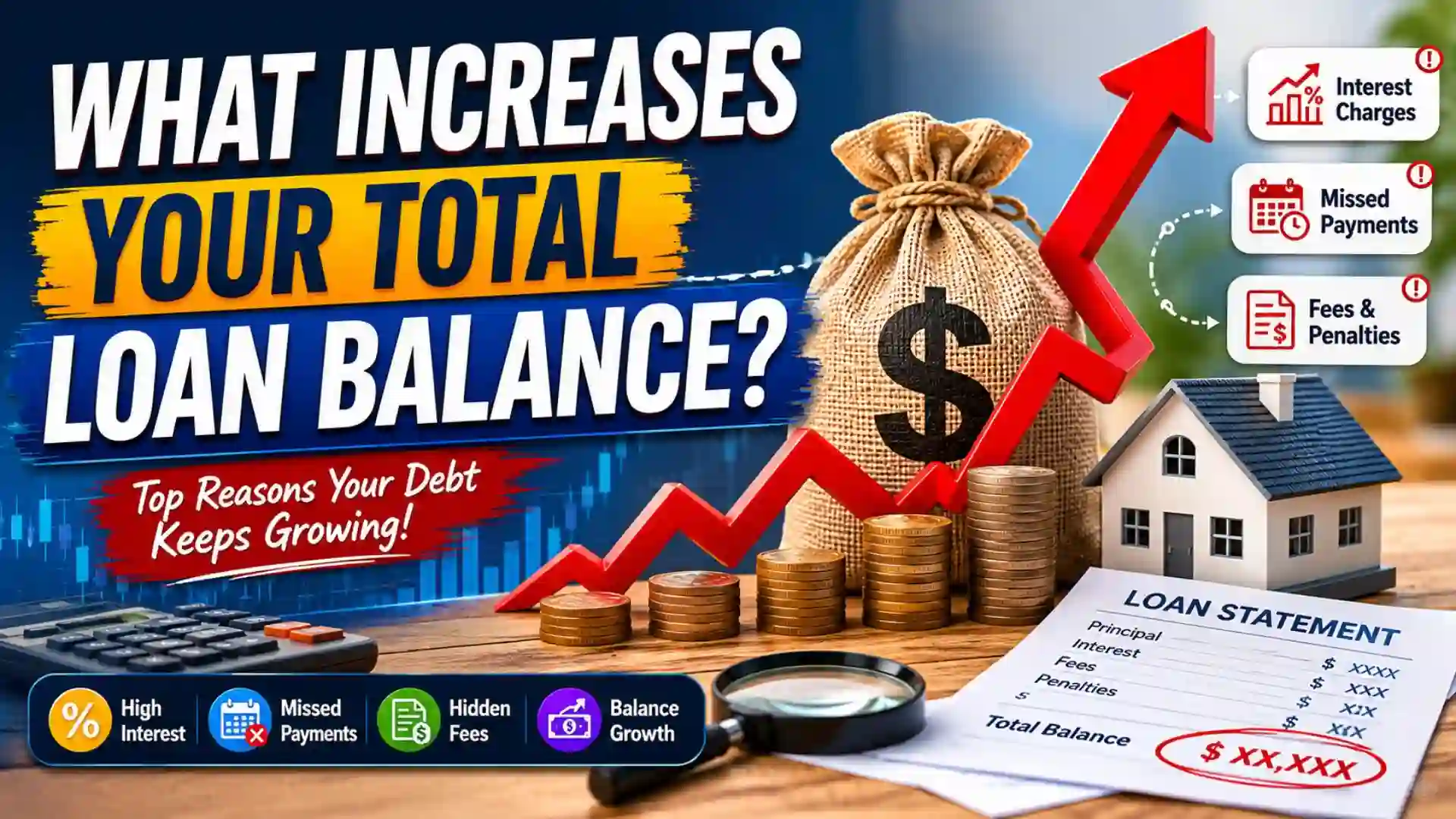
What Increases Your Total Loan Balance? Borrowing money has become a normal part of life for millions of Americans. From student loans and mortgages to auto loans and personal loans, debt helps people achieve important financial goals. However, many borrowers are surprised to see their loan balance increase over time even after making payments. Understanding what increases your total loan balance is essential if you want to avoid unnecessary debt and maintain healthy finances.
A loan balance does not always stay fixed after you borrow money. In many cases, interest charges, fees, missed payments, and repayment strategies can cause the amount you owe to grow significantly. If you do not fully understand how loans work, you may end up paying thousands of dollars more than expected.
This article explains the major factors that increase your total loan balance, how different types of loans behave, and what steps you can take to reduce the amount you owe. This guide is written specifically for borrowers in the United States and covers practical examples relevant to American consumers.
Understanding Loan Balance
Your loan balance is the total amount you still owe to the lender. It includes:
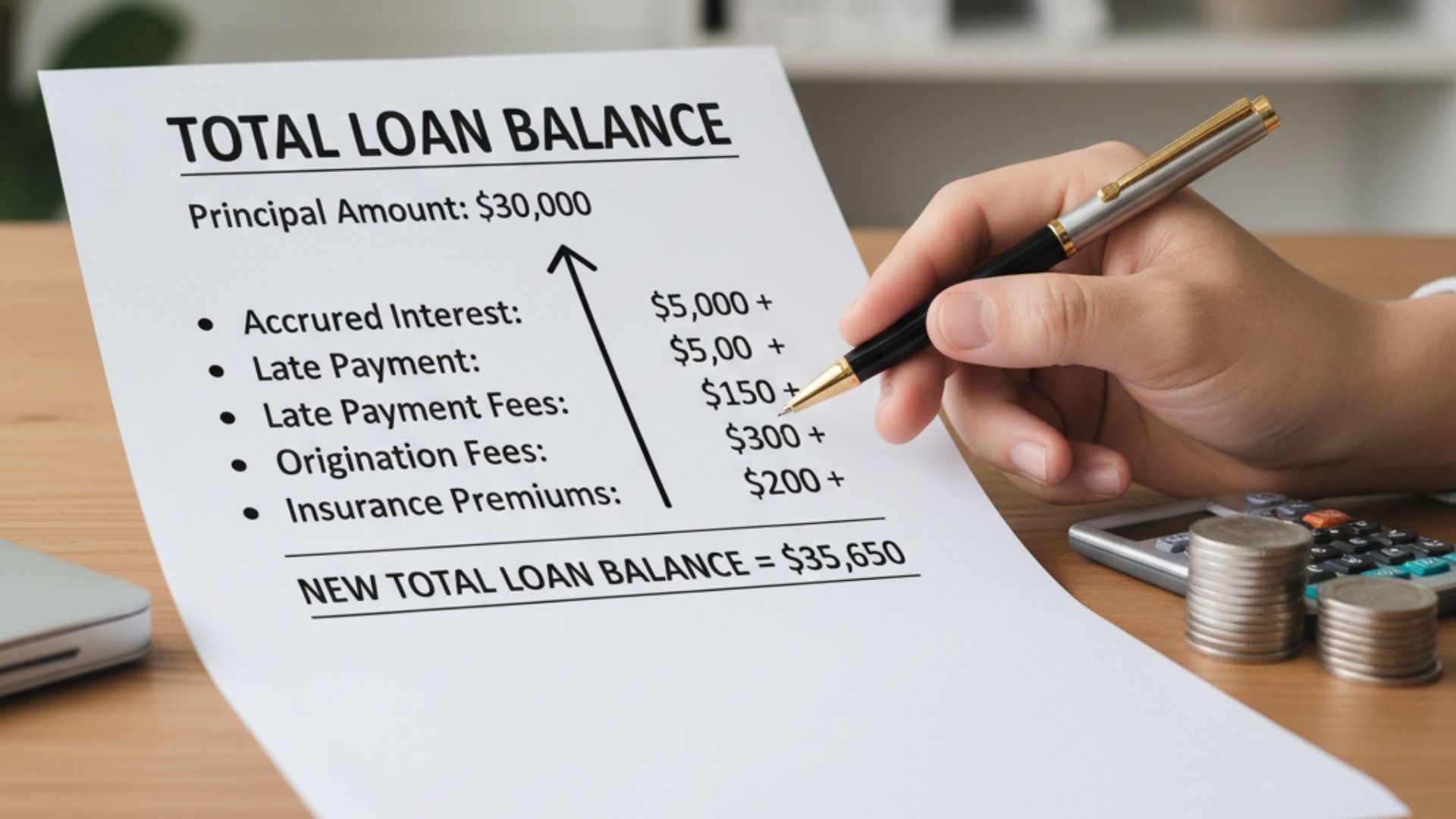
- The original borrowed amount (principal)
- Accrued interest
- Fees or penalties added to the loan
- Any unpaid charges capitalized into the balance
For example, if you take out a $20,000 student loan, your balance starts at $20,000. Over time, interest accumulates. If you miss payments or defer the loan, your balance may rise beyond the original amount.
Understanding how balances grow is the first step toward managing debt responsibly.
Important Loan Information
| Topic | Details |
|---|---|
| Principal | Original amount borrowed |
| Interest | Cost charged by lender for borrowing money |
| Capitalization | Adding unpaid interest to principal |
| Late Fees | Penalties for missed or delayed payments |
| Loan Types | Student loans, mortgages, auto loans, personal loans |
| Credit Score Impact | Missed payments can lower credit scores |
| Common Risk | Paying only minimum payments |
| Best Strategy | Make extra payments toward principal |
| Federal Student Loan Website | https://studentaid.gov/ |
| Consumer Financial Protection Bureau | https://www.consumerfinance.gov/ |
| Federal Trade Commission | https://www.ftc.gov/ |
| Mortgage Information | https://www.hud.gov/ |
| Credit Report Access | https://www.annualcreditreport.com/ |
Interest Accumulation
Interest is the biggest reason loan balances increase. Lenders charge interest as the price for borrowing money.
How Interest Works
Interest is usually calculated as a percentage of your remaining loan balance. The higher the balance, the more interest accrues.
For example:
- Loan amount: $10,000
- Interest rate: 8%
- Annual interest: $800
If you do not make sufficient payments, the interest continues to build.
Daily Interest Accrual
Many loans in the USA use daily interest accrual. This means interest accumulates every day based on your outstanding balance.
If payments are delayed, interest keeps growing continuously. Over months or years, this can add substantial costs to your loan.
Compound Interest
Some loans involve compounding, where unpaid interest gets added to the principal. Then future interest is calculated on the higher amount.
This process causes balances to grow faster over time.
Missed Payments
Missing payments is another major reason your loan balance increases.
Late Fees
Most lenders charge late fees if you fail to make payments on time. These fees are added directly to your balance.
For example:
- Monthly payment due: $300
- Late fee: $35
Your balance immediately increases by the fee amount.
Additional Interest
Missed payments also allow more interest to accumulate because the principal remains unpaid longer.
Damage to Credit Score
Although a lower credit score does not directly increase your current balance, it can lead to higher interest rates on future borrowing.
Interest Capitalization
Interest capitalization occurs when unpaid interest gets added to your principal balance.
This is especially common with federal student loans in the United States.
Example of Capitalization
Suppose you borrow:
- Principal: $25,000
- Unpaid interest: $2,000
After capitalization:
- New principal: $27,000
Future interest is then charged on $27,000 instead of $25,000.
This significantly increases the total repayment amount over time.
Situations That Trigger Capitalization
Interest capitalization often happens when:
- Student loan deferment ends
- Forbearance ends
- Grace periods expire
- Income-driven repayment plans change
- Loans are consolidated
Borrowers who do not understand capitalization can face rapidly growing balances.
Deferred Payments
Loan deferment temporarily pauses required payments, but interest may continue growing.
Federal Student Loans
Some federal student loans subsidize interest during deferment, while others do not.
Unsubsidized loans continue accruing interest even when payments are paused.
Private Loans
Most private lenders continue charging interest during deferment periods.
Mortgage Deferments
Mortgage deferments became common during economic hardships. Deferred amounts usually still need repayment later and may increase total loan costs.
Forbearance
Forbearance allows borrowers to temporarily reduce or pause payments during financial difficulty.
However, interest generally continues to accrue.
Why Forbearance Can Increase Debt?
If payments stop but interest continues:
- Balance grows monthly
- Interest may capitalize later
- Total repayment cost rises
Forbearance can provide short-term relief but may create long-term financial pressure.
Income-Driven Repayment Plans
Income-driven repayment plans are popular for federal student loans because they lower monthly payments.
However, smaller payments may not cover all accrued interest.
Negative Amortization
Negative amortization occurs when payments are too small to reduce principal.
Example:
- Monthly interest: $200
- Monthly payment: $120
The unpaid $80 may be added to the balance.
Over time, the loan balance can grow even while making regular payments.
Minimum Payments
Making only minimum payments is another factor that increases total loan costs.
Credit Cards and Revolving Debt
Credit card debt is especially dangerous because minimum payments often barely cover interest.
A borrower may continue paying for years without significantly reducing the balance.
Long-Term Interest Costs
Even if balances do not rise dramatically, slow repayment increases total interest paid over time.
Adjustable Interest Rates
Some loans have variable interest rates that can increase over time.
Adjustable-Rate Mortgages
Adjustable-rate mortgages (ARMs) start with low introductory rates that later rise.
When rates increase:
- Monthly payments rise
- More interest accrues
- Total loan cost increases
Credit Cards
Many credit cards have variable APRs linked to market rates.
Rising rates increase borrowing costs and make repayment harder.
Loan Fees and Charges
Additional fees can increase your loan balance unexpectedly.
Common Fees
Lenders may charge:
- Origination fees
- Processing fees
- Collection fees
- Late fees
- Returned payment fees
These charges increase the amount owed.
Collection Costs
If a loan enters default, collection agencies may add substantial costs.
Federal student loans can include collection charges that significantly increase balances.
Loan Default
Default happens when borrowers fail to repay according to loan terms.
Consequences of Default
Default can lead to:
- Higher interest charges
- Penalty fees
- Wage garnishment
- Tax refund seizure
- Legal action
Defaulted balances often grow rapidly due to penalties and collection expenses.
Refinancing Mistakes
Refinancing can lower payments, but it may increase total loan costs in some cases.
Longer Loan Terms
Extending repayment terms lowers monthly payments but increases total interest paid.
Example:
- 15-year mortgage vs 30-year mortgage
- Lower monthly payment
- Much higher lifetime interest
Rolling Fees into New Loan
Some refinancing agreements add closing costs to the new balance.
This increases total debt.
Capitalized Interest in Student Loans
Student loans deserve special attention because they frequently involve balance growth.
Common Causes
Student loan balances increase due to:
- In-school deferment
- Grace periods
- Forbearance
- Income-driven repayment
- Capitalization events
Why Borrowers Get Surprised?
Many borrowers assume paused payments mean balances stay frozen. Instead, interest may continue accumulating.
This often shocks graduates when repayment begins.
Mortgage Loan Balance Increases
Although mortgages usually decline over time, certain situations can increase balances.
Escrow Shortages
Property taxes and insurance may rise, creating escrow shortages added to monthly payments.
Missed Mortgage Payments
Late payments lead to:
- Penalties
- Additional interest
- Legal costs
Reverse Mortgages
Reverse mortgages work differently because balances generally increase over time as interest accumulates.
Auto Loan Balance Issues
Auto loans are usually fixed-term loans, but balances can still increase.
Negative Equity
If a vehicle loses value faster than the loan balance decreases, borrowers may owe more than the car is worth.
Rolled-In Debt
Some buyers roll previous car loan debt into a new auto loan, increasing total balance significantly.
Credit Card Debt Growth
Credit card balances can grow rapidly due to high interest rates.
High APRs
Credit cards in the USA often carry APRs above 20%.
This causes balances to rise quickly if payments are small.
Cash Advances
Cash advances usually include:
- Immediate interest
- Higher APRs
- Extra fees
These costs increase balances rapidly.
Payday Loans and Predatory Lending
Payday loans are among the most expensive forms of borrowing.
Extremely High Interest Rates
Some payday lenders charge annual percentage rates exceeding 300%.
Balances can spiral out of control very quickly.
Loan Rollovers
Borrowers who cannot repay often roll over loans into new cycles of debt.
This dramatically increases total repayment amounts.
Economic Factors That Increase Loan Costs
External economic conditions also affect loan balances.
Federal Reserve Rate Changes
When interest rates rise nationally:
- Variable-rate loans become more expensive
- Credit card APRs rise
- Adjustable-rate mortgages increase
Inflation
Inflation may indirectly increase borrowing costs and make repayment more difficult.
Financial Habits That Increase Loan Balance
Borrower behavior plays a major role in debt growth.
Spending Beyond Income
Consistently borrowing more than you can repay leads to rising balances.
Ignoring Loan Statements
Failing to review statements may cause borrowers to miss errors or misunderstand repayment terms.
Using Debt for Nonessential Purchases
Repeated borrowing for luxury or unnecessary expenses can create unsustainable debt.
How to Prevent Your Loan Balance From Increasing?
Understanding the problem is important, but taking action matters even more.
Pay More Than the Minimum
Extra payments reduce principal faster and lower future interest charges.
Make Payments On Time
Avoiding late fees and penalties helps control balance growth.
Pay Interest During Deferment
If possible, pay accrued interest before capitalization occurs.
Choose Shorter Loan Terms
Shorter repayment periods usually reduce total interest costs.
Refinance Carefully
Refinancing can help if it lowers rates without excessively extending repayment periods.
Create a Budget
A strong budget helps borrowers manage debt responsibly and avoid unnecessary borrowing.
Build an Emergency Fund
Emergency savings reduce dependence on loans during financial hardship.
Signs Your Loan Balance Is Becoming Dangerous
Watch for warning signs such as:
- Balance increasing despite payments
- Only paying minimum amounts
- Frequent late payments
- Using loans for daily expenses
- Difficulty understanding statements
- Growing credit card utilization
Recognizing these issues early can prevent serious financial problems.
Importance of Financial Education
Many Americans struggle with debt because they never learned how loans truly work.
Financial literacy helps borrowers:
- Understand interest calculations
- Compare loan offers
- Avoid predatory lending
- Develop repayment strategies
- Protect credit scores
Education is one of the strongest tools against excessive debt.
FAQ about What Increases Your Total Loan Balance?
What is the main thing that increases your total loan balance?
Interest accumulation is the primary factor that increases loan balances. Fees, missed payments, and capitalization also contribute significantly.
Does deferment increase loan balance?
Yes, many loans continue accruing interest during deferment. If unpaid interest capitalizes, the balance increases further.
Why is my student loan balance growing even though I make payments?
This can happen due to negative amortization, where payments do not fully cover accrued interest.
Do late payments increase loan balance?
Yes. Late payments can trigger late fees and additional interest charges.
Can refinancing increase total repayment costs?
Yes. Extending loan terms during refinancing may lower monthly payments but increase overall interest paid.
How can I reduce my loan balance faster?
Pay more than the minimum, make consistent payments, avoid deferment when possible, and reduce high-interest debt first.
What is capitalized interest?
Capitalized interest is unpaid interest added to the principal balance, causing future interest to accrue on a larger amount.
Do credit cards increase balances quickly?
Yes. High APRs and minimum payments can cause balances to grow rapidly.
Are payday loans dangerous?
Payday loans often carry extremely high interest rates and can trap borrowers in cycles of debt.
Can economic conditions affect loan balances?
Yes. Rising interest rates and inflation can increase borrowing costs and repayment difficulty.
Conclusion
Understanding what increases your total loan balance is essential for every borrower in the United States. Interest accumulation, missed payments, capitalization, deferment, forbearance, fees, and poor repayment strategies can all cause debt to grow far beyond the original amount borrowed.
Many borrowers focus only on monthly payments without realizing how interest works behind the scenes. This lack of awareness often leads to long-term financial stress and higher repayment costs. Whether you have student loans, credit card debt, mortgages, auto loans, or personal loans, understanding balance growth can help you make smarter financial decisions.
The best way to control your loan balance is through responsible borrowing, timely payments, careful budgeting, and financial education. Paying more than the minimum, reducing high-interest debt quickly, and avoiding unnecessary fees can save thousands of dollars over the life of a loan.
When borrowers understand how loans function, they gain greater control over their finances and reduce the risk of falling into long-term debt problems.