
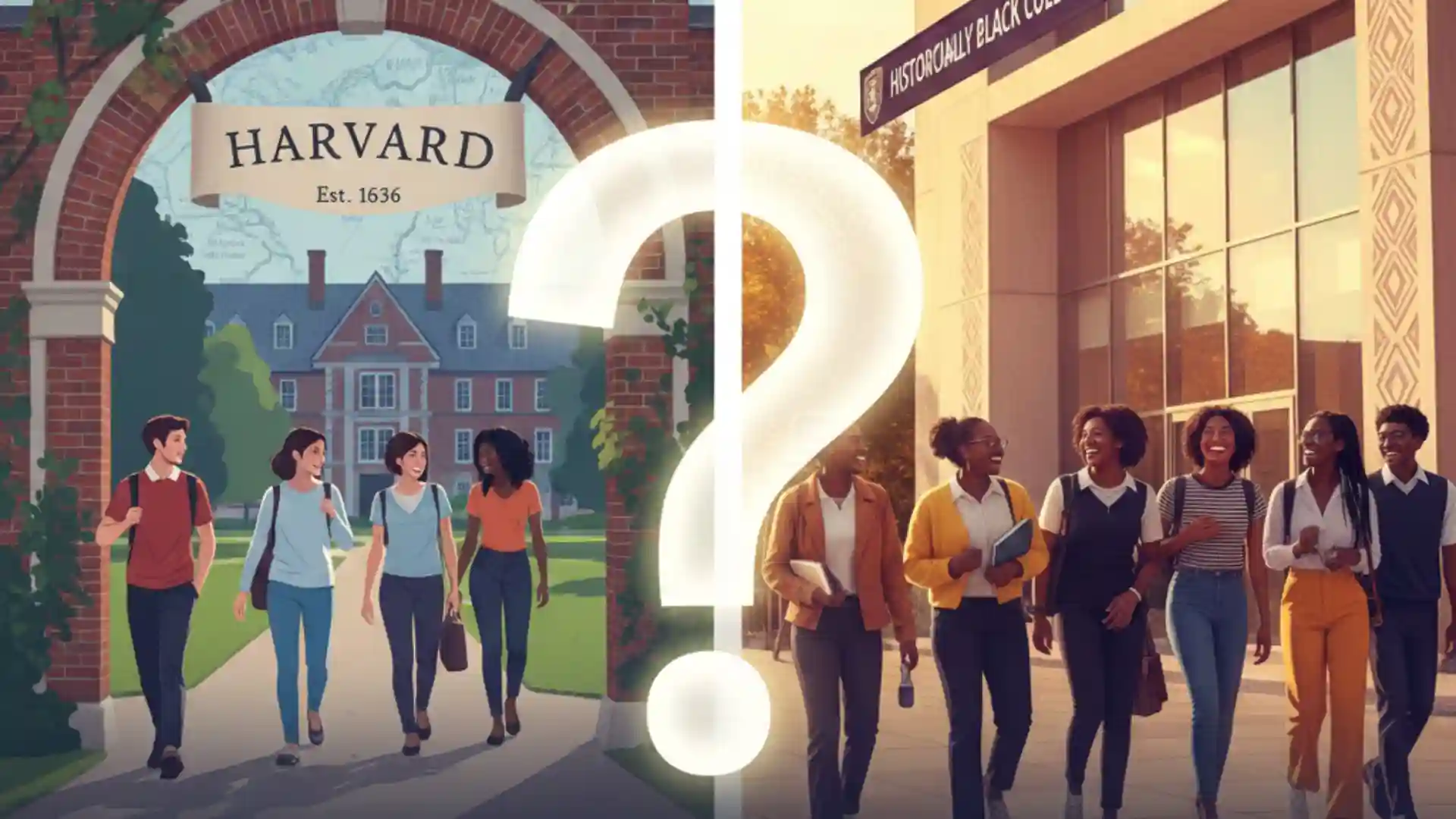
The question “Is Harvard a HBCU?” is asked frequently, especially by students, parents, and readers trying to understand the structure of higher education in the United States. At first glance, the question may seem straightforward, but it opens the door to a deeper discussion about educational history, racial inclusion, institutional missions, and how universities are classified.
Harvard University is one of the most well-known institutions in the world. It is associated with academic prestige, global influence, and centuries of history. Historically Black Colleges and Universities (HBCUs), on the other hand, were created with a specific mission to educate Black Americans during a time when segregation excluded them from most colleges.
Because both Harvard and HBCUs are connected to discussions about race, opportunity, and education, confusion sometimes arises. This article provides a clear, detailed, and historically accurate answer to the question: Is Harvard a HBCU?
Quick Answer: Is Harvard a HBCU?
No, Harvard University is not a HBCU.
Harvard does not meet the legal, historical, or institutional criteria required to be classified as a Historically Black College or University. While Harvard enrolls Black students and supports diversity initiatives, that alone does not qualify an institution as a HBCU.
To understand why, it is necessary to explore what HBCUs are, why they were created, and how Harvard’s history differs.
Important Information at a Glance
| Topic | Details |
|---|---|
| Institution in Question | Harvard University |
| Founded | 1636 |
| Location | Cambridge, Massachusetts |
| HBCU Status | Not a HBCU |
| Definition of HBCU | Colleges founded primarily to educate Black Americans |
| HBCU Establishment Period | Primarily before 1964 |
| Harvard’s Original Mission | Educate clergy and elite colonial leaders |
| Current Student Demographics | Diverse, multi-ethnic |
| Federal HBCU Recognition | No |
| Type of Institution | Private Ivy League university |
What Is a Historically Black College or University (HBCU)?
To understand why Harvard is not a HBCU, it is essential to understand what an HBCU actually is.
Definition of a HBCU
A Historically Black College or University is an institution of higher education that was established primarily to educate Black Americans at a time when they were excluded from most other colleges and universities due to racial segregation.
HBCUs were created in response to:
- Slavery and its aftermath
- Jim Crow segregation laws
- Racial discrimination in education
- Lack of access to higher education for Black Americans
These institutions played a critical role in providing educational opportunities where none existed elsewhere.
Legal and Historical Criteria for HBCUs
In the United States, HBCUs are formally recognized under federal law. According to U.S. classification standards, an institution must meet specific criteria to be designated as an HBCU.
Key requirements include:
- The institution must have been established before 1964
- The institution must have been created primarily to educate Black Americans
- The institution must maintain that mission, even if demographics have diversified
This designation is not informal or symbolic. It is a legal classification that affects funding, grants, and policy considerations.
Why 1964 Matters?
The year 1964 is significant because it marks the passage of the Civil Rights Act, which outlawed segregation in public facilities, including educational institutions.
Before 1964:
- Most colleges excluded Black students explicitly or indirectly
- HBCUs were often the only option for Black Americans seeking higher education
After 1964:
- Colleges could no longer legally deny admission based on race
- Many previously white-only institutions became more diverse
HBCUs existed before integration, not as a result of it.
Harvard University: A Brief Historical Overview
Harvard University was founded in 1636, making it the oldest institution of higher education in the United States.
Original Purpose of Harvard
Harvard was created to:
- Educate clergy for the Massachusetts Bay Colony
- Train colonial leaders
- Serve the educational needs of white, male elites
For much of its early history:
- Admission was limited by race, gender, religion, and class
- Black Americans were largely excluded
Harvard’s early mission was not inclusive by modern standards, nor was it designed to address racial inequality.
Harvard and Black Students: Historical Context
Although Harvard was not founded to educate Black Americans, Black students have attended Harvard at various points in its history.
Early Black Students at Harvard
- A small number of Black students attended Harvard in the 18th and 19th centuries
- Their presence was exceptional, not representative
- Access was limited and often accompanied by discrimination
Harvard did not create programs or policies specifically aimed at educating Black Americans until much later.
Harvard’s Evolution Toward Diversity
In the 20th century, Harvard began to change:
- Expanded admissions policies
- Increased enrollment of students from diverse racial and ethnic backgrounds
- Developed research centers focused on African American studies
- Established diversity and inclusion initiatives
These changes reflect progress, but they do not change Harvard’s historical classification.
Why Diversity Does Not Make an Institution a HBCU?
A common misconception is that any university with a significant Black student population or strong Black studies programs can be considered a HBCU. This is not correct.
Key Distinction
- HBCUs were created for Black education when no alternatives existed
- Harvard diversified after integration became legally required
Intent and origin matter more than current demographics.
Many predominantly white institutions now have diverse student bodies, but that diversity does not redefine their foundational mission.
Ivy League vs HBCU: Key Differences
Harvard belongs to the Ivy League, a group of private universities known for academic prestige and selective admissions.
Ivy League Characteristics
- Founded primarily for elite education
- Historically exclusive
- Significant financial endowments
- Global reputation
HBCU Characteristics
- Founded for racial inclusion
- Historically underfunded
- Mission-driven toward Black empowerment
- Strong community and cultural identity
These two categories emerged from very different social realities.
Can an Institution Become a HBCU Later?
No. Institutions cannot retroactively become HBCUs.
HBCU status is based on:
- Founding purpose
- Historical context
- Federal recognition
A university founded without the mission of educating Black Americans during segregation cannot later be reclassified, regardless of its modern values.
Why the Confusion Exists?
Several factors contribute to confusion about Harvard and HBCUs:
- Increased discussion of race in higher education
- Harvard’s prominent Black alumni
- Strong African American studies programs
- Media coverage of diversity initiatives
While these elements are meaningful, they do not alter institutional classification.
The Importance of HBCUs Today
Understanding why Harvard is not a HBCU also helps clarify why HBCUs remain important today.
HBCUs continue to:
- Produce a high percentage of Black professionals
- Foster leadership in science, politics, and education
- Provide culturally affirming environments
- Serve first-generation college students
Their mission remains distinct and necessary.
Harvard’s Role in Black Education Today
Although not a HBCU, Harvard contributes to Black education in other ways:
- Scholarships and financial aid
- Research on race and inequality
- Academic programs focused on African American history
- Alumni networks that support Black professionals
These efforts are valuable but complementary, not foundational.
FAQ about Is Harvard a HBCU?
Is Harvard officially recognized as a HBCU?
No. Harvard University is not recognized as a Historically Black College or University by any federal or educational authority.
Can a private university be a HBCU?
Yes, many HBCUs are private institutions. However, they must meet the historical and mission-based criteria. Harvard does not meet those criteria.
Does Harvard have Black students?
Yes. Harvard has a racially diverse student body, including Black students from various backgrounds.
Does Harvard support Black studies programs?
Yes. Harvard offers academic programs, research centers, and initiatives focused on African American history, culture, and social issues.
Why are HBCUs still important if universities are integrated?
HBCUs provide culturally supportive environments, address systemic inequality, and continue to play a vital role in educating Black leaders.
Is Harvard better than HBCUs?
This is a subjective question. Harvard and HBCUs serve different missions. One is not inherently “better” than the other; they simply have different purposes and histories.
Are HBCUs only for Black students?
No. While founded to educate Black Americans, HBCUs welcome students of all races today.
Conclusion
So, is Harvard a HBCU? The clear and accurate answer is no.
Harvard University is not a Historically Black College or University because it was not founded with the mission of educating Black Americans during a period of racial exclusion. Its origins, purpose, and historical role differ fundamentally from those of HBCUs.
That distinction does not diminish Harvard’s modern efforts toward inclusion, nor does it lessen the importance of HBCUs. Instead, it highlights the diverse paths institutions have taken within American higher education.
Understanding the difference between Harvard and HBCUs helps preserve historical truth, honors the legacy of institutions created to fight inequality, and clarifies the unique role each plays today.
Both Harvard and HBCUs contribute to education, leadership, and social progress—but they do so from very different foundations, shaped by very different histories.