
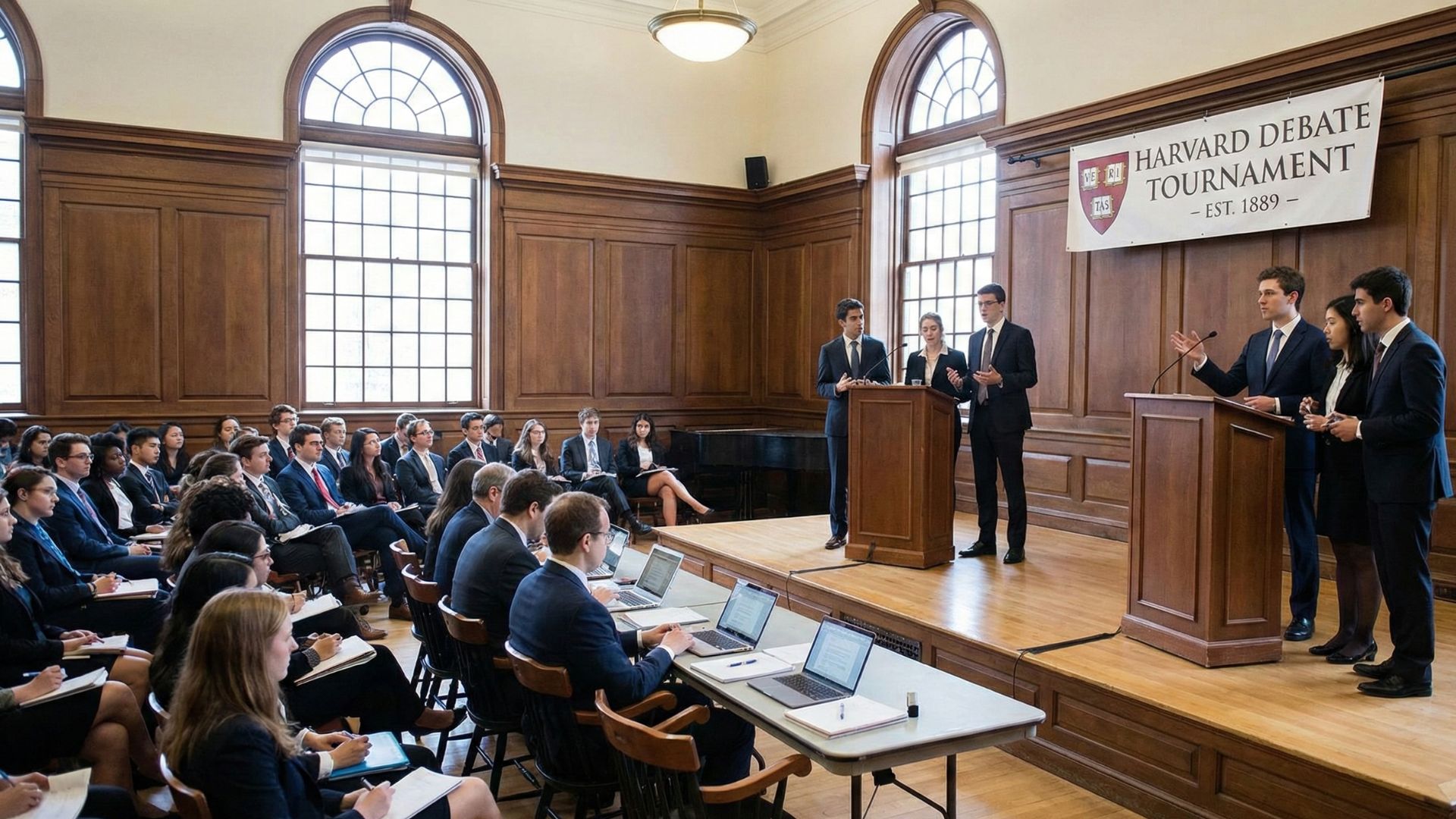
Harvard Debate Tournament: The Harvard Debate Tournament is one of the most respected and highly anticipated competitive academic events in the world. Hosted annually by Harvard University, the tournament has a long history of excellence, intellectual rigor, and global participation. It attracts high school and college debaters from numerous countries, making it one of the largest and most influential competitions in the debate community.
For decades, the tournament has been recognized as a benchmark of academic debate, blending tradition with innovation and providing students with a platform to sharpen their critical thinking, argumentation, public speaking, and research skills. Whether you are a student planning to participate, a coach preparing a team, or a parent looking to understand the significance of this event, this comprehensive guide offers an in-depth look at everything you need to know about the Harvard Debate Tournament.

In this article, we will explore the history, significance, tournament structure, debate formats, judging, scoring, awards, and preparation strategies associated with the tournament. We will also provide a detailed table of important links and resources, followed by frequently asked questions and a final conclusion summing up the importance of the Harvard Debate Tournament in shaping future leaders and thinkers.
Introduction to the Harvard Debate Tournament
The Harvard Debate Tournament is celebrated for its exceptional organizational quality and academic prestige. Hosted on the campus of Harvard University, the tournament includes multiple debate and speech categories, attracting thousands of students, teachers, and judges every year.
Unlike many regional tournaments, the Harvard debate event is international in scope. It often includes participants from various parts of the world, including Asia, Europe, the Middle East, and the Americas. The competition usually spans several days and includes elimination rounds that test the depth of a debater’s research, argumentative structure, cross-examination skills, and ability to respond under pressure.
The tournament is often considered a gateway to national and international debate prominence because winning or performing well here reflects a strong academic and competitive foundation. Many champions of the Harvard Debate Tournament have gone on to excel in law, politics, journalism, academia, and business leadership.
History and Origins of the Harvard Debate Tournament
Harvard University has one of the oldest debate societies in the United States. The early versions of the tournament date back to the traditions of literary and debating clubs that existed long before the modern tournament format emerged.
The competitive event evolved significantly in the late twentieth century as debate gained popularity in high schools across the United States. Harvard soon became a centerpiece of the national debate circuit due to its prestigious name and the high caliber of participants it attracted.
Today, the Harvard Debate Tournament stands as a symbol of academic excellence. It is generally held every year, typically during the spring or winter debate season, depending on the category and age group. Major formats include public forum, policy debate, Lincoln Douglas (LD), parliamentary debate, and speech events.
Why the Harvard Debate Tournament Is Prestigious?
Several factors contribute to the global reputation of this event:
Association with Harvard University
The Harvard name carries immense academic prestige. Participating in a tournament hosted by such an institution adds a layer of credibility and accomplishment for debaters.
International Participation
The tournament is not limited to American institutions. Many schools from outside the United States send delegations, making it a diverse intellectual environment.
High-Level Competition
Participants often include some of the most experienced and well-trained debaters in the world. This creates a challenging and rewarding competitive atmosphere.
Professionalized Judging
Judges often include experienced debaters, coaches, and alumni who understand the nuances of debate formats, ensuring fair and constructive feedback.
Exposure and Opportunities
Success at the Harvard Debate Tournament is often recognized by colleges, scholarship committees, and debate organizations. It opens doors to future opportunities in debate and academic pursuits.
Debate Formats Offered at the Tournament
The Harvard Debate Tournament typically includes several major categories. While formats may vary slightly each year, common divisions include:
Public Forum Debate
Public Forum (PF) involves teams of two debating a monthly resolution related to current global issues. Known for being accessible to general audiences, PF emphasizes clarity, persuasion, and real-world analysis.
Lincoln Douglas Debate
LD debate is a one-on-one format focusing on philosophical and ethical issues. Competitors are judged on logic, moral reasoning, and analytical depth.
Policy Debate
Policy debate features two-person teams arguing a yearlong resolution on governmental policy. It is known for speed, rigorous research, and detailed evidence use.
Parliamentary Debate
Often used in college tournaments, parliamentary debate features impromptu resolutions and limited preparation time, testing quick thinking and rhetorical skills.
Speech Events (Individual Events)
These include:
- Original Oratory
- Extemporaneous Speaking
- Dramatic Interpretation
- Humorous Interpretation
- Duo Interpretation
Each category challenges students to demonstrate creativity, clarity, and compelling delivery.
Structure and Flow of the Tournament
Although the structure may differ slightly each year, most Harvard debate competitions follow similar patterns:
Registration and Check-In
Participants register in advance, and teams must check in before the event begins.
Preliminary Rounds
All teams typically compete in several preliminary rounds to determine rankings.
Elimination Rounds
Top-ranked teams advance to elimination rounds such as:
- Double Octafinals
- Octafinals
- Quarterfinals
- Semifinals
- Finals
Final Rounds and Awards
The final rounds determine the tournament champions, followed by awards and recognition ceremonies.
How Judging Works?
Judging guidelines depend on the debate category, but common criteria include:
- Strength of arguments
- Evidence quality
- Organization and structure
- Cross-examination performance
- Responsiveness to opposing arguments
- Persuasiveness
- Speaking clarity
- Strategy and impact analysis
Most judges provide written or oral feedback to help students improve.
Preparation Strategies for Participants
Understand the Resolution Thoroughly
Deep research is crucial to success. Debaters should analyze all aspects of the topic, including philosophical, political, economic, and social implications.
Practice with Realistic Tournament Conditions
Simulating rounds with teammates or coaches helps reduce stress and improve performance.
Develop both Speaking and Listening Skills
Winning debates requires not just presenting strong arguments but also effectively responding to opponents.
Maintain Organized Evidence Files
Being able to quickly locate and reference evidence is essential, especially in timed rounds.
Focus on Cross-Examination Techniques
Sharp questioning can reveal weaknesses in the opponent’s case or strengthen your own.
Benefits of Participating in the Harvard Debate Tournament
Students gain several long-term benefits:
Enhanced Critical Thinking
Debate challenges students to approach issues from multiple angles.
Strong Communication Skills
Public speaking improves confidence, articulation, and clarity.
Research and Analysis Skills
Debaters learn to evaluate sources, synthesize information, and build logical arguments.
College Application Advantage
Participation in a major international tournament adds academic distinction.
Networking Opportunities
Students meet peers, coaches, and judges from around the world, creating academic and professional connections.
Important Links and Information
| Category | Description | Link |
|---|---|---|
| Official Harvard University Website | General information about Harvard University | https://www.harvard.edu |
| Harvard Debate Council | Organizers of many Harvard debate programs | https://www.harvard.edu (use navigation to find debate section) |
| Sample Debate Formats | Overview of common debate formats | Various online resources |
| Tournament Registration | Registration details for upcoming tournaments | Provided by Harvard Debate Council or hosting partners |
| Travel Information | Campus maps, directions, and accommodations | https://www.harvard.edu/visit |
FAQ about Harvard Debate Tournament
What is the Harvard Debate Tournament?
It is an annual academic debate competition hosted by Harvard University, attracting high school and college students from around the world.
Who can participate in the Harvard Debate Tournament?
Eligibility varies by category, but most tournaments are open to high school or college students registered through their school, debate club, or coach.
What formats are offered?
Common formats include public forum, policy debate, parliamentary debate, Lincoln Douglas debate, and various speech events.
How competitive is the tournament?
The Harvard Debate Tournament is highly competitive, often featuring some of the strongest debate teams globally.
Are there registration fees?
Yes, most participants must pay entry fees, which vary by category and team size.
Do you need a coach to participate?
While not always mandatory, having a coach improves preparation and understanding of rules and judging.
What do winners receive?
Winners typically receive trophies, certificates, and recognition. More importantly, they gain prestige within the debate community.
How long does the tournament last?
It typically lasts several days, depending on the number of participants and debate categories.
Conclusion
The Harvard Debate Tournament stands as one of the most influential and respected academic competitions in the world. Its long-standing tradition of intellectual excellence, coupled with its association with Harvard University, makes it a landmark event for students seeking to challenge themselves in debate, argumentation, and public speaking.
With its diverse formats, rigorous structure, and international participation, the tournament offers invaluable opportunities for academic growth, personal development, and competitive achievement. Whether students aim to improve their communication skills, strengthen their college applications, or explore careers in law, politics, or public service, the experience gained from participating in this tournament is transformative.
By understanding the history, structure, judging criteria, and preparation strategies of the Harvard Debate Tournament, participants can approach the competition with confidence and clarity. Ultimately, the tournament represents more than just winning or losing; it is a celebration of knowledge, inquiry, leadership, and the power of thoughtful discourse.