
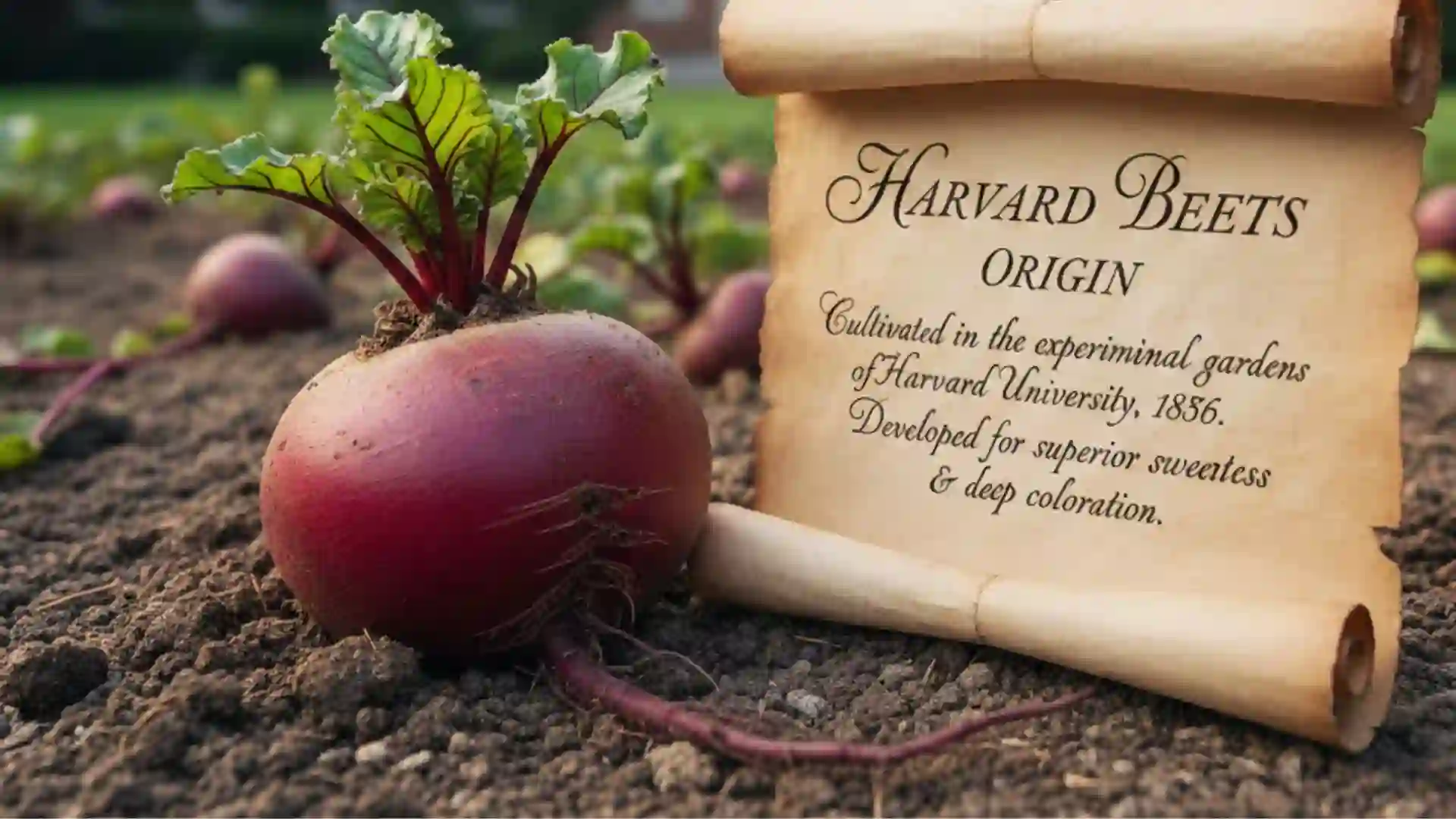
Harvard Beets Origin: The term Harvard beets refers to a distinctive American beet preparation known for its deep crimson color, glossy sweet-and-sour glaze, and association with traditional New England cuisine. Despite the academic-sounding name, Harvard beets are not officially connected to a university curriculum or research program. Instead, the dish has roots in early American cooking traditions and reflects the agricultural abundance of beets in the northeastern United States.
Understanding the origin of Harvard beets requires exploring three interrelated topics:
- The botanical and historical background of beets as a crop.
- The culinary development of sweet-and-sour beet dishes in America.
- The evolution of the “Harvard” naming tradition.
This comprehensive article examines the historical background, cultural influences, agricultural development, naming theories, and modern adaptations of Harvard beets. It also includes a detailed table of important information, frequently asked questions, and a conclusion.
The Botanical Origin of Beets
Before exploring Harvard beets specifically, it is important to understand the origin of the beet itself.
The common beet, scientifically known as Beta vulgaris, is believed to have originated in the Mediterranean region. Early civilizations cultivated beet varieties primarily for their leaves rather than their roots. Over time, selective breeding emphasized the root, leading to the development of modern table beets.
Ancient History of Beets
- Ancient Greeks and Romans cultivated beets for medicinal and culinary purposes.
- Early beet varieties were long and thin rather than round.
- The red color intensified through agricultural selection during the Middle Ages.
By the 16th and 17th centuries, beets became widely cultivated across Europe. European settlers brought beet seeds to North America, where the crop adapted well to the temperate climate.
Beets in Early American Agriculture
Beets became a staple crop in colonial America due to several advantages:
- Hardy growth in cooler climates
- Long storage capability
- Nutritional value
- Versatility in cooking
In New England, where agricultural cycles were shaped by long winters and short growing seasons, root vegetables like beets were particularly valuable. Beets could be stored in cellars for months and preserved through pickling or cooking.
By the 18th and 19th centuries, beets were firmly established in American kitchens.
The Culinary Roots of Harvard Beets
Sweet-and-Sour Tradition
The preparation style associated with Harvard beets—sweet and sour—has European culinary roots. German, Eastern European, and Jewish cuisines featured sweet-sour vegetable dishes long before they became popular in America.
The classic preparation typically includes:
- Cooked sliced beets
- Vinegar
- Sugar
- Butter
- Cornstarch or flour (to thicken)
- Occasionally cloves or cinnamon
This combination produces a glossy glaze that balances acidity and sweetness.
American Adaptation
In the United States, especially in New England, this sweet-and-sour preparation evolved into what became known as Harvard beets. The dish became common in:
- Church gatherings
- Holiday meals
- School cafeterias
- Institutional dining halls
Its vibrant color and relatively simple ingredients made it visually appealing and affordable.
Theories Behind the Name “Harvard Beets”
One of the most debated aspects of Harvard beets is the origin of the name. Several theories exist, though none are definitively proven.
1. Color Association Theory
The most widely accepted explanation is that the name references the deep crimson color of the beets, which resembles the signature color associated with Harvard University. The rich red glaze closely matches the institution’s traditional color.
Over time, the dish may have been informally referred to as “Harvard-style” due to this resemblance.
2. New England Regional Theory
Because Harvard University is located in Cambridge, Massachusetts, some historians suggest that the dish gained popularity in New England and became associated with the region. The name may reflect regional pride rather than direct institutional involvement.
3. Marketing Influence Theory
In the late 19th and early 20th centuries, food companies frequently used prestigious names to elevate everyday dishes. Attaching the word “Harvard” to a beet recipe could have been a marketing strategy to make the dish sound refined or upscale.
4. Cookbook Attribution Theory
Some culinary historians believe the term may have first appeared in regional cookbooks. Once printed, the name likely spread rapidly through household cooking traditions.
While no single theory is universally accepted, the color association theory remains the most plausible explanation.
Evolution of the Recipe Over Time
Early Versions
Early Harvard beet recipes were simple and used pantry staples:
- Fresh garden beets
- Apple cider vinegar
- Brown sugar
- Butter
Cornstarch was later added to create the signature thick glaze.
Mid-20th Century Popularity
Harvard beets gained widespread popularity during the mid-1900s. Canned beet products became common, and food manufacturers included Harvard-style preparation instructions on labels.
The dish became particularly associated with:
- Thanksgiving dinners
- Christmas meals
- Sunday family gatherings
Modern Adaptations
Today, Harvard beets can be prepared using:
- Fresh roasted beets
- Canned sliced beets
- Balsamic vinegar instead of cider vinegar
- Maple syrup instead of refined sugar
Health-conscious variations reduce sugar content or use plant-based butter alternatives.
Nutritional Profile of Beets
Beets are not only visually striking but nutritionally valuable.
Key Nutrients
- Folate
- Potassium
- Fiber
- Vitamin C
- Iron
Beets are also rich in natural nitrates, which may support cardiovascular health.
However, traditional Harvard beet recipes contain added sugar and butter, increasing calorie content. Modern variations aim to preserve flavor while reducing excess sweetness.
Cultural Significance in American Cuisine
Harvard beets represent more than a side dish; they reflect:
- Agricultural self-sufficiency
- Regional New England identity
- Sweet-and-sour culinary traditions
- Institutional dining history
They frequently appear in community cookbooks, which preserve local heritage and family traditions.
Agricultural Development of Beet Varieties
Over centuries, beet breeding has led to:
- Round, uniform roots
- Improved sweetness
- Enhanced color intensity
- Greater disease resistance
Modern beet farming in the United States occurs in several regions, including:
- Midwest states
- Pacific Northwest
- Northeastern farms
While Harvard beets are not a distinct beet variety, the dish relies heavily on high-quality table beets.
Important Links and Information
Below is a structured table summarizing important aspects related to Harvard beets and their origin.
| Category | Information |
|---|---|
| Botanical Name | Beta vulgaris |
| Geographic Origin of Beets | Mediterranean Region |
| Arrival in North America | 17th Century (Colonial Period) |
| Culinary Style | Sweet-and-Sour Glazed Vegetable Dish |
| Primary Ingredients | Beets, Vinegar, Sugar, Butter, Thickener |
| Color Significance | Deep Crimson (Associated with Harvard Color) |
| Popular Region in U.S. | New England |
| Peak Popularity Period | Mid-20th Century |
| Common Occasions Served | Holiday Meals, Church Suppers, Family Gatherings |
| Modern Variations | Reduced Sugar, Balsamic Glaze, Vegan Butter |
| Nutritional Highlights | Folate, Potassium, Fiber |
| Preservation Methods | Canning, Pickling, Refrigeration |
Harvard Beets in Institutional Dining
The dish gained prominence in:
- School cafeterias
- University dining halls
- Military mess halls
Its low cost, ease of preparation, and strong visual appeal made it practical for large-scale cooking.
Institutional adoption helped standardize the name and spread it nationwide.
Comparison with Other Beet Preparations
Pickled Beets
- Strong vinegar flavor
- Stored long-term
- No thick glaze
Roasted Beets
- Earthy flavor
- Caramelized texture
- Often served in salads
Borscht
- Beet-based soup
- Eastern European origin
- Includes broth and additional vegetables
Harvard Beets
- Sweet and tangy glaze
- Served warm
- Thickened sauce coating
Harvard beets stand out due to their balance of sweetness and acidity.
Economic Factors Behind Popularity
Several factors contributed to the rise of Harvard beets:
- Affordable ingredients
- Ease of preservation
- Seasonal availability
- Institutional adoption
- Cultural familiarity
During periods of economic difficulty, simple vegetable dishes became especially important.
FAQ about Harvard Beets Origin
Are Harvard beets connected to Harvard University?
There is no official institutional connection. The name most likely refers to the crimson color associated with Harvard.
When did Harvard beets first appear?
The exact date is unclear, but they became widely recognized in American cookbooks during the late 19th and early 20th centuries.
What makes Harvard beets different from pickled beets?
Harvard beets are served warm with a thick sweet-and-sour glaze, whereas pickled beets are preserved in vinegar and served cold.
Are Harvard beets healthy?
Beets themselves are nutritious, but traditional recipes contain added sugar and butter. Healthier versions reduce these ingredients.
Why are they redder than other dishes?
Beets naturally contain betalain pigments, which give them their intense red color.
Can Harvard beets be made vegan?
Yes. Butter can be replaced with plant-based alternatives.
Were Harvard beets popular nationwide?
Yes, especially in the mid-20th century when canned vegetables became common.
Is Harvard beet a specific beet variety?
No. The term refers to a preparation style, not a distinct cultivar.
Conclusion
The origin of Harvard beets lies at the intersection of agricultural history, European culinary traditions, and American regional identity. While the beet itself traces back to the Mediterranean, its transformation into the sweet-and-sour Harvard-style dish reflects the creativity and practicality of American home cooking.
The name likely stems from the dish’s deep crimson color, reminiscent of Harvard’s traditional shade, rather than any direct institutional affiliation. Over time, the dish became a staple in New England kitchens, institutional cafeterias, and holiday tables across the United States.
Today, Harvard beets remain a symbol of traditional American comfort food. Whether prepared from scratch with fresh garden beets or adapted into modern, health-conscious variations, the dish continues to reflect centuries of agricultural evolution and culinary adaptation.
Understanding the history of Harvard beets provides insight not only into a single recipe but also into broader themes of food migration, regional identity, and cultural continuity.