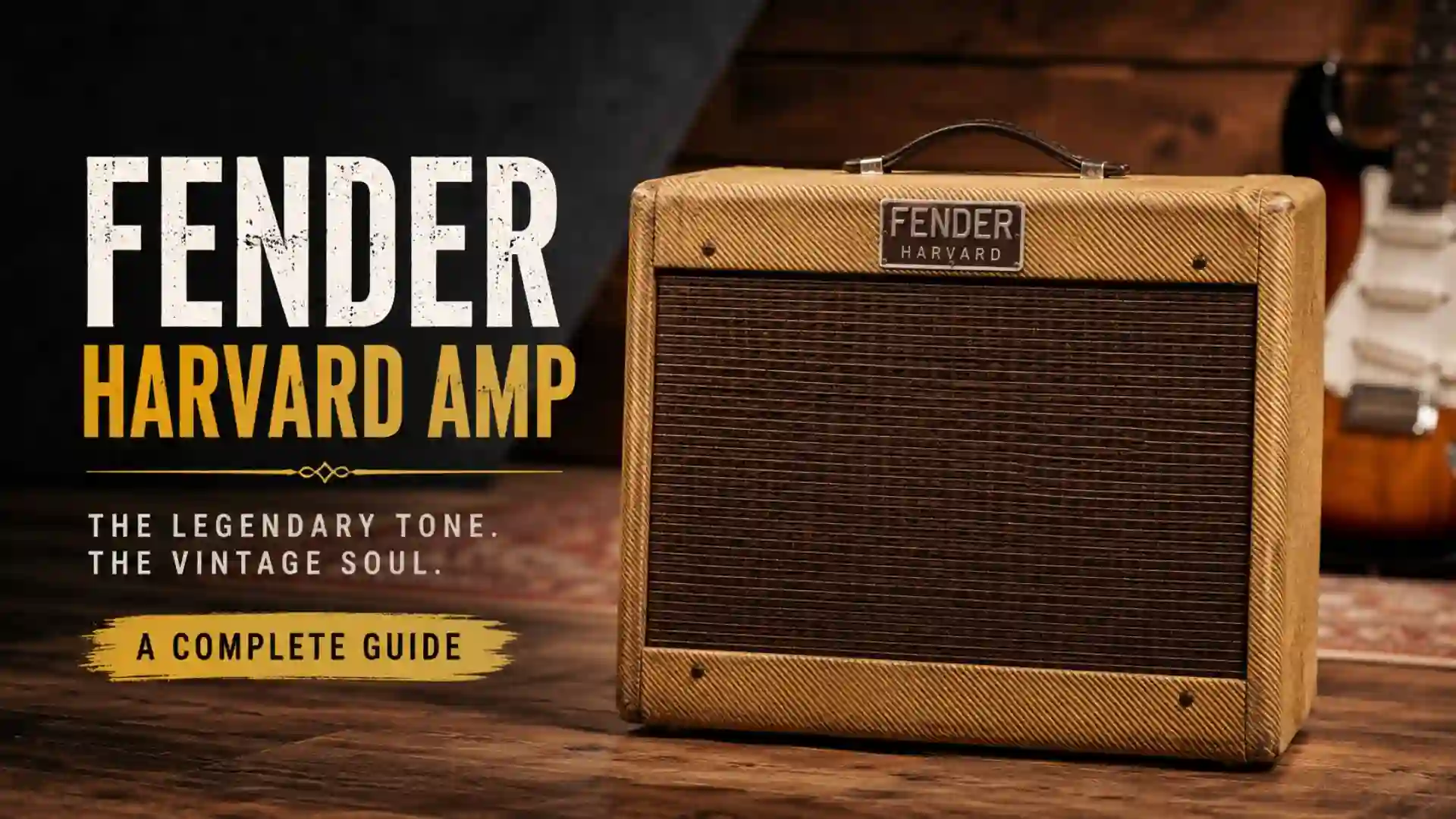
The Fender Harvard Amp is one of the most respected and collectible vintage guitar amplifiers ever produced by Fender. While amplifiers such as the Twin Reverb, Deluxe Reverb, and Bassman often dominate discussions among guitar players, the Harvard occupies a unique place in amplifier history. Known for its warm tones, dynamic response, and compact design, the Harvard amplifier helped shape the sound of countless recordings during the golden age of electric guitar music.
For musicians, collectors, and vintage gear enthusiasts, the Fender Harvard represents more than just an amplifier. It symbolizes an era when amplifier designs focused on simplicity, musicality, and pure tube-driven sound. Despite its relatively modest power output, the Harvard delivers exceptional tonal character that continues to attract players decades after its original production.
This article explores the history, design, specifications, sound characteristics, advantages, disadvantages, collectibility, and modern relevance of the Fender Harvard Amp.
Important Information and Links
| Information | Details |
|---|---|
| Product Name | Fender Harvard Amp |
| Manufacturer | Fender Musical Instruments Corporation |
| Amplifier Type | Tube Guitar Amplifier |
| Original Production Era | 1950s and Early 1960s |
| Circuit Family | Tweed Era Fender Amplifiers |
| Power Output | Approximately 10–15 Watts |
| Speaker Configuration | Single Speaker Design |
| Best For | Blues, Jazz, Rock, Vintage Tones |
| Amplifier Technology | All-Tube Circuit |
| Collector Value | High Among Vintage Fender Enthusiasts |
| Portability | Compact and Lightweight |
| Tone Character | Warm, Dynamic, Responsive |
| Suitable Venues | Studio Recording, Small Gigs, Practice Sessions |
| Modern Reissues | Limited Availability |
| Official Fender Website | https://www.fender.com |
History of the Fender Harvard Amp
The Fender Harvard amplifier was introduced during the 1950s, a period often regarded as the golden age of amplifier development. During this time, Fender was producing some of the most influential amplifiers in music history.
The Harvard was positioned between smaller practice amplifiers and larger stage-ready models. It offered enough power for rehearsals, small performances, and recording sessions while remaining compact and easy to transport.
The amplifier became especially popular among blues and early rock musicians who appreciated its ability to produce natural tube overdrive at manageable volume levels. Unlike larger amplifiers that required significant volume to reach saturation, the Harvard could achieve rich harmonic distortion without overwhelming a room.
Today, vintage Harvard amplifiers are highly sought after by collectors because of their rarity and historical significance.
Design Philosophy
One reason the Fender Harvard remains admired is its straightforward design philosophy.
During the 1950s, amplifier engineers focused on creating equipment that enhanced the natural sound of the guitar rather than heavily modifying it. The Harvard follows this philosophy perfectly.
The amplifier was designed to provide:
- Clear clean tones
- Smooth overdrive characteristics
- Responsive touch sensitivity
- Reliable tube performance
- Simple control layout
Rather than overwhelming users with numerous controls and effects, the Harvard encourages players to shape their tone through their playing technique and guitar controls.
This simplicity contributes significantly to the amplifier’s enduring popularity.
Technical Specifications
Although different versions of the Harvard existed over the years, several common characteristics define the amplifier.
Power Output
The Fender Harvard generally produces around 10 to 15 watts of power. While this may seem modest by modern standards, tube wattage behaves differently than solid-state wattage.
These watts provide enough volume for:
- Recording studios
- Home practice
- Small clubs
- Rehearsals
- Blues performances
Tube Configuration
The Harvard uses vacuum tubes for both preamp and power sections.
Tube amplification contributes to:
- Rich harmonic content
- Smooth compression
- Dynamic response
- Warm tonal character
Many guitarists continue to prefer tube amplifiers because they react naturally to playing dynamics.
Speaker Setup
Most Harvard models feature a single speaker configuration.
Benefits include:
- Focused sound projection
- Reduced weight
- Excellent midrange presence
- Easier transportation
The single-speaker design helps create the distinctive voice associated with vintage Fender amplifiers.
Control Layout
Typical controls include:
- Volume
- Tone
The minimal control set makes operation simple and intuitive.
Players can quickly dial in usable tones without spending excessive time adjusting settings.
Sound Characteristics
The Fender Harvard is famous primarily because of its tone.
Many guitarists describe the Harvard sound as:
- Warm
- Organic
- Responsive
- Dynamic
- Articulate
The amplifier excels at translating the player’s touch into sound.
Clean Tones
At lower volume levels, the Harvard produces clear and detailed clean tones.
Characteristics include:
- Sparkling highs
- Smooth mids
- Tight bass response
- Excellent note separation
These qualities make the amplifier ideal for:
- Jazz
- Country
- Surf
- Traditional blues
Overdriven Tones
When pushed harder, the Harvard begins to generate natural tube overdrive.
Unlike harsh distortion, tube overdrive offers:
- Smooth clipping
- Rich harmonics
- Increased sustain
- Musical compression
Many recording engineers appreciate this type of overdrive because it sits well in a mix.
Touch Sensitivity
One of the Harvard’s strongest qualities is touch sensitivity.
Players can transition from clean to gritty tones simply by changing picking intensity.
This dynamic interaction creates a more expressive playing experience.
Why Guitarists Love the Fender Harvard?
Several factors explain why the Harvard continues to attract musicians.
Authentic Vintage Tone
The Harvard delivers a sound that many modern amplifiers attempt to replicate.
Its authentic tube circuit creates a tonal richness difficult to duplicate using digital technology.
Recording Excellence
Many engineers consider lower-powered tube amplifiers ideal for recording.
Advantages include:
- Easier microphone placement
- Natural saturation
- Controlled volume levels
- Detailed harmonic content
The Harvard excels in studio environments where tonal quality matters more than sheer volume.
Simplicity
Modern amplifiers often include dozens of controls, channels, and effects.
The Harvard takes a different approach.
Its straightforward design encourages musicians to focus on playing rather than adjusting settings.
Portability
Compared to larger Fender amplifiers, the Harvard is easier to transport.
This portability makes it attractive for:
- Session musicians
- Small venue performers
- Traveling artists
Comparison with Other Vintage Fender Amplifiers
Harvard vs Princeton
The Princeton is another compact Fender amplifier.
The Harvard generally offers:
- More aggressive overdrive
- Slightly higher output
- Stronger midrange response
The Princeton typically provides cleaner tones for longer before breaking up.
Harvard vs Deluxe
The Deluxe offers greater volume and headroom.
However, the Harvard often reaches desirable tube saturation at lower levels.
This makes the Harvard particularly appealing for studio use.
Harvard vs Champ
The Champ is smaller and lower powered.
Compared to the Champ, the Harvard provides:
- Fuller sound
- Greater projection
- Improved low-end response
Many players view the Harvard as a natural upgrade from the Champ.
Collectibility and Market Value
Vintage Fender Harvard amplifiers have become increasingly collectible.
Several factors contribute to their value:
Rarity
Production numbers were relatively limited compared to more famous Fender models.
As a result, surviving examples are difficult to find.
Historical Importance
The Harvard represents an important chapter in amplifier development.
Collectors value equipment that helped shape modern electric guitar sound.
Original Components
Amplifiers retaining original:
- Transformers
- Speakers
- Tubes
- Cabinets
often command premium prices.
Condition
Market value depends heavily on:
- Cosmetic condition
- Functional condition
- Originality
- Service history
Well-preserved examples can achieve impressive prices in the vintage market.
Who Should Buy a Fender Harvard Amp?
The Fender Harvard is ideal for several types of musicians.
Vintage Gear Enthusiasts
Collectors appreciate the amplifier’s historical significance and rarity.
Blues Guitarists
The Harvard’s natural overdrive complements blues playing exceptionally well.
Studio Musicians
Recording artists benefit from its manageable volume and rich tube tone.
Jazz Players
Its clean sound characteristics make it suitable for traditional jazz styles.
Home Recording Creators
Modern home studios often prefer lower-powered amplifiers that can be pushed harder without excessive volume.
The Harvard fits this requirement perfectly.
Advantages of the Fender Harvard Amp
The amplifier offers numerous strengths.
Excellent Tube Tone
The Harvard produces authentic vintage sound that remains highly desirable.
Dynamic Response
The amplifier reacts naturally to playing technique.
Compact Design
Its smaller size improves portability and convenience.
Recording-Friendly Power
The wattage level is well suited for studio applications.
High Collectible Value
Vintage examples often appreciate in value over time.
Potential Drawbacks
No amplifier is perfect.
Potential limitations include:
Limited Volume
Players performing in large venues may require additional amplification.
Maintenance Requirements
Vintage tube amplifiers require periodic servicing.
Availability
Finding an original Harvard can be challenging.
Cost
Collectible vintage equipment often commands premium prices.
Modern Alternatives
For musicians unable to acquire an original Harvard, several alternatives exist.
Modern options include:
- Fender Princeton Reverb
- Fender Blues Junior
- Fender ’57 Custom Series
- Boutique Tweed-Style Amplifiers
- Hand-Wired Vintage Reproductions
These amplifiers attempt to capture some of the tonal qualities associated with classic Fender designs.
Tips for Maintaining a Vintage Harvard Amp
Proper maintenance is essential for preserving performance and value.
Store Properly
Keep the amplifier in a dry environment.
Service Regularly
Qualified technicians should inspect vintage electronics periodically.
Use Quality Tubes
High-quality replacement tubes help maintain optimal tone.
Protect Original Components
Avoid unnecessary modifications that may reduce collector value.
Transport Carefully
Vintage cabinets and speakers require gentle handling.
The Legacy of the Fender Harvard
Although it may not enjoy the same mainstream recognition as some larger Fender amplifiers, the Harvard has earned legendary status among knowledgeable guitarists.
Its combination of portability, responsiveness, tube warmth, and historical significance makes it one of the most respected vintage amplifiers ever produced.
The Harvard demonstrates that great tone does not necessarily require high wattage or complex features. Instead, exceptional design and quality components can create a musical instrument that remains relevant for generations.
FAQ about Fender Harvard Amp
What is the Fender Harvard Amp?
The Fender Harvard Amp is a vintage tube guitar amplifier produced by Fender during the 1950s and early 1960s. It is known for its warm tone, natural overdrive, and compact design.
How many watts does a Fender Harvard produce?
Most Harvard models produce approximately 10 to 15 watts of power.
Is the Fender Harvard good for recording?
Yes. Many musicians and engineers consider it an excellent recording amplifier because it achieves natural tube saturation at manageable volume levels.
Why is the Fender Harvard valuable?
Its rarity, historical significance, vintage Fender construction, and desirable tone contribute to its collectible value.
Is the Fender Harvard suitable for live performances?
It works well for small venues and intimate performances. Larger venues may require microphone reinforcement.
Does the Harvard have built-in effects?
No. Traditional Harvard models feature a simple design without built-in effects such as reverb or tremolo.
Are original Fender Harvard amplifiers rare?
Yes. Compared to many other Fender models, original Harvard amplifiers are relatively rare and highly sought after by collectors.
What music styles suit the Fender Harvard?
The amplifier performs exceptionally well for blues, jazz, country, classic rock, and vintage-inspired music.
Can modern amplifiers replicate the Harvard sound?
Many modern amplifiers attempt to capture its tonal character, but collectors often prefer original vintage models for authenticity.
Is the Fender Harvard still manufactured?
Original production ceased decades ago, although Fender and boutique builders occasionally release amplifiers inspired by the Harvard’s design philosophy.
Conclusion
The Fender Harvard Amp remains one of the most fascinating and respected amplifiers in Fender’s history. Its modest power output, exceptional touch sensitivity, warm tube character, and timeless design continue to attract musicians and collectors around the world. While larger amplifiers often receive greater public attention, the Harvard proves that musical excellence is not determined by size or wattage alone.
For guitarists seeking authentic vintage tone, expressive dynamics, and historical significance, the Fender Harvard stands as a remarkable example of amplifier craftsmanship. Whether used in a recording studio, displayed as part of a vintage collection, or played on stage in intimate venues, the Harvard continues to embody the qualities that made Fender a legendary name in the world of guitar amplification.