
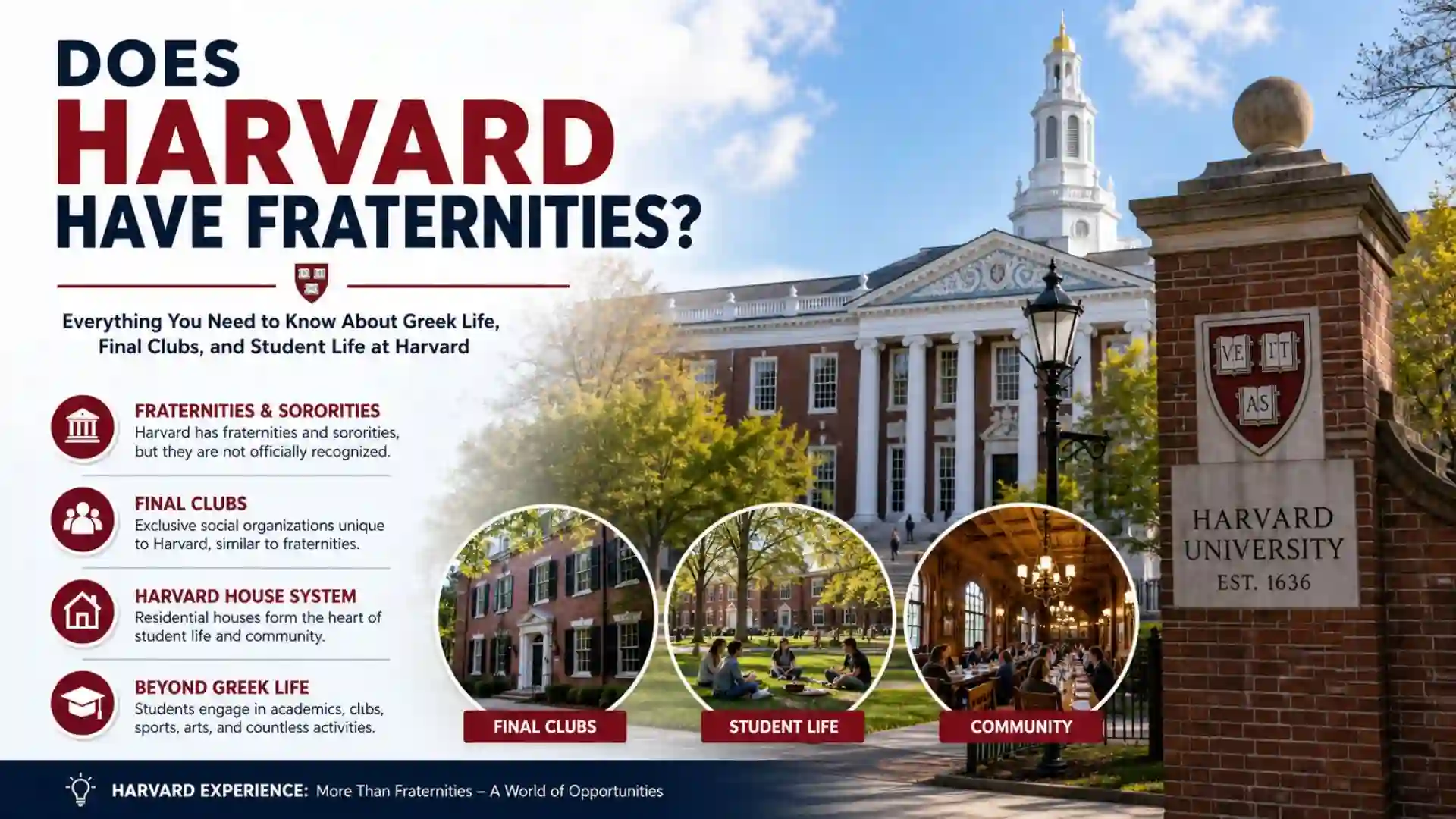
Does Harvard Have Fraternities? When students begin researching college life in the United States, one of the most common questions they ask is: does Harvard have fraternities? Harvard University is one of the most prestigious institutions in the world, known for academic excellence, influential alumni, and a unique campus culture. However, many prospective students are curious about whether Harvard follows the traditional American college system of fraternities and sororities.
The short answer is yes, Harvard students can participate in fraternities and sororities, but the system at Harvard is very different from what is seen at many other universities in the United States. Harvard does not officially recognize traditional Greek organizations in the same way many state universities do. Instead, the university has its own long-standing traditions, social organizations, and residential systems that shape student life.
In this detailed guide, you will learn everything about the question does Harvard have fraternities, including the history of fraternities at Harvard, the role of final clubs, the university’s policies, student experiences, advantages and disadvantages, and how Harvard’s social culture differs from other colleges.
Overview: Does Harvard Have Fraternities?
Harvard University does have fraternities and sororities, but they are not the central part of campus life. Unlike universities where Greek life dominates social activities, Harvard places greater emphasis on residential houses, student organizations, academic communities, and extracurricular activities.
Many Harvard students join organizations such as:
- Fraternities
- Sororities
- Gender-inclusive social clubs
- Cultural organizations
- Final clubs
- Student societies
However, Harvard’s administration has historically maintained a complicated relationship with exclusive social organizations.
Important Information About Harvard Fraternities
| Topic | Details |
|---|---|
| University Name | Harvard University |
| Location | Cambridge, Massachusetts, USA |
| Type of Institution | Private Ivy League University |
| Greek Life Presence | Limited and unofficial |
| Official Recognition | Harvard does not officially recognize fraternities and sororities |
| Alternative Social System | Residential houses and final clubs |
| Popular Social Organizations | Final clubs, cultural groups, student societies |
| Co-ed Organizations | Yes |
| Main Focus of Student Life | Academics, leadership, networking, extracurriculars |
| Housing System | Harvard House System |
Understanding Greek Life in American Universities
Before discussing whether Harvard has fraternities, it is important to understand what fraternities are.
Fraternities are student organizations commonly found at American colleges and universities. They are usually formed around brotherhood, leadership, networking, social activities, and community service. Sororities are similar organizations for women.
Greek organizations often:
- Have Greek-letter names
- Organize parties and social events
- Provide networking opportunities
- Offer leadership training
- Build alumni connections
- Encourage philanthropy and volunteering
At many universities, Greek life plays a major role in campus culture. However, Harvard’s approach is different.
History of Fraternities at Harvard
The discussion around does Harvard have fraternities cannot be complete without understanding Harvard’s history.
Harvard has had fraternities and exclusive social organizations for many decades. Some Greek organizations existed at Harvard during the 19th and 20th centuries, but they never became as dominant as they did at many public universities.
Instead, Harvard developed its own exclusive organizations called “final clubs.”
These clubs became more socially influential than traditional fraternities.
What Are Harvard Final Clubs?
Final clubs are exclusive social organizations at Harvard College. They are somewhat similar to fraternities but operate independently from the university.
Some characteristics of final clubs include:
- Invitation-only membership
- Private clubhouses
- Alumni networks
- Social events
- Selective recruitment processes
Historically, final clubs were male-only organizations, though some female and co-ed clubs later emerged.
Many people compare final clubs to fraternities because they serve similar social and networking purposes. However, they are structurally different.
Difference Between Fraternities and Final Clubs
| Fraternities | Final Clubs |
|---|---|
| Usually national organizations | Independent Harvard organizations |
| Use Greek-letter names | Use unique club names |
| Common at many universities | Unique to Harvard |
| Often officially recognized | Generally independent from Harvard |
| Membership based on recruitment | Membership often invitation-based |
| May focus on philanthropy | Often focus on social networking |
Does Harvard Officially Recognize Fraternities?
One of the biggest aspects of the question does Harvard have fraternities is official recognition.
Harvard does not officially recognize fraternities, sororities, or final clubs as university organizations. This means:
- The university does not fund them
- They cannot officially recruit through Harvard
- They are separate from official student activities
- They operate independently
Despite this, some fraternities and sororities continue to exist around Harvard through national organizations or independent operations.
Harvard’s Policies Toward Fraternities and Final Clubs
Harvard has had several debates regarding exclusive social organizations.
In recent years, the university attempted to discourage participation in single-gender social organizations. Harvard argued that exclusive clubs could contribute to inequality, exclusion, and unhealthy social dynamics.
At one point, Harvard introduced policies restricting members of exclusive organizations from:
- Holding leadership positions in student groups
- Receiving certain university recommendations
- Participating in some opportunities
These policies became highly controversial and faced legal challenges. Eventually, Harvard withdrew some of these restrictions.
This debate remains an important part of understanding does Harvard have fraternities.
Why Harvard Is Different From Other Universities?
At many American universities, Greek life is a major part of student culture. Students may live in fraternity houses, attend Greek events regularly, and build their social circles around fraternities.
Harvard is different because of its residential house system.
The Harvard House System
One of the main reasons fraternities are less important at Harvard is the Harvard House System.
After their first year, undergraduate students are assigned to one of Harvard’s residential houses. These houses become the center of student life.
The houses provide:
- Housing
- Dining halls
- Social activities
- Academic support
- Community events
- Intramural sports
- Networking opportunities
Because students already have strong communities through their houses, fraternities are less central to campus life.
Popular Harvard Residential Houses
Some well-known Harvard houses include:
- Adams House
- Lowell House
- Eliot House
- Kirkland House
- Winthrop House
- Quincy House
- Dunster House
These houses create close student communities that reduce dependence on fraternities for social belonging.
Sororities at Harvard
When asking does Harvard have fraternities, many people also wonder about sororities.
Harvard students do participate in sororities, though they are not officially recognized by the university. Several national sorority chapters have operated near Harvard over the years.
These organizations often focus on:
- Sisterhood
- Leadership
- Community service
- Academic support
- Networking
Like fraternities, they exist independently from official university structures.
Co-Ed Social Organizations at Harvard
Harvard students also participate in co-ed organizations and social clubs.
These groups may focus on:
- Arts
- Debate
- Entrepreneurship
- Politics
- Public service
- Cultural identity
- Performing arts
Because Harvard offers hundreds of student organizations, students often find social communities outside traditional Greek life.
Why Some Students Join Fraternities?
Even though Greek life is limited, some Harvard students still join fraternities or similar organizations.
Reasons may include:
Networking Opportunities
Fraternities often have strong alumni networks that can help students professionally.
Social Connections
Students may enjoy social events and friendships built through fraternity membership.
Leadership Development
Many organizations encourage leadership and teamwork.
Community and Belonging
Some students seek smaller social groups within the larger university environment.
Criticism of Fraternities and Final Clubs
The question does Harvard have fraternities also involves understanding criticism surrounding exclusive organizations.
Critics argue that fraternities and final clubs may:
- Promote exclusivity
- Create social inequality
- Encourage unhealthy competition
- Exclude certain groups
- Reinforce privilege
Some controversies involving elite social clubs at Harvard have attracted national media attention over the years.
Supporters of Fraternities and Final Clubs
Supporters argue that these organizations:
- Build lifelong friendships
- Encourage leadership
- Provide professional networking
- Create traditions and identity
- Offer strong alumni support
Some alumni believe these organizations contribute positively to the Harvard experience.
Student Life at Harvard Beyond Fraternities
Even without strong Greek life, Harvard has one of the most active student cultures in the world.
Students participate in:
- Academic societies
- Research groups
- Student newspapers
- Music organizations
- Sports teams
- Cultural clubs
- Volunteer programs
- Entrepreneurship groups
This wide variety of opportunities means students can easily find communities outside fraternities.
Diversity and Inclusion at Harvard
Harvard emphasizes diversity and inclusion across campus life.
The university encourages:
- Inclusive communities
- Equal access to opportunities
- Cultural representation
- Open dialogue
- Student well-being
This emphasis partly explains Harvard’s cautious stance toward exclusive organizations.
How Harvard Students Socialize?
Instead of relying heavily on fraternity houses, Harvard students socialize through:
- Residential house events
- Campus festivals
- Student organizations
- Athletic teams
- Academic clubs
- Dorm activities
- Cultural celebrations
Social life at Harvard tends to be more decentralized compared to universities dominated by Greek life.
Are Harvard Fraternities Similar to Those in Movies?
Popular movies often portray American fraternities as party-centered organizations with large houses and intense recruitment systems.
Harvard’s social organizations are generally more academic and networking-oriented than those stereotypes suggest.
While social events certainly exist, Harvard’s campus culture is more focused on intellectual engagement, leadership, and extracurricular achievement.
Harvard Alumni and Exclusive Organizations
Several famous Harvard alumni have belonged to exclusive clubs or organizations.
These alumni include:
- Politicians
- Business leaders
- Writers
- Entrepreneurs
- Public figures
Because of these influential connections, Harvard’s social organizations continue to attract attention.
Advantages of Harvard’s Limited Greek System
Strong Academic Focus
Students often prioritize academics over social hierarchy.
Inclusive Social Structure
The residential house system creates broader communities.
Reduced Social Pressure
Students may feel less pressure to join Greek organizations.
Greater Diversity of Activities
Students can participate in many different communities.
Disadvantages According to Some Students
Limited Traditional College Experience
Students seeking classic fraternity culture may feel disappointed.
Exclusive Final Clubs
Some final clubs still maintain highly selective systems.
Networking Imbalances
Exclusive organizations may create unequal access to connections.
Harvard’s Evolving Social Culture
Harvard’s social culture continues to evolve.
In recent years, there has been increasing discussion about:
- Inclusion
- Gender equality
- Student mental health
- Campus belonging
- Social accessibility
These discussions influence how fraternities, final clubs, and student organizations operate.
International Students and Harvard Fraternities
Many international students ask the question does Harvard have fraternities because Greek life is unique to the United States.
At Harvard, international students often find it easier to integrate through:
- Residential houses
- International student groups
- Cultural associations
- Academic communities
As a result, fraternities are usually not necessary for building friendships or networking.
Comparing Harvard to Other Ivy League Universities
Other Ivy League schools also vary in their approach to Greek life.
| University | Greek Life Presence |
|---|---|
| Harvard | Limited |
| Yale | Limited |
| Princeton | Moderate through eating clubs |
| Dartmouth | Strong |
| Cornell | Strong |
| Brown | Moderate |
| Columbia | Limited |
| University of Pennsylvania | Moderate |
This comparison shows that Harvard is among the Ivy League schools where fraternities are less dominant.
Common Misconceptions About Harvard Fraternities
Myth 1: Harvard Has No Fraternities
This is false. Some fraternities and sororities do exist, though unofficially.
Myth 2: Final Clubs Are the Same as Fraternities
They are similar in some ways but structurally different.
Myth 3: You Need to Join a Club to Succeed at Harvard
Most students succeed without joining exclusive organizations.
Myth 4: Harvard Social Life Is Boring
Harvard has a vibrant social environment through houses and student organizations.
Is Greek Life Important at Harvard?
Compared to many American universities, Greek life is not central at Harvard.
Most students:
- Focus on academics
- Participate in student organizations
- Build friendships through houses
- Engage in research and extracurricular activities
Fraternities are only one small part of the larger Harvard experience.
Future of Fraternities at Harvard
The future of fraternities and exclusive organizations at Harvard remains uncertain.
Ongoing debates involve:
- Student freedom
- Inclusion
- Campus culture
- Equality
- University oversight
Harvard will likely continue balancing student independence with institutional values.
FAQ about Does Harvard Have Fraternities?
Does Harvard have fraternities?
Yes, Harvard students can participate in fraternities, but they are not officially recognized by the university and are less central to campus life compared to many other universities.
Are fraternities popular at Harvard?
Fraternities exist at Harvard, but they are not as influential or widespread as at many public universities.
What are final clubs at Harvard?
Final clubs are exclusive social organizations unique to Harvard. They function similarly to fraternities in some ways but are independent organizations.
Does Harvard officially support Greek life?
No, Harvard does not officially recognize fraternities or sororities as university organizations.
Are there sororities at Harvard?
Yes, some sororities operate near Harvard, though they are generally independent from the university.
Why is Greek life smaller at Harvard?
Harvard’s residential house system provides students with built-in communities, reducing the importance of fraternities.
Can international students join fraternities at Harvard?
Yes, international students may join fraternities or clubs if they choose.
Is social life active at Harvard without fraternities?
Yes, Harvard has a very active social culture through residential houses, clubs, sports, and student organizations.
Conclusion
The question does Harvard have fraternities has a more nuanced answer than many people expect. Harvard does have fraternities, sororities, and exclusive social organizations, but they do not dominate campus life the way they do at many American universities.
Instead, Harvard’s unique residential house system, academic environment, and diverse extracurricular opportunities shape student experiences far more than Greek life. Final clubs and independent organizations continue to play a role in Harvard culture, but most students build friendships and communities through houses, clubs, athletics, and academic activities.
For prospective students, it is important to understand that Harvard’s campus culture focuses more on intellectual engagement, leadership, and diverse student involvement than traditional fraternity systems. While fraternities exist, they represent only one small part of the broader Harvard experience.