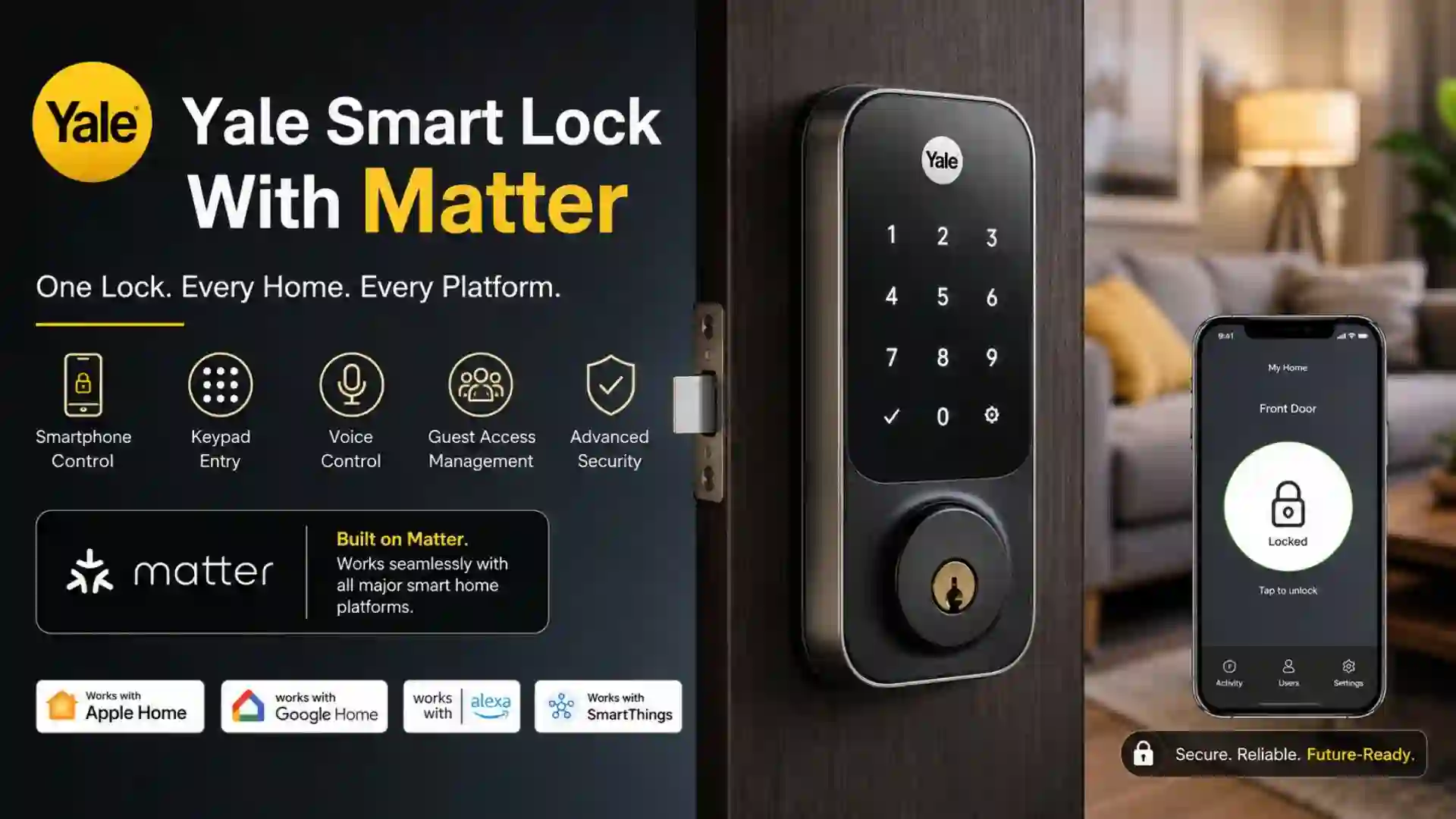
Yale Smart Lock With Matter: Smart home technology has evolved rapidly over the last few years, and smart locks have become one of the most important upgrades for modern homes. Among the leading brands in the smart security market, Yale has established itself as a trusted name with decades of expertise in home protection. With the introduction of Matter compatibility, Yale smart locks are becoming even more powerful, flexible, and user-friendly.
A Yale smart lock with Matter support allows homeowners to integrate their door locks across multiple smart home ecosystems without worrying about compatibility issues. Whether you use Apple HomeKit, Google Home, Amazon Alexa, or Samsung SmartThings, Matter creates a unified standard that improves communication between devices and platforms.
In this article, you will learn everything about Yale smart locks with Matter, including their features, benefits, installation process, security capabilities, compatibility, troubleshooting, and how they compare to traditional smart locks.
What Is Matter in Smart Home Technology?
Matter is a universal smart home connectivity standard developed by the Connectivity Standards Alliance (CSA). Major technology companies such as Apple, Google, Amazon, Samsung, and others collaborated to create a common communication framework for smart devices.
Before Matter, many smart home products required users to choose a single ecosystem. Some devices worked only with Apple HomeKit, while others supported Alexa or Google Home separately. This created compatibility issues and complicated smart home setups.
Matter solves this problem by allowing certified devices to work together across multiple platforms. A Yale smart lock with Matter certification can communicate seamlessly with various smart home systems, making setup easier and improving long-term compatibility.
Why Yale Smart Locks Are Popular?
Yale has been manufacturing locks for over a century, making it one of the most trusted brands in home security. Their smart lock lineup combines traditional security engineering with advanced digital technology.
Some reasons why Yale smart locks are highly popular include:
- Strong build quality
- Advanced encryption and security
- Remote access capabilities
- Easy smartphone control
- Keypad entry options
- Voice assistant integration
- Auto-lock and auto-unlock functions
- Stylish modern designs
- Integration with smart home systems
The addition of Matter support enhances these benefits even further.
Important Information About Yale Smart Locks With Matter
| Feature | Details |
|---|---|
| Brand | Yale |
| Connectivity Standard | Matter |
| Compatible Platforms | Apple HomeKit, Google Home, Amazon Alexa, Samsung SmartThings |
| Control Methods | Mobile app, keypad, voice assistant |
| Wireless Protocols | Thread, Wi-Fi, Bluetooth |
| Remote Access | Yes |
| Auto Lock/Unlock | Supported |
| Guest Access | Available |
| Installation Type | DIY Friendly |
| Power Source | Battery operated |
| Security Features | Encryption, activity logs, tamper alerts |
| Best Use Cases | Homes, apartments, rental properties, offices |
How Matter Improves Yale Smart Locks?
Matter brings several improvements to the smart lock experience. Yale smart locks that support Matter are designed to reduce friction and improve reliability.
Better Cross-Platform Compatibility
One of the biggest advantages of Matter is interoperability. You no longer need to worry about whether your smart lock works with your preferred ecosystem.
A Yale Matter-enabled smart lock can connect to:
- Apple Home
- Google Home
- Amazon Alexa
- Samsung SmartThings
This flexibility gives homeowners more freedom when building a smart home setup.
Faster Device Setup
Matter devices use simplified onboarding procedures. In many cases, you simply scan a QR code and add the lock directly to your preferred smart home platform.
This reduces technical complexity for users who are not experienced with smart home installations.
Improved Reliability
Matter is designed to improve device communication reliability, especially when combined with Thread networking technology. Yale smart locks with Matter can maintain stable communication with other smart home devices.
Local Device Control
Many Matter-compatible devices support local communication instead of depending entirely on cloud servers. This improves:
- Response speed
- Reliability
- Privacy
- Offline functionality
Popular Yale Smart Locks With Matter Support
Yale offers multiple smart lock models that either include Matter support or can be upgraded using compatible modules.
Yale Assure Lock 2
The Yale Assure Lock 2 is one of the most advanced smart locks in Yale’s lineup. It is known for its slim design, flexible connectivity options, and broad ecosystem support.
Features include:
- Key-free entry
- Touchscreen keypad
- Fingerprint-resistant surface
- Auto-lock functionality
- Remote access
- Matter compatibility
- App control
- Voice assistant support
This model is especially popular among homeowners seeking a sleek modern smart lock.
Yale Approach Lock
The Yale Approach Lock focuses on simplifying smart home access while maintaining strong security standards.
Common features include:
- Matter-over-Thread support
- Mobile app integration
- Guest access management
- Battery monitoring
- Automatic locking schedules
Yale Smart Lever Locks
Yale also offers smart lever locks suitable for offices, apartments, and interior doors. Some newer models support Matter integration through modular upgrades.
Matter and Thread: Why They Work Together
Many Yale smart locks use Thread technology alongside Matter. Thread is a low-power wireless networking protocol designed specifically for smart home devices.
Benefits of Thread include:
- Faster communication
- Better range
- Lower power consumption
- Mesh networking capabilities
- Improved reliability
Thread devices create a mesh network where devices help relay signals to one another. This improves connectivity across larger homes.
Matter uses Thread as one of its preferred communication methods, making Yale locks faster and more efficient.
Installation Process for Yale Smart Locks With Matter
Installing a Yale smart lock is generally straightforward and can often be completed without professional assistance.
Step 1: Remove Existing Lock
Remove your current deadbolt or door lock carefully using basic tools such as a screwdriver.
Step 2: Install the Yale Lock Hardware
Attach the new Yale smart lock components according to the manufacturer’s instructions. Most Yale locks are designed to fit standard doors.
Step 3: Insert Batteries
Install the required batteries into the lock unit. Most Yale smart locks operate on AA batteries.
Step 4: Download the Mobile App
Install the Yale app or use your preferred smart home platform application.
Step 5: Pair the Device
Scan the Matter QR code provided with the lock to add it to your smart home ecosystem.
Step 6: Configure Settings
Customize features such as:
- Auto-lock timing
- Guest codes
- Notifications
- Access schedules
- Voice assistant integration
Security Features of Yale Smart Locks
Home security is the primary reason people purchase smart locks. Yale includes several advanced protection features in its Matter-compatible devices.
Encrypted Communication
Matter uses strong encryption standards to protect communication between devices. This helps reduce the risk of unauthorized access.
Activity Monitoring
Users can track lock activity through smartphone apps. This allows homeowners to see:
- When doors were locked or unlocked
- Which user accessed the property
- Failed entry attempts
- Remote unlock history
Temporary Access Codes
Yale smart locks allow users to create temporary codes for:
- Guests
- Housekeepers
- Delivery personnel
- Contractors
- Family members
These codes can expire automatically after a specified period.
Auto-Lock Functionality
Auto-lock ensures the door locks automatically after a selected amount of time, helping prevent accidental unlocked doors.
Tamper Alerts
Some Yale models provide tamper detection and security notifications when suspicious activity occurs.
Smart Home Integration Capabilities
One of the strongest benefits of Matter-enabled Yale smart locks is integration flexibility.
Apple Home Integration
Users can unlock doors using:
- iPhone
- Apple Watch
- Siri voice commands
- Home automations
Google Home Integration
Google Assistant users can:
- Lock doors with voice commands
- Check lock status
- Include locks in routines
Amazon Alexa Integration
Alexa users can manage Yale locks through:
- Voice control
- Smart routines
- Remote monitoring
Samsung SmartThings Integration
SmartThings users can create advanced automations involving:
- Lights
- Security systems
- Sensors
- Cameras
- Door locks
Benefits of Using Yale Smart Locks With Matter
Simplified Smart Home Setup
Matter reduces compatibility confusion and creates a more streamlined user experience.
Future-Proof Technology
Matter is becoming the industry standard for smart homes. Purchasing a Yale smart lock with Matter support helps ensure long-term compatibility.
Better Ecosystem Flexibility
Users can switch ecosystems without replacing hardware.
Enhanced Reliability
Thread networking and local communication improve overall performance.
Strong Security
Yale combines traditional lock engineering with modern digital protection systems.
Potential Drawbacks
While Yale smart locks with Matter offer many benefits, there are also some limitations to consider.
Higher Cost
Matter-enabled smart locks are often more expensive than standard locks.
Battery Dependency
Like all battery-powered smart locks, Yale devices require periodic battery replacement.
Learning Curve
Some users may initially find smart home setup confusing, especially if they are new to automation systems.
Smart Hub Requirements
Certain advanced features may require compatible Thread border routers or smart home hubs.
Yale Smart Locks for Rental Properties
Smart locks are increasingly popular among property managers and Airbnb hosts.
Benefits include:
- Remote guest access
- Temporary codes
- Reduced key management
- Improved security
- Easy access monitoring
Matter compatibility further improves management flexibility by supporting multiple ecosystems.
Comparing Yale Smart Locks With Traditional Locks
| Feature | Yale Smart Lock With Matter | Traditional Lock |
|---|---|---|
| Remote Access | Yes | No |
| Smartphone Control | Yes | No |
| Voice Assistant Support | Yes | No |
| Activity Logs | Yes | No |
| Temporary Access Codes | Yes | No |
| Auto Locking | Yes | No |
| Physical Keys | Optional | Yes |
| Integration With Smart Home | Yes | No |
Battery Life and Maintenance
Battery life depends on usage frequency and connectivity settings. Most Yale smart locks operate for several months on a single set of batteries.
Maintenance tips include:
- Replace batteries before they fully drain
- Keep firmware updated
- Clean keypad surfaces regularly
- Check door alignment
- Test auto-lock features periodically
Common Troubleshooting Tips
Lock Not Responding
Possible causes include:
- Low battery
- Connectivity issues
- Firmware problems
Restarting the device or replacing batteries often resolves the issue.
Pairing Problems
Ensure:
- Matter setup codes are correct
- Your Thread border router is active
- The lock is within range
Auto-Lock Not Working
Check:
- Door alignment
- App settings
- Firmware updates
Privacy and Data Protection
Privacy is a growing concern in smart home technology. Matter was designed with stronger local control and encryption standards.
Yale smart locks also support secure authentication methods that reduce exposure to cloud vulnerabilities.
Users can further improve privacy by:
- Using strong passwords
- Enabling two-factor authentication
- Updating firmware regularly
- Monitoring account access
Who Should Buy a Yale Smart Lock With Matter?
These smart locks are ideal for:
Homeowners
People seeking convenience, automation, and improved security.
Smart Home Enthusiasts
Users building cross-platform smart homes benefit greatly from Matter compatibility.
Rental Property Owners
Remote management features simplify guest access.
Families
Multiple user codes and activity tracking improve convenience and security.
Tech Beginners
Matter simplifies the smart home experience for new users.
Future of Matter-Compatible Smart Locks
Matter adoption is expected to grow rapidly in coming years. More manufacturers are adding Matter support to smart home products, creating broader interoperability across ecosystems.
Future improvements may include:
- Faster automation speeds
- Better energy efficiency
- Enhanced biometric security
- Improved AI-based home automation
- Expanded ecosystem compatibility
Yale is likely to continue expanding its Matter-compatible product lineup as the standard becomes more widely adopted.
FAQ about Yale Smart Lock With Matter 2026
What is a Yale smart lock with Matter?
It is a Yale smart lock that supports the Matter smart home standard, allowing compatibility across multiple ecosystems like Apple Home, Google Home, and Alexa.
Do Yale Matter locks require Wi-Fi?
Some functions may require Wi-Fi or a compatible hub, but Matter devices often communicate locally using Thread technology.
Can Yale smart locks work without internet?
Yes, many functions continue to work locally even without internet access.
Are Yale smart locks secure?
Yes, Yale smart locks use advanced encryption, authentication systems, and security monitoring features.
Can I install a Yale smart lock myself?
Most Yale smart locks are designed for DIY installation using basic household tools.
How long do batteries last?
Battery life varies but usually lasts several months under normal usage.
Does Matter improve smart home reliability?
Yes, Matter improves compatibility, local communication, and device interoperability.
Can multiple people use the same Yale smart lock?
Yes, you can create multiple user codes and manage access permissions through the app.
Do Yale smart locks still support physical keys?
Some models include traditional key access, while others are fully key-free.
Is Matter the future of smart homes?
Matter is widely considered the future standard for unified smart home connectivity.
Conclusion
Yale smart locks with Matter support represent a major step forward in smart home security and convenience. By combining Yale’s long-standing expertise in physical security with the interoperability of Matter, these locks provide homeowners with a more flexible and future-ready solution.
The ability to work across multiple ecosystems without compatibility limitations makes Matter-enabled Yale locks especially attractive for modern smart homes. Features such as remote access, activity tracking, temporary codes, voice assistant integration, and enhanced encryption create a safer and more convenient user experience.
As Matter adoption continues to grow, Yale smart locks are well-positioned to remain among the leading smart security products in the market. Whether you are upgrading your existing home security system or building a new smart home setup, a Yale smart lock with Matter offers reliability, flexibility, and long-term compatibility that traditional locks simply cannot match.