
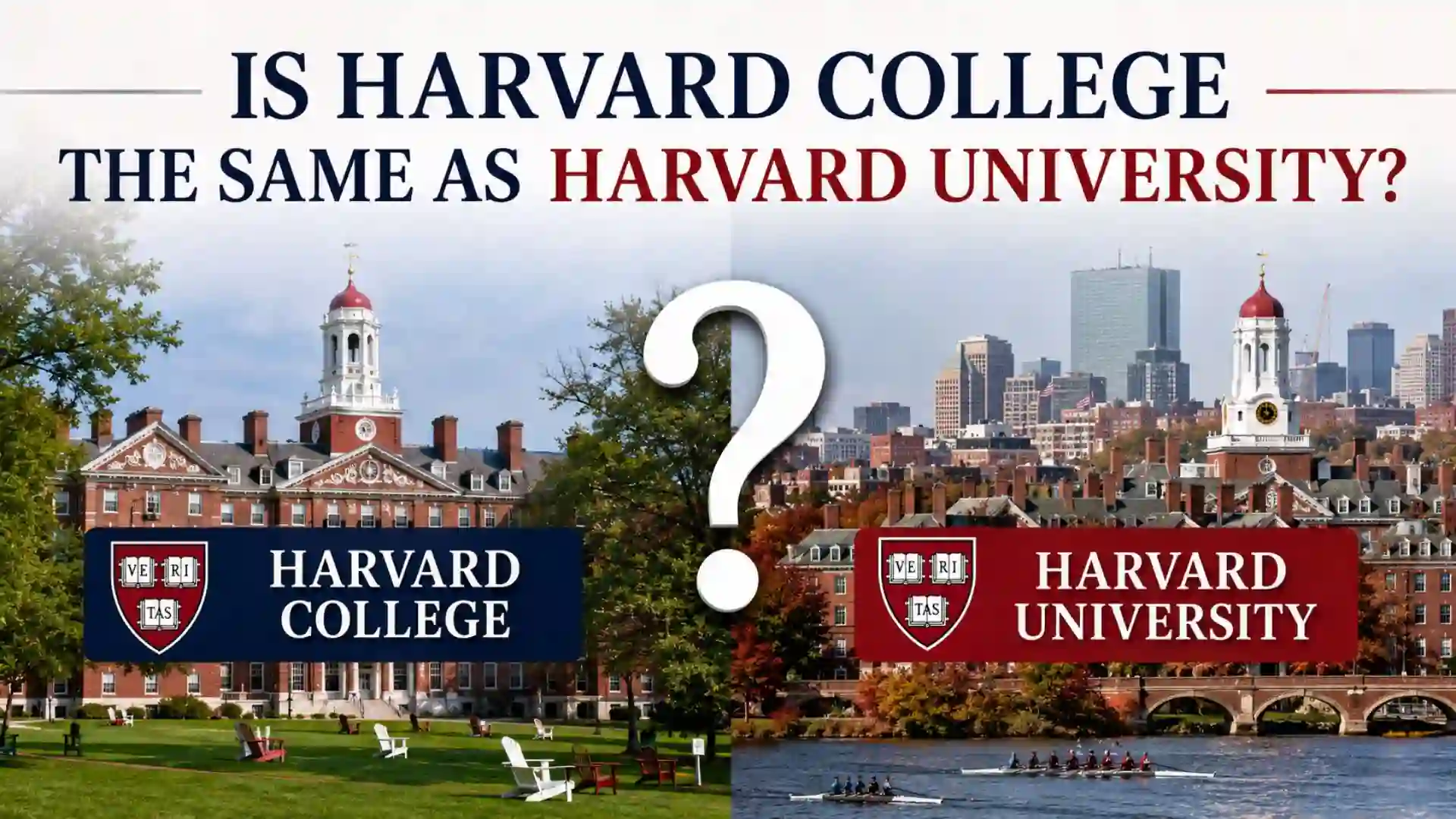
Is Harvard College the Same as Harvard University? Many students, parents, and international applicants often ask the question: is Harvard College the same as Harvard University? The confusion is understandable because people frequently use the terms interchangeably. However, Harvard College and Harvard University are not exactly the same thing. Harvard College is actually one part of the larger Harvard University system.
Understanding the difference is important for students who plan to apply, study, or simply learn more about one of the most prestigious educational institutions in the world. This article explains the relationship between Harvard College and Harvard University, how they differ, what programs they offer, and why the distinction matters.
Understanding Harvard University
Harvard University is a private Ivy League university located in Cambridge, Massachusetts. Founded in 1636, it is the oldest institution of higher education in the United States.
Harvard University is a large educational system made up of multiple schools, departments, institutes, and academic divisions. These schools serve undergraduate, graduate, and professional students across many disciplines.
The university includes:
- Harvard College
- Harvard Law School
- Harvard Business School
- Harvard Medical School
- Harvard Kennedy School
- Harvard Graduate School of Education
- Harvard Divinity School
- Harvard School of Engineering and Applied Sciences
- Harvard T.H. Chan School of Public Health
- Harvard Graduate School of Design
- Harvard School of Dental Medicine
- Radcliffe Institute for Advanced Study
When people refer to “Harvard,” they are usually talking about Harvard University as a whole.
What Is Harvard College?
Harvard College is the undergraduate liberal arts college of Harvard University. It specifically serves students pursuing bachelor’s degrees.
In simple terms:
- Harvard University = Entire institution
- Harvard College = Undergraduate division within the university
Students attending Harvard College work toward undergraduate degrees such as:
- Bachelor of Arts (A.B.)
- Bachelor of Science (S.B.)
Harvard College mainly focuses on undergraduate education in arts, sciences, humanities, engineering, and social sciences.
Is Harvard College the Same as Harvard University?
The direct answer to the question is Harvard College the same as Harvard University is no.
Harvard College is only one part of Harvard University. While all Harvard College students belong to Harvard University, not all Harvard University students attend Harvard College.
For example:
- A law student attends Harvard Law School
- A business student attends Harvard Business School
- A medical student attends Harvard Medical School
- An undergraduate student attends Harvard College
All these schools operate under the umbrella of Harvard University.
Key Differences Between Harvard College and Harvard University
The easiest way to understand the difference is through comparison.
| Feature | Harvard College | Harvard University |
|---|---|---|
| Type | Undergraduate college | Entire university system |
| Students | Undergraduate students only | Undergraduate and graduate students |
| Degrees Offered | Bachelor’s degrees | Bachelor’s, master’s, doctoral, and professional degrees |
| Founded | 1636 as original college | Expanded university system over time |
| Main Focus | Liberal arts and sciences education | Broad academic and professional education |
| Part of | Harvard University | Parent institution |
| Admissions | Undergraduate admissions | Separate admissions for each school |
Why Do People Get Confused?
The confusion happens because Harvard College was the original institution established in 1636. At that time, there were no graduate schools or professional schools.
Over the centuries, Harvard expanded by creating specialized schools for law, medicine, business, public policy, and other fields. Eventually, the entire collection became known as Harvard University.
Since undergraduate students often say they “go to Harvard,” many people assume Harvard College and Harvard University are identical.
History of Harvard College and Harvard University
Understanding the history makes the distinction clearer.
Early Foundation
Harvard began as a single college primarily focused on training clergy and educating young men in classical studies.
The institution was named after John Harvard, who donated books and money to the school after his death.
Expansion Into a University
As education evolved, Harvard added new schools and faculties:
- Medical School in 1782
- Law School in 1817
- Divinity School in 1816
- Business School in 1908
Over time, the institution transformed into a complete university system.
Today, Harvard University includes numerous schools, while Harvard College remains the undergraduate division.
Admissions: Harvard College vs Harvard University
Another major difference involves admissions.
Harvard College Admissions
Students applying after high school usually apply to Harvard College. Admissions are highly competitive and based on:
- Academic performance
- Standardized test scores (if required)
- Essays
- Extracurricular activities
- Recommendations
- Leadership qualities
Harvard College accepts undergraduate applicants seeking bachelor’s degrees.
Harvard University Graduate Admissions
Graduate and professional schools within Harvard University have separate admissions processes.
For example:
- Harvard Law School requires LSAT or related qualifications
- Harvard Business School often requires work experience and GMAT/GRE scores
- Harvard Medical School requires MCAT scores and medical prerequisites
Each school sets its own standards and requirements.
Student Life at Harvard College
Harvard College students experience a traditional undergraduate campus environment.
Residential Houses
After the first year, students are assigned to one of Harvard’s residential houses, including:
- Adams House
- Lowell House
- Quincy House
- Eliot House
- Kirkland House
These houses create smaller communities within the university.
Academic Opportunities
Students at Harvard College can study:
- Literature
- Economics
- Computer Science
- Government
- Engineering
- Biology
- Psychology
- History
They also have access to research opportunities, internships, and global programs.
Graduate Schools Within Harvard University
Harvard University is internationally respected for its graduate and professional schools.
Harvard Law School
Harvard Law School is among the most prestigious law schools in the world and has produced many influential judges, lawyers, and political leaders.
Harvard Business School
Harvard Business School is known for its MBA program and case-study teaching method.
Harvard Medical School
Harvard Medical School is one of the leading medical schools globally, connected with top hospitals and research institutions.
These schools are not part of Harvard College but are part of Harvard University.
Degrees Offered by Harvard College
Harvard College primarily awards undergraduate degrees.
Bachelor of Arts (A.B.)
This is the most common undergraduate degree and includes majors in:
- Humanities
- Social Sciences
- Arts
- Languages
Bachelor of Science (S.B.)
This degree is usually awarded in technical or scientific disciplines such as engineering and applied sciences.
Degrees Offered by Harvard University
Harvard University offers a much broader range of degrees.
These include:
- Master’s degrees
- Doctoral degrees
- Professional degrees
- Law degrees
- Medical degrees
- Business administration degrees
This broader academic structure is another reason Harvard College and Harvard University are not the same.
Campus and Locations
Most Harvard College undergraduate activities take place in Cambridge, Massachusetts.
However, Harvard University extends beyond Cambridge.
Some graduate and professional schools are located in Boston, including:
- Harvard Medical School
- Harvard School of Dental Medicine
- Harvard T.H. Chan School of Public Health
Therefore, Harvard University spans multiple campuses and academic centers.
Academic Reputation
Both Harvard College and Harvard University are associated with academic excellence.
Harvard College Reputation
Harvard College is widely recognized for:
- Rigorous undergraduate education
- Selective admissions
- Strong liberal arts tradition
- Research opportunities
Harvard University Reputation
Harvard University is globally respected for:
- Research output
- Professional education
- Graduate programs
- Faculty achievements
- Nobel Prize winners
- Global influence
Which One Should Students Apply To?
The answer depends on educational goals.
Apply to Harvard College If:
- You are finishing high school
- You want an undergraduate degree
- You seek a liberal arts education
Apply to Another Harvard School If:
- You already have a bachelor’s degree
- You want graduate or professional education
- You plan to study law, medicine, business, or public policy
Important Information and Links
| Information | Details |
|---|---|
| Official Institution Name | Harvard University |
| Undergraduate Division | Harvard College |
| Location | Cambridge, Massachusetts, USA |
| Founded | 1636 |
| Type | Private Ivy League University |
| Undergraduate Degrees | A.B. and S.B. |
| Graduate Schools | Law, Business, Medicine, Education, and more |
| Official Website | https://www.harvard.edu/ |
| Undergraduate Admissions | https://college.harvard.edu/admissions |
| Harvard College Website | https://college.harvard.edu/ |
| Harvard Law School | https://hls.harvard.edu/ |
| Harvard Business School | https://www.hbs.edu/ |
| Harvard Medical School | https://hms.harvard.edu/ |
Common Misunderstandings About Harvard
“Everyone at Harvard attends Harvard College”
This is incorrect. Many students attend graduate or professional schools instead.
“Harvard College and Harvard University issue the same degrees”
Not exactly. Harvard College awards undergraduate degrees, while other schools award graduate and professional degrees.
“Harvard College is separate from Harvard University”
This is also incorrect. Harvard College is fully part of Harvard University.
Why the Difference Matters?
Understanding the difference helps students:
- Choose the correct application process
- Understand degree options
- Identify suitable academic programs
- Learn about undergraduate versus graduate education
This distinction is especially important for international students who may be unfamiliar with the American university system.
FAQ about Is Harvard College the Same as Harvard University?
What is the difference between Harvard College and Harvard University?
Harvard College is the undergraduate division of Harvard University. Harvard University is the larger institution that includes many graduate and professional schools.
Is Harvard College part of Harvard University?
Yes. Harvard College is one of the schools within Harvard University.
Can graduate students attend Harvard College?
No. Harvard College only serves undergraduate students pursuing bachelor’s degrees.
Which is more prestigious: Harvard College or Harvard University?
Both are prestigious because Harvard College is part of Harvard University. However, Harvard University includes all schools and programs collectively.
Do Harvard College students say they attend Harvard University?
Yes. Students often say they attend Harvard University or simply “Harvard.”
Is Harvard College only for undergraduate students?
Yes. Harvard College exclusively offers undergraduate education.
Are Harvard Law School and Harvard College the same?
No. Harvard Law School is a graduate professional school, while Harvard College is the undergraduate college.
Conclusion
To clearly answer the question is Harvard College the same as Harvard University, the answer is no. Harvard College is the undergraduate branch of Harvard University, while Harvard University is the complete institution that includes many graduate and professional schools.
Harvard College focuses on bachelor’s degree programs and undergraduate education, whereas Harvard University encompasses a much larger academic system that includes law, medicine, business, public policy, engineering, and research programs.
Although the names are often used interchangeably, understanding the distinction is important for students, applicants, and anyone interested in higher education. Knowing the difference can help you choose the right academic path and better understand how one of the world’s most famous universities is organized.