

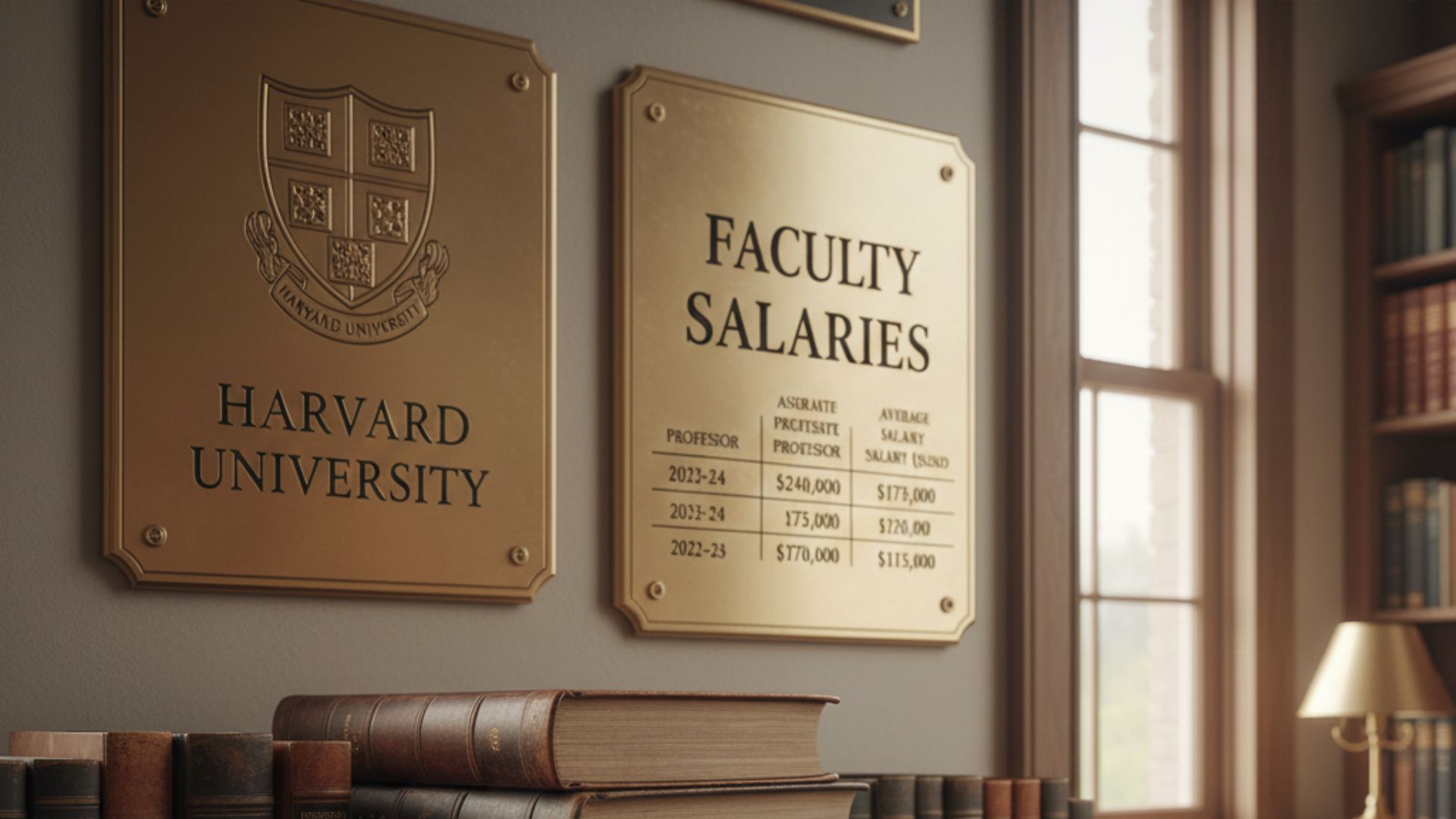
Harvard Faculty Salaries: Harvard University is one of the most prestigious academic institutions in the world. With its global reputation for excellence in teaching, research, and innovation, it naturally attracts some of the most accomplished scholars across disciplines. One topic that consistently generates curiosity among students, academics, and the general public alike is Harvard faculty salaries. Questions often arise about how much professors earn, how salaries differ by rank and discipline, and what factors influence compensation at such an elite institution.
This article provides a comprehensive and balanced overview of Harvard faculty salaries. Rather than focusing on sensational figures, it explains the salary structure, academic ranks, sources of funding, and institutional policies that shape faculty compensation. The goal is to help readers understand not just how much Harvard faculty may earn, but why salaries are structured the way they are.
Understanding Harvard’s Faculty System
Before discussing salaries, it is important to understand how Harvard’s faculty system is organized. Harvard University is not a single centralized entity when it comes to employment. Instead, it is made up of multiple schools and faculties, each with its own budget, governance structure, and compensation framework.
Some of Harvard’s major schools include:
- Faculty of Arts and Sciences (FAS)
- Harvard Business School (HBS)
- Harvard Law School (HLS)
- Harvard Medical School (HMS)
- Harvard School of Engineering and Applied Sciences
- Harvard Graduate School of Education
- Harvard T.H. Chan School of Public Health
Each of these schools operates with a significant degree of autonomy. As a result, faculty salaries can vary widely depending on the school, discipline, and funding model.
Academic Ranks and Salary Differences
Faculty salaries at Harvard are closely tied to academic rank. These ranks generally follow a hierarchy that exists across most research universities.
Assistant Professor
Assistant professors are typically early-career academics who are on the tenure track. At Harvard, this rank is highly competitive and often temporary, lasting several years while the faculty member builds a research portfolio and teaching record.
Salaries at this level are generally lower than those of senior faculty, but they are still competitive when compared to peer institutions. Compensation reflects both teaching responsibilities and research expectations.
Associate Professor
Associate professors are usually tenured or on a clear path to tenure. Their salaries are higher than those of assistant professors, reflecting experience, academic contributions, and institutional commitment.
At this level, faculty members often take on more responsibilities, including graduate supervision, departmental service, and leadership roles within research initiatives.
Full Professor
Full professors represent the highest academic rank. These individuals are often internationally recognized experts in their fields. Salaries at this level can vary dramatically depending on discipline, reputation, and external funding.
At Harvard, full professors in professional schools or high-demand disciplines may earn significantly more than their counterparts in the humanities.
Harvard Faculty Salaries by School (General Overview)
The variation in salaries across Harvard’s schools is one of the most important aspects to understand. Professional schools often have access to different revenue streams than traditional academic faculties.
Faculty of Arts and Sciences (FAS)
The Faculty of Arts and Sciences includes departments such as economics, history, physics, mathematics, and literature. Salaries here tend to follow traditional academic pay scales and are more constrained by institutional norms and endowment policies.
Harvard Business School
Harvard Business School faculty salaries are generally higher than those in many other schools. This is largely due to:
- Market competition with the private sector
- Revenue from executive education programs
- Strong demand for business expertise
Harvard Law School
Law faculty salaries are also influenced by external market conditions. Top legal scholars could command high earnings in private practice, which affects how universities structure compensation to remain competitive.
Harvard Medical School
Harvard Medical School operates under a unique model. Many faculty members are also practicing clinicians affiliated with hospitals. Their total compensation may include clinical income, research grants, and teaching stipends, making direct salary comparisons difficult.
Important Information About Harvard Faculty Salaries
| Aspect | Details |
|---|---|
| Institution Type | Private Ivy League University |
| Salary Determination | Decentralized by school and department |
| Main Influencing Factors | Rank, discipline, funding, experience |
| Typical Faculty Ranks | Assistant, Associate, Full Professor |
| Professional Schools | Generally higher salaries |
| Humanities & Arts | More standardized salary scales |
| External Income | Grants, consulting, clinical practice |
| Transparency | Aggregate data available, individual salaries private |
Factors That Influence Harvard Faculty Salaries
Academic Discipline
Discipline plays a major role in salary variation. Fields with strong demand outside academia, such as business, law, medicine, and economics, tend to offer higher salaries to remain competitive.
Research Funding and Grants
Faculty members who secure large research grants may receive portions of their salary from external funding sources. While grants do not always increase base salary, they can support summer pay, research assistants, and reduced teaching loads.
Experience and Reputation
A senior scholar with decades of influential research, prestigious awards, and a strong publication record may command a higher salary than a junior faculty member in the same department.
Administrative Roles
Faculty members who take on administrative responsibilities such as department chair, program director, or dean may receive additional compensation or stipends.
Market Adjustments and Retention Offers
Universities sometimes increase salaries to retain faculty who receive competing offers from other institutions. These retention-based adjustments can significantly affect individual compensation.
How Harvard Compares to Other Universities?
Harvard faculty salaries are often compared with those at other Ivy League institutions and top global universities. While Harvard is competitive, it does not always offer the highest base salary.
Some key points of comparison:
- Private universities often pay more than public institutions
- Professional schools generally pay more than arts and sciences
- Cost of living adjustments are considered, but not always fully reflected
Harvard’s appeal lies not only in salary but also in research resources, institutional prestige, and intellectual environment.
Misconceptions About Harvard Faculty Pay
All Harvard Professors Are Extremely Wealthy
This is a common misconception. While some faculty members earn high incomes, especially in professional schools, many earn salaries comparable to peers at other elite institutions.
Endowment Automatically Means High Salaries
Harvard’s endowment supports many initiatives, including financial aid and research, but it does not translate directly into unlimited faculty salaries.
Public Data Reflects Total Earnings
Reported salary figures often exclude consulting income, book royalties, clinical earnings, or honoraria. Conversely, they may also exclude certain benefits, making direct interpretation difficult.
Benefits Beyond Salary
Faculty compensation at Harvard includes more than just base pay. Benefits often include:
- Health and retirement plans
- Research funding and sabbaticals
- Housing assistance in some cases
- Access to world-class academic resources
For many faculty members, these non-monetary benefits significantly enhance the overall value of their position.
Career Motivation: Why Faculty Choose Harvard
Many scholars choose Harvard not solely for salary but for:
- Academic freedom
- Institutional reputation
- Opportunities for interdisciplinary collaboration
- Access to top students and research infrastructure
These factors often outweigh pure financial considerations.
FAQ about Harvard Faculty Salaries 2026
Are Harvard faculty salaries publicly available?
Individual salaries are generally private, though aggregate data and salary ranges may be available through institutional reports.
Do Harvard professors earn more than Ivy League peers?
In many cases, salaries are comparable. Differences depend more on discipline and rank than on the institution alone.
Do professors receive bonuses?
Bonuses are uncommon in traditional academic roles but may exist in executive education or administrative contexts.
Can faculty earn income outside Harvard?
Yes. Many faculty members earn additional income through consulting, writing, speaking engagements, or clinical work, subject to university policies.
Are salaries adjusted for inflation or cost of living?
Adjustments may occur periodically, but they vary by school and economic conditions.
Conclusion
Harvard faculty salaries are shaped by a complex combination of academic rank, discipline, institutional structure, and external market forces. While the university is often associated with wealth and prestige, faculty compensation reflects careful balancing between competitiveness, academic values, and long-term sustainability.
Rather than offering uniform or extravagant pay, Harvard uses a decentralized and merit-based approach that aligns salaries with responsibilities, expertise, and market realities. For those considering an academic career or simply curious about how elite universities operate, understanding Harvard faculty salaries provides valuable insight into the broader economics of higher education.
Ultimately, Harvard’s ability to attract top faculty depends not just on salary, but on the intellectual environment, resources, and global influence that few institutions can match.








851963 845653I will appropriate away grab your rss feed to remain up to date on any succeeding articles you may write 580649