Harvard Extension School: Harvard University is globally recognized as one of the most prestigious institutions of higher learning. When people hear the name “Harvard,” they often think of selective admissions, centuries-old traditions, and elite academic standards. However, not everyone is aware that Harvard also operates a unique and accessible division known as Harvard Extension’s School.
Harvard Extension School offers flexible, high-quality education designed for working professionals, adult learners, international students, and individuals seeking personal or professional growth. It combines Harvard’s academic rigor with a model that emphasizes access, flexibility, and real-world application.
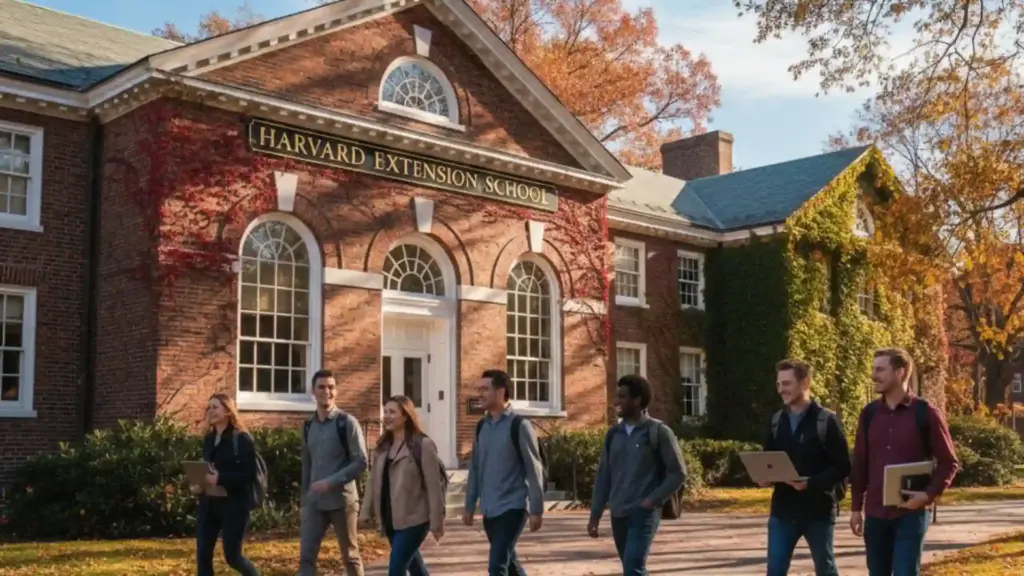
This article provides an in-depth exploration of Harvard Extension School, including its history, academic structure, degree programs, admissions approach, learning format, and career value. By the end, you will have a clear understanding of what Harvard Extension School is, who it is for, and how it fits into the broader Harvard ecosystem.
What Is Harvard Extension School?
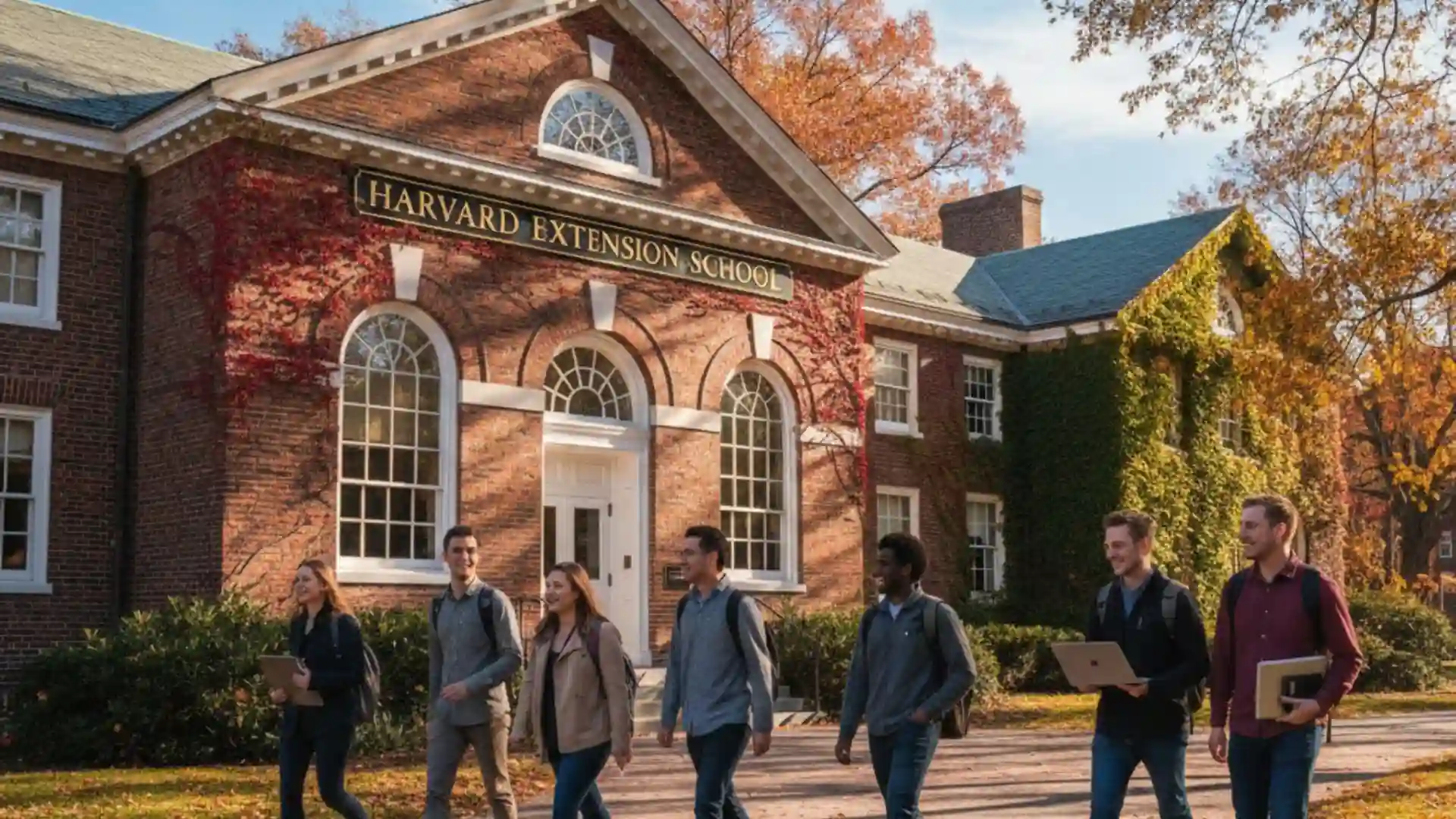
Harvard Extension School (HES) is one of the twelve degree-granting schools of Harvard University. It operates as part of the Harvard Division of Continuing Education, with a mission to make Harvard-quality education accessible to a broader population.
Unlike Harvard College or other graduate schools at the university, Harvard Extension School follows an open-enrollment philosophy for many of its courses. This means students often begin by taking classes and proving their academic readiness rather than going through a highly selective admissions process upfront.
Harvard Extension School serves learners at various stages of life, including:
- Working professionals
- Career changers
- Adult learners returning to education
- International students
- Lifelong learners
History and Mission of Harvard Extension School
Harvard Extension School traces its roots back more than a century, originating from Harvard’s early efforts to extend education beyond traditional campus boundaries. Its founding principles were centered on the idea that education should not be limited by age, geography, or prior academic pathways.
Core Mission
The mission of Harvard Extension School is to:
- Expand access to higher education
- Maintain academic rigor consistent with Harvard standards
- Support lifelong learning
- Bridge theory and practical application
Over time, the school has evolved to incorporate online learning, evening classes, and hybrid formats, making it possible for students worldwide to engage with Harvard-level coursework.
How Harvard Extension School Is Different from Other Harvard Schools?
While Harvard Extension’s School is fully part of Harvard University, it differs in structure and purpose from institutions like Harvard College or Harvard Business School.
Key Differences
- Admissions Model: Extension School emphasizes performance-based admission rather than traditional selective admissions.
- Student Demographics: Students are typically older and more professionally diverse.
- Scheduling: Courses are designed to accommodate working adults.
- Delivery Format: Classes are offered online, on campus, or in hybrid formats.
Despite these differences, academic standards remain high, and courses are taught by Harvard-affiliated faculty and subject-matter experts.
Academic Programs at Harvard Extension School
Harvard Extension School offers a wide range of academic programs, including undergraduate and graduate degrees, certificates, and individual courses.
Undergraduate Programs
Students can pursue a Bachelor of Liberal Arts (ALB) degree with concentrations in areas such as:
- Psychology
- Computer science
- Economics
- Government
- History
- Biology
Undergraduate programs are designed for students who may not follow a traditional college path but still seek a rigorous academic experience.
Graduate Programs
Harvard Extension School offers Master of Liberal Arts (ALM) degrees in various fields, including:
- Management
- Finance
- Data science
- Information technology
- Biotechnology
- Journalism
- International relations
Graduate programs focus on advanced knowledge, research skills, and professional application.
Certificates and Professional Development
In addition to degree programs, Harvard Extension’s School offers certificates that allow students to gain targeted expertise without committing to a full degree.
Certificates are popular among professionals who want to:
- Upgrade specific skills
- Strengthen credentials
- Explore a new field
- Support career advancement
Certificates can often be applied toward degree programs later.
Important Information and Overview
| Category | Details |
|---|---|
| Institution Name | Harvard Extension School |
| Parent Organization | Harvard University |
| Division | Harvard Division of Continuing Education |
| Degree Types | Bachelor of Liberal Arts (ALB), Master of Liberal Arts (ALM) |
| Learning Format | Online, on-campus, hybrid |
| Target Students | Working professionals, adult learners |
| Admissions Model | Performance-based |
| Faculty | Harvard-affiliated instructors |
| Global Access | Available worldwide |
| Academic Focus | Liberal arts and professional studies |
Admissions Process Explained
The admissions process at Harvard Extension’s School is unique compared to traditional universities.
Performance-Based Admission
Rather than relying heavily on standardized test scores or prior academic prestige, Harvard Extension School allows students to:
- Enroll in specific introductory courses
- Demonstrate academic ability through coursework
- Meet GPA and course completion requirements
- Apply formally to a degree program
This approach rewards commitment, discipline, and academic performance.
Learning Experience and Teaching Style
Courses at Harvard Extension’s School are designed to be intellectually rigorous while remaining practical and accessible.
Teaching Methods
- Lectures and seminars
- Case studies and research projects
- Group discussions and peer collaboration
- Real-world applications
Many instructors are practitioners in their fields, bringing professional insights into the classroom.
Online and On-Campus Learning
Harvard Extension School is known for its flexibility in course delivery.
Online Learning
Online courses allow students to:
- Study from anywhere in the world
- Balance education with work and family
- Access recorded lectures and resources
On-Campus Learning
Students who choose on-campus classes benefit from:
- Face-to-face interaction
- Access to Harvard facilities
- Immersion in campus life
Many programs combine both formats.
Academic Standards and Expectations
Harvard Extension’s School maintains high academic expectations. Coursework is demanding, and students are expected to:
- Engage deeply with readings and assignments
- Meet strict grading standards
- Demonstrate critical thinking and analysis
- Manage time effectively
This rigor ensures that Extension School degrees carry academic credibility.
Career Value of a Harvard Extension School Degree
A common question is how a Harvard Extension’s School degree is perceived in the job market.
Professional Recognition
Graduates often report benefits such as:
- Enhanced credibility
- Expanded professional networks
- Improved career mobility
- Greater confidence in academic and professional settings
Degrees are awarded by Harvard University, and alumni become part of the broader Harvard alumni community.
Harvard Extension School and Lifelong Learning
One of the defining features of Harvard Extension’s School is its commitment to lifelong learning. Students range in age from early twenties to retirees, creating a diverse and intellectually rich environment.
This diversity enhances classroom discussions and allows students to learn from varied perspectives and experiences.
Common Misconceptions About Harvard Extension School
Misconception 1: It Is Not “Real” Harvard
Harvard Extension School is an official Harvard school and awards Harvard University degrees.
Misconception 2: It Is Easy
Courses are rigorous and require sustained effort and academic discipline.
Misconception 3: Degrees Are Inferior
The curriculum follows Harvard standards, and degrees are respected when properly understood.
Why Harvard Extension School Matters Today?
In a rapidly changing world, traditional education models do not meet everyone’s needs. Harvard Extension School addresses this gap by offering flexibility without sacrificing academic quality.
Its approach reflects a modern understanding of education as a lifelong process rather than a one-time experience limited to early adulthood.
FAQ about Harvard Extension School
Is Harvard Extension School part of Harvard University?
Yes. It is one of Harvard University’s degree-granting schools.
Can international students attend Harvard Extension School?
Yes. Many courses and programs are accessible to international students.
Are degrees from Harvard Extension School the same as other Harvard degrees?
Degrees are awarded by Harvard University, but they specify the field of study rather than a traditional school name.
Is admission competitive?
Admission is based on academic performance in required courses rather than traditional selectivity.
Can I study fully online?
Yes. Many programs can be completed entirely online.
Do Harvard Extension School students get alumni status?
Yes. Graduates become Harvard alumni.
Conclusion
Harvard Extension School represents a unique and important part of Harvard University’s mission to expand access to education while maintaining academic excellence. By offering flexible, performance-based pathways to degrees and certificates, it opens doors for learners who might otherwise be excluded from elite academic environments.
Whether you are a working professional, a career changer, or a lifelong learner, Harvard Extension School provides an opportunity to engage with Harvard-level education on terms that fit your life. Its emphasis on rigor, accessibility, and practical relevance makes it a powerful option in today’s educational landscape.
Understanding Harvard Extension School helps demystify what “Harvard education” can look like in the modern world. It is not just about exclusivity, but about opportunity, commitment, and the pursuit of knowledge at the highest level.