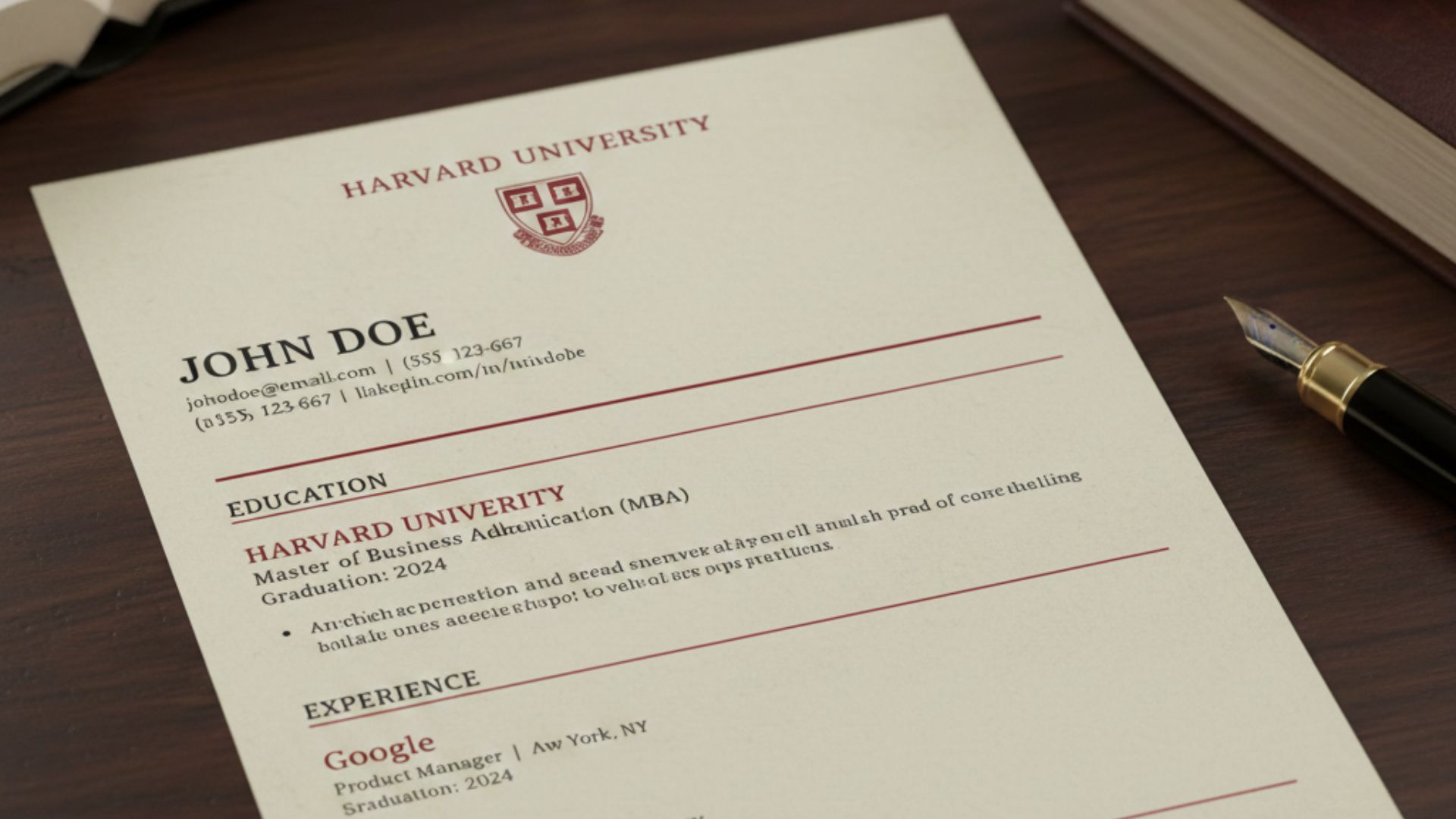
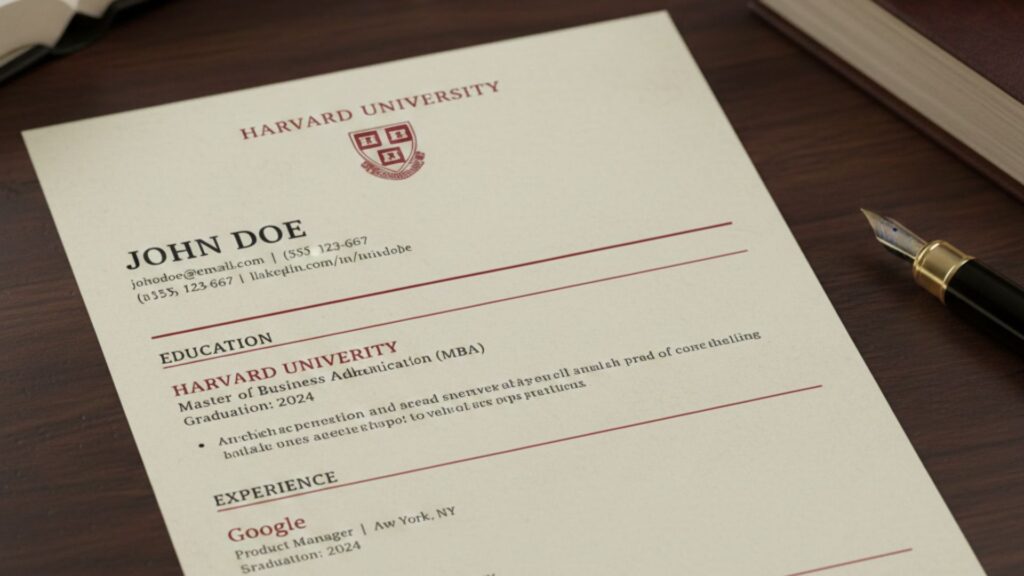
Harvard Resume Template: A resume is often the first impression a candidate makes on an employer, recruiter, or academic institution. Among the many resume formats available today, the Harvard resume template has earned a reputation for being one of the most effective, professional, and widely accepted formats. It is known for its clarity, structured layout, and emphasis on achievements rather than decorative elements.
Despite its name, the Harvard resume template is not limited to Harvard University students or alumni. It has become a globally recognized resume format used by students, professionals, and job seekers across industries. This article provides a comprehensive explanation of what the Harvard resume template is, how it works, why it is effective, and how you can use it to improve your chances of landing interviews.
Whether you are a student, a recent graduate, or an experienced professional, understanding the Harvard resume template can significantly strengthen your job application.
What Is the Harvard Resume Template?
The Harvard resume template is a clean, professional resume format that emphasizes content over design. It focuses on:
- Clear section headings
- Consistent formatting
- Strong bullet points
- Quantifiable achievements
- Logical organization
Unlike modern graphic resumes that rely on colors, icons, or design-heavy layouts, the Harvard resume template is text-focused. It is designed to be easily read by both human recruiters and applicant tracking systems (ATS).
The format originated from career guidance materials associated with Harvard’s career services, but over time it has been widely adopted outside the academic context. Today, it is considered a gold standard for resumes in corporate, academic, nonprofit, and government sectors.
Why the Harvard Resume Template Is So Popular?
The popularity of the Harvard resume template comes from its practicality and effectiveness. Employers often review hundreds of resumes for a single role, and this format makes it easier for them to quickly identify relevant information.
Key Reasons for Its Popularity
- Clarity and readability
The layout allows recruiters to scan the resume in seconds and still understand the candidate’s profile. - Professional appearance
It looks serious and polished without appearing outdated or overly rigid. - ATS-friendly
Since it avoids complex formatting, tables, or graphics, it performs well with automated screening systems. - Universally accepted
It works across industries, from finance and consulting to education and technology. - Focus on achievements
The format encourages candidates to highlight results and impact rather than just listing responsibilities.
Who Should Use the Harvard Resume Template?
The Harvard resume template is suitable for a wide range of individuals, including:
- College students applying for internships
- Fresh graduates entering the job market
- Mid-level professionals seeking career growth
- Senior professionals applying for leadership roles
- Candidates applying to multinational companies
- Applicants for academic or research positions
Because of its flexibility, the template can be adapted to different career stages and industries without losing its effectiveness.
Structure of the Harvard Resume Template
The Harvard resume template follows a logical and consistent structure. Each section serves a specific purpose and should be arranged in a clear order.
1. Header (Contact Information)
The header is placed at the top of the resume and includes:
- Full name
- Phone number
- Professional email address
- City and country (optional)
- LinkedIn profile or portfolio (optional)
The name is usually in a slightly larger font than the rest of the text, but the design remains minimal.
2. Resume Summary or Objective (Optional)
This section provides a brief overview of your profile. While optional, it is useful for professionals with experience or those changing careers.
A good summary includes:
- Your current role or academic status
- Years of experience (if applicable)
- Key skills or areas of expertise
- Career focus
It should be concise and limited to two or three lines.
3. Education Section
Education is often placed near the top, especially for students and recent graduates. This section typically includes:
- Degree name
- Field of study
- Institution name
- Graduation year
- Academic achievements (optional)
The Harvard resume template lists education in reverse chronological order, with the most recent qualification first.
4. Work Experience Section
This is the most important section for most job seekers. Each role should include:
- Job title
- Organization name
- Location
- Employment dates
- Bullet points describing achievements
Bullet points should start with action verbs and focus on measurable outcomes wherever possible.
5. Skills Section
The skills section highlights your core competencies. Skills can be grouped into categories such as:
- Technical skills
- Professional skills
- Language skills
- Software proficiency
The Harvard resume template avoids long paragraphs and instead uses short, clear listings.
6. Additional Sections (Optional)
Depending on your profile, you may include:
- Certifications
- Publications
- Research experience
- Volunteer work
- Awards and honors
- Leadership roles
Only include sections that add value to your application.
Important Information and Resources
| Category | Details |
|---|---|
| Resume Type | Text-based professional resume |
| Primary Focus | Achievements and experience |
| Best For | Students, graduates, professionals |
| Page Length | 1 page (early career), 2 pages (experienced) |
| Font Style | Serif or sans-serif (simple fonts) |
| Font Size | 10.5 to 12 points |
| File Format | PDF or Word document |
| ATS Compatibility | High |
| Customization Level | Easy to adapt for different roles |
| Industry Use | Corporate, academic, nonprofit, government |
Formatting Guidelines for the Harvard Resume Template
Proper formatting is essential to maintain the effectiveness of the Harvard resume template.
Font and Spacing
- Use professional fonts such as Times New Roman, Arial, or Calibri
- Maintain consistent font sizes
- Use clear section headings
- Ensure sufficient white space
Bullet Points
- Use bullet points instead of paragraphs
- Keep bullet points concise
- Start with action verbs
- Focus on results rather than duties
Consistency
- Use consistent date formats
- Align text properly
- Maintain uniform spacing between sections
Common Mistakes to Avoid
Even with a strong template, mistakes can reduce the effectiveness of your resume.
Overloading Information
Including too much information makes the resume hard to scan. Focus on relevance.
Using Decorative Elements
The Harvard resume template works best without graphics, icons, or excessive formatting.
Weak Bullet Points
Avoid vague descriptions. Each bullet point should communicate value and impact.
Ignoring Customization
A generic resume is less effective. Tailor your resume for each role.
How to Customize the Harvard Resume Template?
Customization does not mean changing the structure. It means adjusting the content to match the job requirements.
Steps to customize effectively:
- Analyze the job description
- Identify required skills and keywords
- Adjust bullet points to reflect relevant experience
- Reorder sections if necessary
- Remove irrelevant information
This approach ensures your resume remains focused and targeted.
Harvard Resume Template vs Other Resume Formats
Compared to creative or infographic resumes, the Harvard resume template prioritizes substance over style. While creative resumes may work in design-focused industries, the Harvard format is more reliable for traditional and competitive roles.
It also differs from functional resumes by emphasizing chronological work history rather than skill grouping. This makes it more transparent and credible to employers.
Why the Harvard Resume Template Still Works Today?
Despite changing hiring trends and digital recruitment tools, the fundamentals of resume evaluation remain the same. Employers want clarity, relevance, and evidence of capability. The Harvard resume template delivers all three.
Its enduring appeal lies in its simplicity. By removing distractions, it allows your experience and achievements to stand out. This is particularly important in competitive job markets where recruiters spend limited time reviewing each resume.
FAQ about Harvard Resume Template 2026
Is the Harvard resume template only for Harvard students?
No. Anyone can use the Harvard resume template regardless of their educational background.
How long should a Harvard-style resume be?
One page is ideal for students and early-career professionals. Two pages may be acceptable for experienced professionals.
Can I use the Harvard resume template for job applications outside academia?
Yes. It is widely accepted in corporate, nonprofit, and government sectors.
Does the Harvard resume template work with ATS systems?
Yes. Its simple formatting and clear structure make it highly ATS-compatible.
Should I include a photo in a Harvard resume?
No. Photos are generally discouraged unless specifically requested.
Can I modify the section order?
Yes, but the overall structure should remain logical and professional.
Conclusion
The Harvard resume template is more than just a layout; it is a structured approach to presenting your professional story. Its emphasis on clarity, consistency, and achievement-focused content makes it one of the most effective resume formats available today.
Whether you are a student preparing your first resume or a professional seeking career advancement, adopting the Harvard resume template can significantly improve how your profile is perceived. It helps recruiters quickly understand who you are, what you have done, and what value you bring.
By following the guidelines outlined in this article and customizing the content to match your goals, you can create a resume that is professional, credible, and impactful. In a competitive job market, a well-crafted Harvard-style resume can be a powerful tool that opens doors to new opportunities.