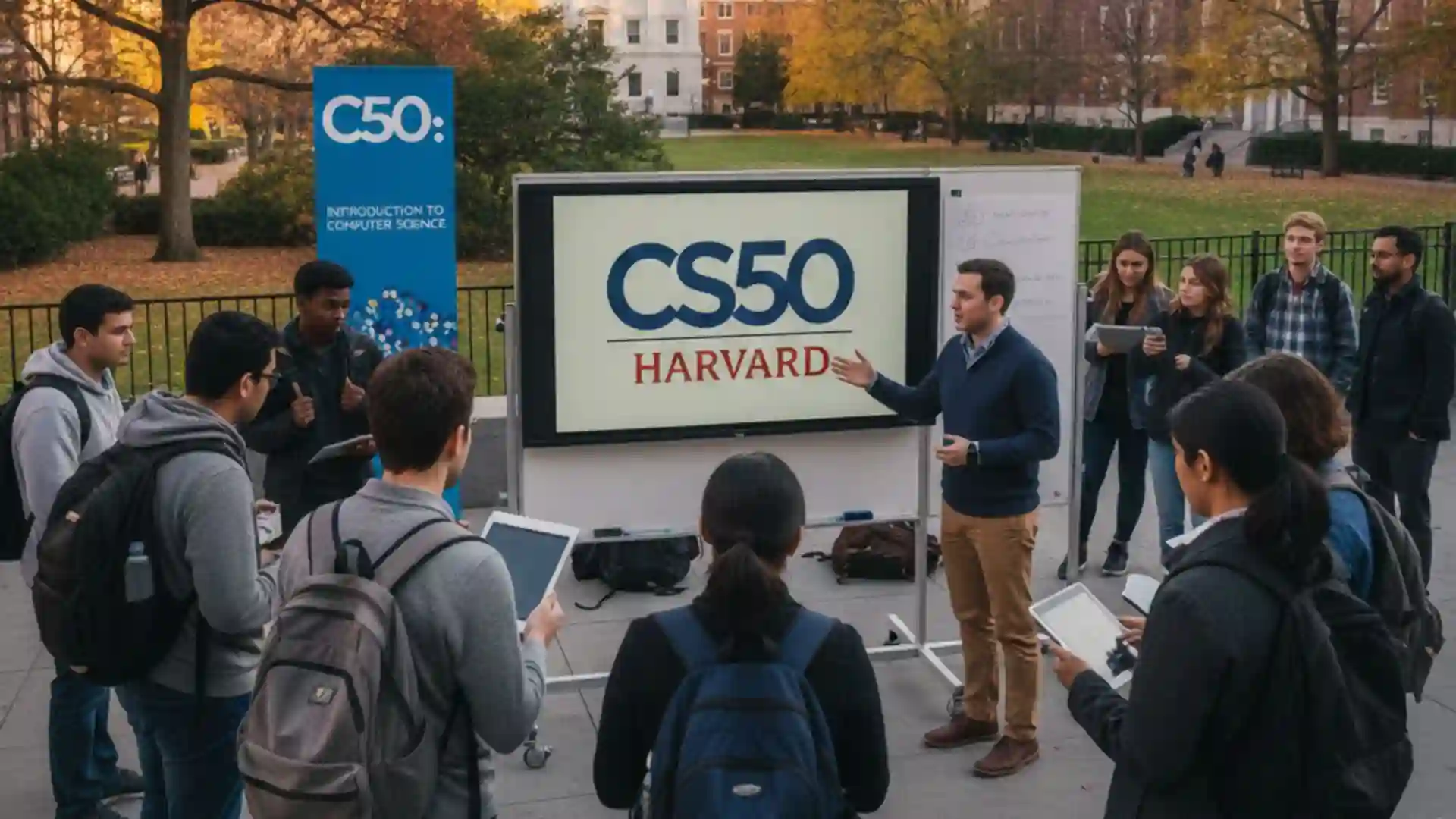
CS50 Harvard is one of the most well-known and widely taken computer science courses in the world. Designed by Harvard University, CS50 has become a global gateway into programming, problem-solving, and computational thinking. Whether you are a beginner with no technical background or an experienced learner looking to strengthen your foundations, CS50 offers a structured, intellectually rigorous, and accessible introduction to computer science.
What makes CS50 unique is not just its academic credibility, but its ability to make complex concepts understandable without sacrificing depth. Over the years, CS50 has evolved into more than just a course—it has become a learning movement that has introduced millions of learners to the world of technology.
This article provides a detailed, comprehensive overview of CS50 Harvard, covering its structure, curriculum, learning outcomes, global recognition, and who should take it.
Important Links and Information About CS50 Harvard
| Category | Details |
|---|---|
| Course Name | CS50: Introduction to Computer Science |
| Institution | Harvard University |
| Course Type | Online computer science course |
| Difficulty Level | Beginner to intermediate |
| Programming Languages | C, Python, SQL, HTML, CSS, JavaScript |
| Instructor | Harvard faculty |
| Course Format | Video lectures, problem sets, projects |
| Certification | Optional paid certificate |
| Access Link | https://harvardonline.harvard.edu/course/cs50-introduction-computer-science |
| Global Availability | Worldwide |
What Is CS50 Harvard?
CS50 is Harvard University’s flagship introductory course in computer science. Originally taught on-campus to Harvard undergraduates, the course has been adapted for online learners across the world while maintaining the same academic standards and structure.
The course is designed to teach students how to think computationally, rather than simply how to code. It emphasizes problem-solving, logic, algorithmic thinking, and an understanding of how computers work under the hood.
CS50 is often described as challenging but rewarding, with a strong focus on developing resilience and analytical thinking.
Why CS50 Harvard Is So Popular?
CS50 has earned its popularity for several reasons:
- It is offered by one of the world’s most prestigious universities
- It is accessible to learners with no prior experience
- It balances theory with hands-on practice
- It teaches real-world programming languages
- It encourages deep understanding rather than memorization
Unlike many beginner courses that oversimplify concepts, CS50 respects the learner’s intelligence and pushes students to think critically from the start.
Who Should Take CS50?
CS50 Harvard is designed for a broad audience.
Ideal Learners Include:
- Absolute beginners with no coding experience
- Students considering computer science or engineering
- Professionals transitioning into tech roles
- Entrepreneurs wanting technical literacy
- Educators seeking structured CS knowledge
The course explicitly states that no prior programming experience is required, making it accessible to anyone willing to put in the effort.
Course Structure and Learning Format
CS50 follows a well-organized structure that mirrors Harvard’s on-campus experience.
Key Components of the Course
- Video lectures
- Problem sets (assignments)
- Labs and exercises
- Final project
- Community discussions
Each week builds on the previous one, gradually increasing in complexity.
Core Topics Covered in CS50 Harvard
CS50 provides a broad yet deep introduction to computer science fundamentals.
1. Computational Thinking
Students learn how to break problems into smaller components, identify patterns, and design step-by-step solutions.
This mindset is foundational for all programming and technical disciplines.
2. Programming in C
CS50 begins with the C programming language, which helps students understand:
- Memory management
- Data types
- Pointers
- Low-level computing concepts
Starting with C gives learners a strong technical foundation that makes learning other languages easier.
3. Algorithms and Data Structures
Students explore:
- Searching algorithms
- Sorting techniques
- Time and space complexity
- Efficiency trade-offs
These concepts help learners understand why some solutions perform better than others.
4. Python Programming
After mastering foundational concepts, students transition to Python, a high-level language known for readability and versatility.
Python is used to demonstrate how abstracted languages simplify development while relying on the same underlying principles.
5. Web Development
CS50 introduces basic web technologies, including:
- HTML
- CSS
- JavaScript
Students learn how websites work and how front-end and back-end components interact.
6. Databases and SQL
The course covers database fundamentals, including:
- Data storage
- Queries
- Relational databases
- SQL syntax
This section helps learners understand how applications manage and retrieve data efficiently.
The CS50 Teaching Philosophy
One of the defining features of CS50 Harvard is its teaching philosophy.
The course emphasizes:
- Learning by doing
- Making mistakes as part of growth
- Persistence and problem-solving
- Clarity over shortcuts
Students are encouraged to struggle productively, which builds confidence and long-term understanding.
Problem Sets and Assignments
CS50 is known for its challenging but well-designed problem sets.
These assignments require students to:
- Apply concepts creatively
- Debug their own code
- Think logically and systematically
While demanding, the problem sets are considered the heart of the learning experience.
The CS50 Final Project
The course culminates in a final project where students design and implement a program of their choice.
This project allows learners to:
- Apply everything they have learned
- Explore personal interests
- Build something tangible
The final project is often used by learners as part of their professional portfolio.
Certification and Recognition
CS50 can be taken for free, but learners may opt for a paid certificate upon completion.
About the Certificate
- Issued by Harvard-affiliated platforms
- Verifies course completion
- Useful for resumes and LinkedIn profiles
- Demonstrates commitment and skill development
While not equivalent to a degree, the CS50 certificate carries strong credibility.
CS50 and Career Benefits
Many learners use CS50 as a stepping stone into technical careers.
Skills Gained Include:
- Logical reasoning
- Programming fundamentals
- Debugging techniques
- Problem decomposition
- Technical confidence
These skills are valuable across industries, not just in software development.
CS50 Compared to Other Beginner Courses
CS50 stands out due to:
- Academic rigor
- Depth of explanation
- Broad language exposure
- Focus on fundamentals
Unlike short bootcamps or superficial tutorials, CS50 prioritizes long-term understanding.
Global Impact of CS50 Harvard
CS50 has reached learners in hundreds of countries and is used in:
- Universities
- High schools
- Professional training programs
- Independent self-study
Its influence extends far beyond Harvard’s campus.
Common Challenges in CS50
CS50 is not an easy course, and students should be prepared for challenges.
Common Difficulties
- Steep learning curve at the beginning
- Time-consuming problem sets
- Debugging frustration
However, these challenges are intentional and help develop resilience and analytical thinking.
Tips for Succeeding in CS50
- Start assignments early
- Watch lectures carefully
- Practice debugging systematically
- Use discussion forums wisely
- Focus on understanding, not speed
Consistency is more important than perfection.
FAQ about CS50 Harvard 2026
Is CS50 Harvard free?
Yes, CS50 can be accessed for free. A paid option is available for those who want a verified certificate.
Do I need prior programming experience?
No. CS50 is designed for beginners and assumes no prior knowledge.
How long does CS50 take to complete?
The course typically takes several weeks, depending on pace and commitment.
Is CS50 hard?
CS50 is challenging but fair. The difficulty is part of what makes it valuable.
Does CS50 provide a Harvard degree?
No. CS50 provides a certificate, not a degree.
Can CS50 help me get a job?
CS50 builds strong foundational skills that are valuable for technical roles, though additional learning may be required for specialization.
Is CS50 suitable for non-technical professionals?
Yes. Many non-technical professionals take CS50 to gain computational literacy.
Conclusion
CS50 Harvard is more than an introductory computer science course—it is a rigorous, thoughtfully designed learning experience that equips students with essential problem-solving and programming skills. Its global reach, academic credibility, and emphasis on foundational understanding make it one of the best starting points for anyone interested in computer science.
By focusing on how computers think rather than just how to write code, CS50 empowers learners to approach technology with confidence and curiosity. Whether your goal is career advancement, academic exploration, or personal growth, CS50 offers a meaningful and transformative entry into the world of computer science.
To access the official course, visit:
https://harvardonline.harvard.edu/course/cs50-introduction-computer-science
For learners willing to embrace challenge and persistence, CS50 Harvard remains one of the most rewarding educational experiences available online.