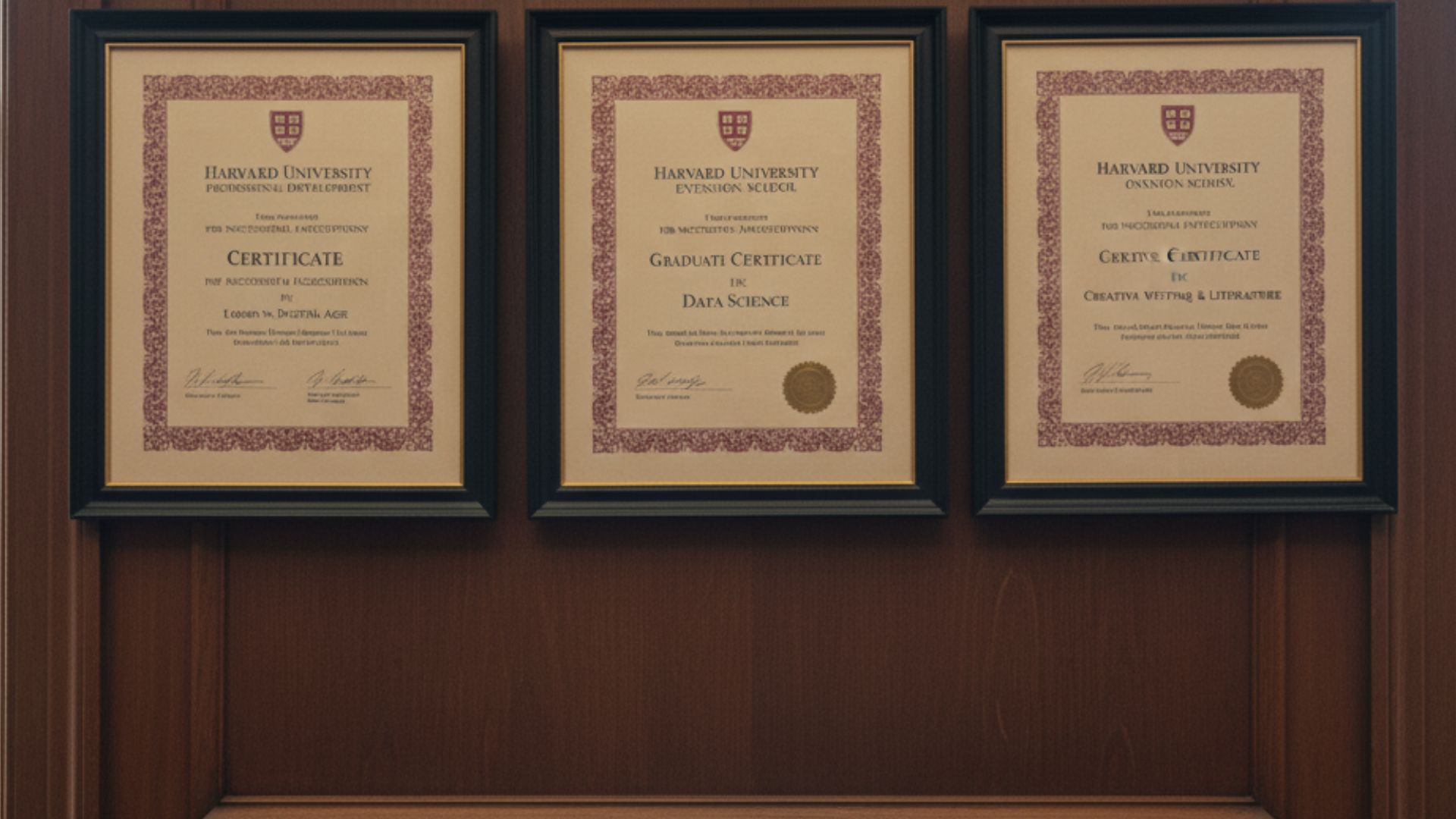
Harvard Certificate Programs: Harvard University is globally synonymous with excellence, leadership, and innovation. While many associate Harvard with traditional degree programs, the university also offers an extensive range of certificate programs that make its world-class education more accessible to learners across the globe.
These Harvard certificate programs are designed to provide focused, practical knowledge for professionals, entrepreneurs, and students seeking to enhance their skills without committing to a full degree. They cover diverse fields, from business and data science to public health, education, sustainability, and technology.
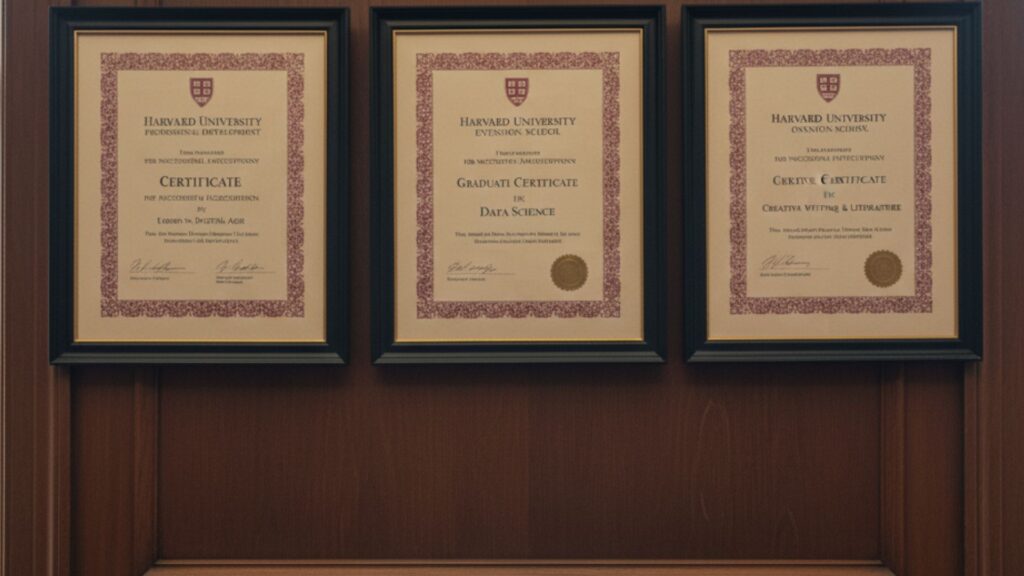
This article provides an in-depth exploration of Harvard’s certificate programs — their structure, benefits, admission requirements, costs, and real-world impact — helping you decide if one is the right fit for your personal and professional goals.
Understanding Harvard Certificate Programs
Harvard’s certificate programs are short-term, non-degree offerings designed to build specific competencies. These programs may be completed online, on-campus, or in a hybrid format, depending on the school and subject area.
Unlike traditional degree programs that require several years of study, most Harvard certificates can be completed in a few months to two years, depending on the student’s schedule and course load.
The programs are offered by various Harvard schools, including:
- Harvard Extension School (HES)
- Harvard Business School (HBS) Online
- Harvard Kennedy School (HKS) Executive Education
- Harvard T.H. Chan School of Public Health
- Harvard Graduate School of Education (HGSE)
Each school designs its certificate programs to meet the evolving needs of modern learners and global industries.
Types of Harvard Certificate Programs
Harvard offers a wide variety of certificate options to cater to different academic and professional interests. Below are the main categories:
a. Professional Graduate Certificates (Harvard Extension School)
These are among the most popular Harvard certificate programs. They are designed for working professionals seeking advanced expertise in specific areas.
Examples include:
- Business Communication
- Data Science
- Digital Marketing Strategy
- International Relations
- Project Management
- Sustainability and Environmental Management
Each program requires completion of three to five graduate-level courses, and students can often apply some of these courses toward a future degree at Harvard Extension School.
b. Executive Education Programs (HBS and HKS)
Executive Education certificates target mid- to senior-level professionals. These programs emphasize leadership, management, innovation, and global strategy.
Examples include:
- Leading Change and Organizational Renewal (HBS)
- Public Leadership Credential (HKS)
- Strategy Execution (HBS Online)
- Leadership in Corporate Sustainability (HBS Executive Education)
Executive certificates can often be completed in a few weeks or months, depending on intensity and delivery format.
c. Online Certificates (Harvard Online and edX)
Harvard’s collaboration with edX, the online learning platform, makes several certificate programs accessible to global learners.
Examples include:
- HarvardX Data Science Professional Certificate
- CS50: Introduction to Computer Science
- Contract Law: From Trust to Promise to Contract
- Entrepreneurship in Emerging Economies
These programs are affordable and self-paced, making them ideal for those seeking flexibility.
d. Health and Medicine Certificates (Harvard T.H. Chan School of Public Health)
Designed for healthcare professionals, these programs emphasize applied learning in medicine, global health, and leadership.
Examples include:
- Leadership Development for Physicians in Academic Health Centers
- Safety, Quality, Informatics, and Leadership
- Public Health Leadership Lab
e. Education and Learning Certificates (Harvard Graduate School of Education)
These programs target educators and administrators looking to improve teaching practices and educational outcomes.
Examples include:
- Certificate in School Management and Leadership (CSML)
- Learning Design, Innovation, and Technology (LDIT)
Structure and Duration
Most Harvard certificate programs follow a flexible structure, allowing professionals to balance studies with work and personal commitments.
- Duration: 6 months to 2 years (depending on program and schedule).
- Mode: Online, on-campus, or hybrid.
- Courses Required: 3–5 courses for most graduate certificates.
- Credit Transfer: Many credits can be applied toward future degree programs.
The modular design of these programs ensures learners can immediately apply acquired skills to their careers.
Admission Requirements
Admission to Harvard’s certificate programs is typically less competitive than degree programs but still maintains academic rigor.
General eligibility criteria include:
- Bachelor’s degree (for most graduate-level certificates).
- English language proficiency (TOEFL, IELTS, or equivalent).
- Relevant work experience (for executive programs).
- Completed application form and program fee.
For online certificates, there may be no formal admission requirement — learners can directly enroll and start learning.
Benefits of Harvard Certificate Programs
Harvard’s certificate programs offer numerous advantages for professionals and lifelong learners:
- Global Recognition: Harvard’s name carries unmatched prestige and credibility.
- Career Advancement: Certificates strengthen resumes and improve promotion prospects.
- Flexible Learning: Options for online or part-time study make learning accessible anywhere.
- Networking Opportunities: Students connect with Harvard faculty and global peers.
- Pathway to a Degree: Many programs count toward future Harvard master’s degrees.
- Practical Skills: The focus on real-world application ensures immediate workplace impact.
These benefits make Harvard’s certificates a valuable investment for personal and professional growth.
Costs and Financial Aid
Harvard certificate program costs vary based on the school, program type, and delivery format.
| Program Type | Estimated Cost Range (USD) | Duration |
|---|---|---|
| Harvard Extension School Graduate Certificates | $11,000–$15,000 | 1–2 years |
| Harvard Business School Online Certificates | $1,500–$5,000 | 6–12 weeks |
| Harvard Kennedy School Executive Education | $5,000–$20,000 | 2 weeks–3 months |
| Harvard Online (edX) Certificates | $100–$2,000 | Flexible (self-paced) |
| Harvard Public Health & Education Certificates | $8,000–$18,000 | 2–12 months |
While tuition may seem high, the programs’ flexibility and career benefits often make them worthwhile.
Financial aid options include:
- Employer sponsorships.
- Installment payment plans (available for most online programs).
- Scholarships for specific programs or demographics.
How to Apply?
The application process for Harvard certificate programs is straightforward.
Steps to apply:
- Visit the official Harvard program website.
- Choose the desired certificate program.
- Review admission requirements and deadlines.
- Submit the online application form.
- Pay the program fee or tuition deposit.
- Receive enrollment confirmation and start learning.
For Harvard Extension School, applications are accepted year-round, while executive programs have specific start dates.
Career Impact and Alumni Outcomes
Harvard certificate holders often experience measurable career benefits. Many graduates report promotions, salary increases, and new leadership opportunities after completing a program.
Common career outcomes include:
- Transition to leadership or management roles.
- Entry into new industries such as data analytics, sustainability, or entrepreneurship.
- Enhanced professional networks through Harvard’s global alumni community.
Employers value Harvard certificates for their rigorous academic standards and real-world applicability.
Sample Programs and Their Focus
Here’s an overview of popular Harvard certificate programs and what they offer:
| Program Name | School | Focus Area | Format |
|---|---|---|---|
| Business Analytics | HBS Online | Data-driven business decision-making | Online |
| Data Science | Harvard Extension | Programming, statistics, and data visualization | Online/Hybrid |
| Public Leadership Credential | HKS | Public policy and government leadership | Online |
| Sustainable Finance | Harvard Extension | Corporate responsibility and green investment | Online |
| Project Management | Harvard Extension | Project planning and risk management | Online |
| CSML for Educators | HGSE | Educational leadership and management | Online |
| Health Care Leadership | HSPH | Health system improvement and strategy | Hybrid |
Why Choose a Harvard Certificate Over Other Options?
While many universities offer certificate programs, Harvard’s stand out because of:
- Academic Rigor: Courses are designed and taught by Harvard faculty.
- Prestige: The Harvard brand enhances your professional credibility.
- Flexibility: Options to study online, in-person, or in hybrid mode.
- Networking: Access to Harvard’s global learning community.
- Stackable Credentials: Pathways to advanced degrees or additional certificates.
Harvard’s certificate programs strike the perfect balance between academic excellence and practical application.
Important Links and Information about Harvard Certificate Programs
| Category | Details / Links |
|---|---|
| Official Website | https://www.extension.harvard.edu |
| Online Learning Platform | https://online.hbs.edu |
| Executive Education | https://www.hks.harvard.edu/execed |
| Public Health Programs | https://www.hsph.harvard.edu/executive-and-continuing-professional-education/ |
| Education Programs (HGSE) | https://www.gse.harvard.edu/ |
| edX Harvard Courses | https://online-learning.harvard.edu |
| Typical Duration | 6 months – 2 years |
| Program Cost Range | $100 – $20,000 |
| Eligibility | Open to graduates and working professionals |
| Mode of Study | Online, On-campus, Hybrid |
FAQ about Harvard Certificate Programs
What is a Harvard certificate program?
A Harvard certificate program is a short-term, focused learning track designed to help students and professionals build specialized skills in business, technology, healthcare, or education.
Are Harvard certificate programs accredited?
Yes. Certificates are awarded by Harvard University through its various schools, such as Harvard Extension, Harvard Business School, or Harvard Kennedy School.
Do I need a degree to enroll?
Most graduate-level certificate programs require a bachelor’s degree, but some online certificates are open to all learners without prior qualifications.
How long does it take to complete a certificate?
Depending on the program, it may take anywhere from a few months to two years to complete.
Can I apply the credits toward a Harvard degree later?
Yes. Many certificate courses at Harvard Extension School and HBS Online can be transferred toward a future degree.
Are Harvard’s online certificates worth it?
Absolutely. They are recognized globally and provide practical, industry-relevant skills supported by the Harvard reputation.
How much do Harvard certificate programs cost?
Costs vary between $100 (for short edX courses) and $20,000 (for executive programs).
Can international students apply?
Yes. Most Harvard certificate programs accept international applicants and offer online participation options.
Conclusion
Harvard certificate programs offer a unique opportunity to experience the world-class education of Harvard University without committing to a full degree program. Whether you’re looking to advance your career, transition to a new field, or deepen your knowledge, these programs combine flexibility, rigor, and global recognition.
Through its diverse offerings — from data science to leadership and public policy — Harvard continues to make lifelong learning accessible to students worldwide. A Harvard certificate not only enhances professional skills but also connects learners to a global network of thinkers, innovators, and leaders who are shaping the future.
If you are ready to elevate your career and education, a Harvard certificate program could be your next transformative step.